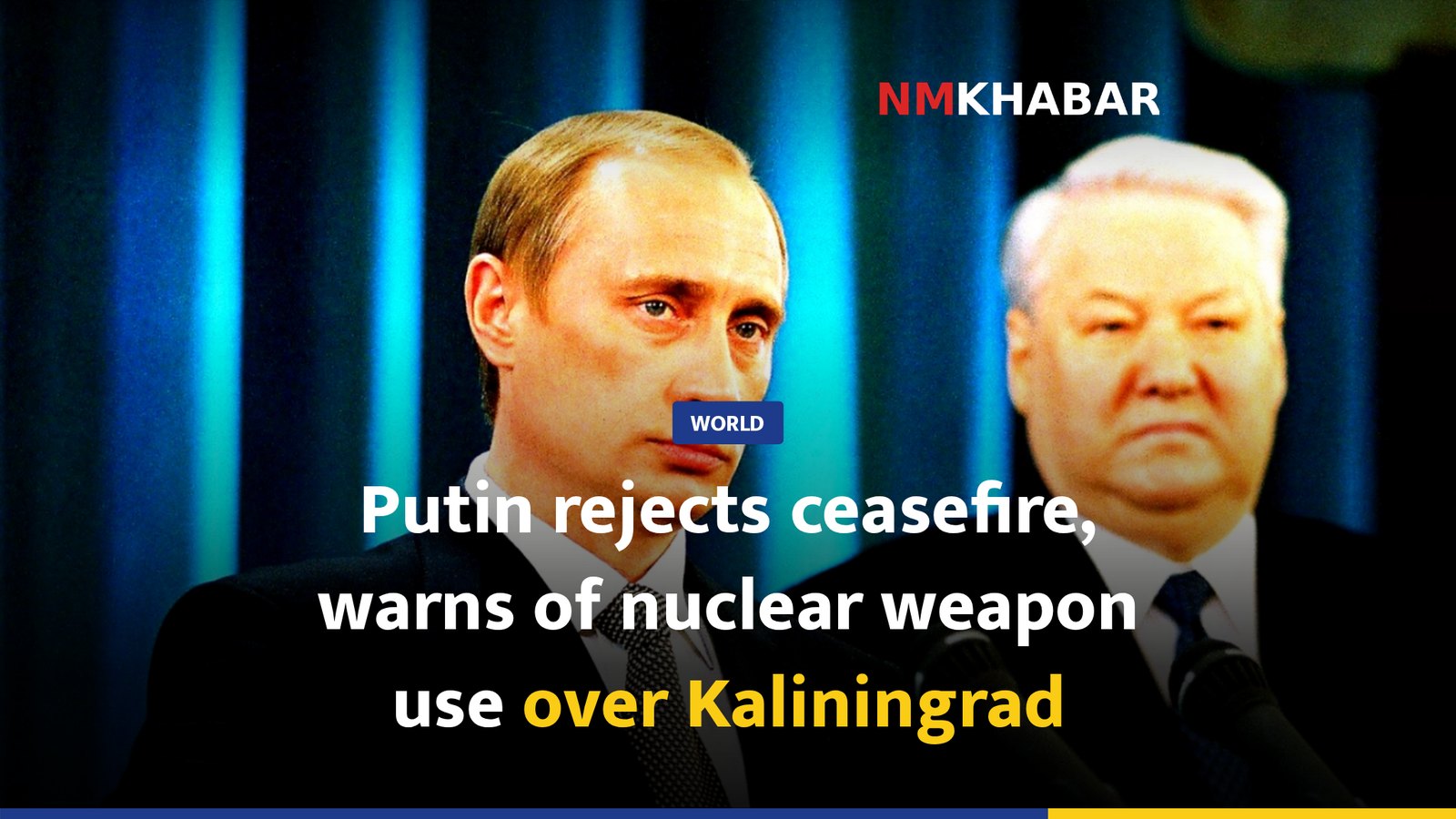
Russian President Vladimir Putin on September 24, 2026, rejected a proposal for a ceasefire with Ukraine that would halt long-range strikes, simultaneously warning that Moscow could use nuclear weapons if its territory of Kaliningrad faces a direct threat.
Speaking at the Valdai Political Forum in Moscow, President Putin dismissed as ‘ridiculous’ a proposal for Ukraine to cease attacks on Russian oil processing facilities in exchange for Russia halting strikes on Ukrainian vessels.
This proposal emerged following a meeting between US President Donald Trump and his Ukrainian counterpart, Volodymyr Zelenskyy, on September 22, 2026, in New York, during the 81st session of the United Nations General Assembly. During their encounter, President Trump had reportedly urged Ukraine to stop targeting Russian oil refineries. Separately, on September 25, 2026, President Trump was reported to have authorized Ukraine to produce Patriot missiles.
Nuclear threat over Kaliningrad
President Putin warned that Russia would deploy its ‘entire arsenal,’ including nuclear weapons, if there were attempts to separate or directly attack Kaliningrad, a Russian exclave situated between Poland and Lithuania.
This warning followed a disclosure by NATO, the North Atlantic Treaty Organization, regarding a diplomatic note received from Russia. The note contained a similar threat of nuclear weapon use if efforts were made to detach Kaliningrad from Russia. NATO Secretary General Mark Rutte, however, characterized Russia’s nuclear threats as ‘inappropriate.’
Putin further cautioned that escalating retaliatory measures could push the conflict to a ‘fatal point of no return.’
Broader conflict and international reactions
The Russian President acknowledged that Russia has been consistently targeting Ukraine’s energy infrastructure. He stated that Ukrainian attacks on Russian oil processing centers had impacted Russia’s gross domestic product by approximately 1 percent.
On September 29, 2026, an attack on Kyiv resulted in one fatality and six injuries, including three children.
In response to the ongoing hostilities, Ukrainian President Volodymyr Zelenskyy on September 28, 2026, called for increased international pressure and sanctions against Russia.
Pope Leo XIV, the head of the Catholic Church, also appealed to both Russia and Ukraine on September 29, 2026, urging them to engage in dialogue to bring an end to the war. US President Trump, on September 26, 2026, expressed his belief that both Russia and Ukraine desire a ‘solution’ to the conflict.
Path forward remains unclear
Despite the rejection of the ceasefire proposal, President Putin reiterated Russia’s willingness to end the war through negotiations. He expressed a desire to see Ukraine as a neutral state once hostilities cease.
However, Ukraine has signaled that for it to halt attacks on Russian energy infrastructure, Russia must provide concrete guarantees that it will not target Ukraine’s critical infrastructure.
Several key details regarding the ongoing situation remain undisclosed. The comprehensive agenda and other participants of the Valdai Political Forum on September 24, 2026, have not been made public. Similarly, the full text of the diplomatic note received by NATO from Russia and NATO’s official response to it are unavailable. The timeline and specific conditions under which a full agreement for a ceasefire between Russia and Ukraine could be reached also remain unclear.