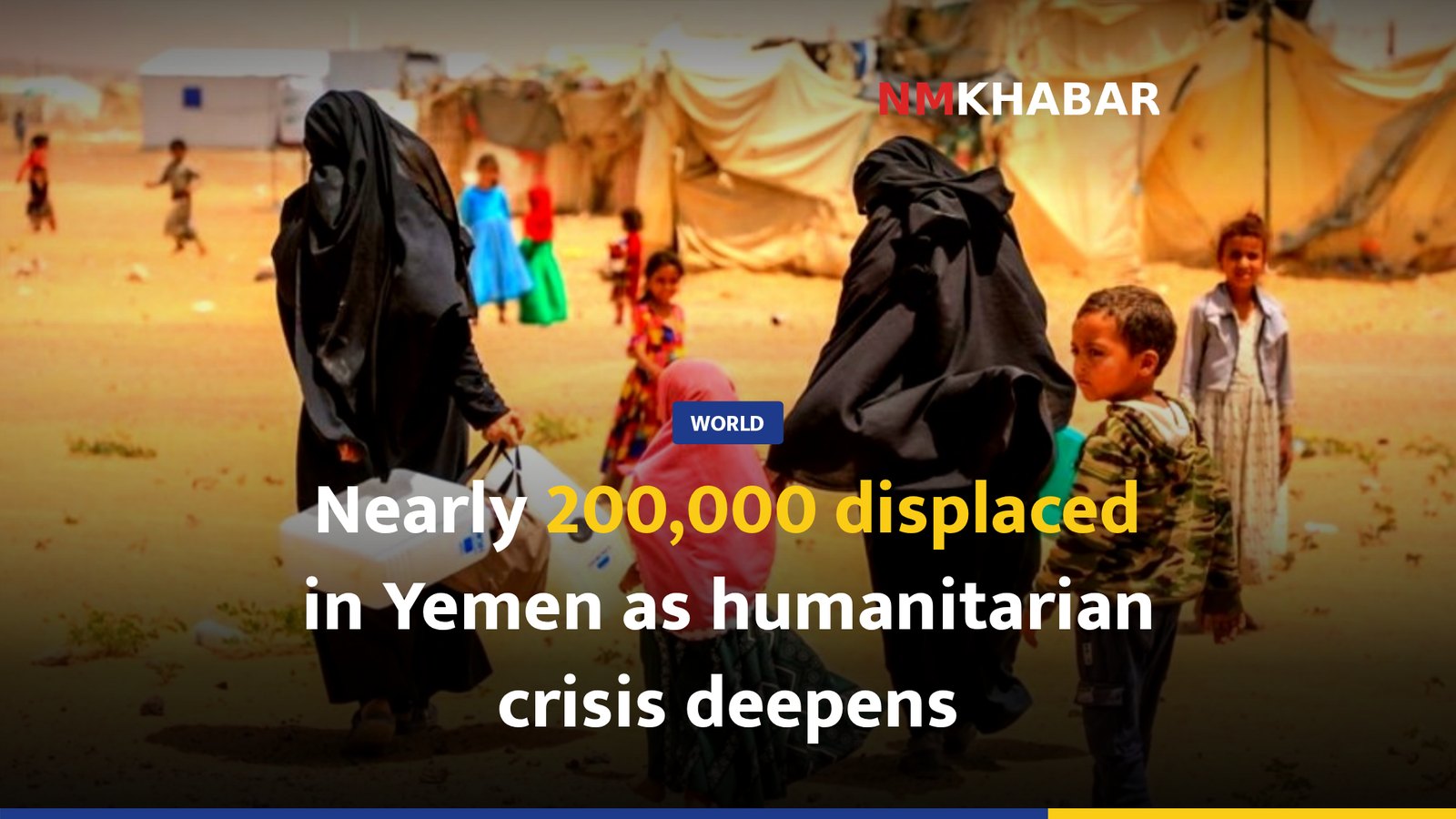
Nearly 200,000 people have been internally displaced in Yemen due to escalating tensions, the internationally recognised Yemeni government announced. The Executive Unit for the Management of Displacement Camps in Yemen, a government body established in 2009, reported 197,906 officially registered displaced individuals as of Wednesday, September 30, 2026. These individuals belong to 29,519 families.
The Executive Unit stated that ongoing military tensions, direct shelling, and a deteriorating security situation are causing “increasingly severe incidents of forced displacement.” These conditions pose serious threats to the lives and safety of civilians.
The highest number of displaced individuals are in Taiz province, with over 97,000 people affected. Lahj province follows with more than 50,000 displaced. The recent surge in hostilities, particularly along Yemen’s western coast and southern Taiz frontlines, has intensified since early September, according to the United Nations Population Fund (UNFPA), which coordinates reproductive health and protection services in Yemen.
Humanitarian agencies report varying figures
While the Executive Unit reported nearly 198,000 displacements, other humanitarian organisations have provided slightly different figures, reflecting the dynamic nature of the crisis and varying reporting periods. The International Organization for Migration (IOM), which tracks displacement data, recorded 145,308 new displaced individuals across eight provinces as of September 28, 2026, since tensions escalated in June 2026. This figure includes an increase of 15,870 people in just one week, with Taiz (81,444) and Lahj (34,860) accounting for the highest numbers.
The UN High Commissioner for Refugees (UNHCR), the UN refugee agency, reported on September 22, 2026, that over 125,000 people had been displaced due to recent conflicts between Houthi rebels and government forces. Similarly, UN Human Rights Chief Volker Türk expressed concern on September 24, 2026, over at least 125 civilians killed or injured and 125,000 displaced since early August.
The conflict in Yemen began in 2014 when the Houthi group, an Iran-backed rebel group, seized control of the capital Sana’a and other key areas. In 2015, a Saudi-led military coalition intervened in support of the internationally recognised government. This decade-long conflict has led to economic decline, widespread displacement, recurring epidemics, and climate crises.
Funding appeals remain critically underfunded
A UN-brokered ceasefire in 2022 broke down in September 2026 following a significant increase in hostilities. Tensions had already escalated in July 2026 due to renewed Houthi grievances over a years-long air and sea blockade by Saudi Arabia, leading to reciprocal attacks and clashes. The Houthi group also declared a naval blockade against Saudi-linked shipping in the Red Sea and attacked commercial vessels crossing the Bab al-Mandab Strait.
The United Nations and its humanitarian partners published the 2026 Yemen Humanitarian Needs and Response Plan (HNRP) on March 18, 2026, appealing for $2.16 billion to provide life-saving assistance to 12 million people. However, funding remains critically low. UNFPA urgently needs $22.7 million to continue its humanitarian response in Yemen until December 2026, but as of October 1, 2026, only six percent of the appeal had been received.
UNHCR’s operations in Djibouti are only 15 percent funded, while its Yemen operations had received just $34 million of the required $194 million for 2026 even before the latest escalation. UN officials have consistently called for immediate action, including the release of detained humanitarian workers, increased funding for the humanitarian response, and support for peace efforts, emphasising that only a political solution can end the crisis.
The UN Security Council is scheduled to hold a briefing and closed consultations on Yemen in October 2026. Meanwhile, more than 10,000 people are expected to arrive in Djibouti by mid-October as sea conditions are anticipated to improve, potentially enabling further crossings.