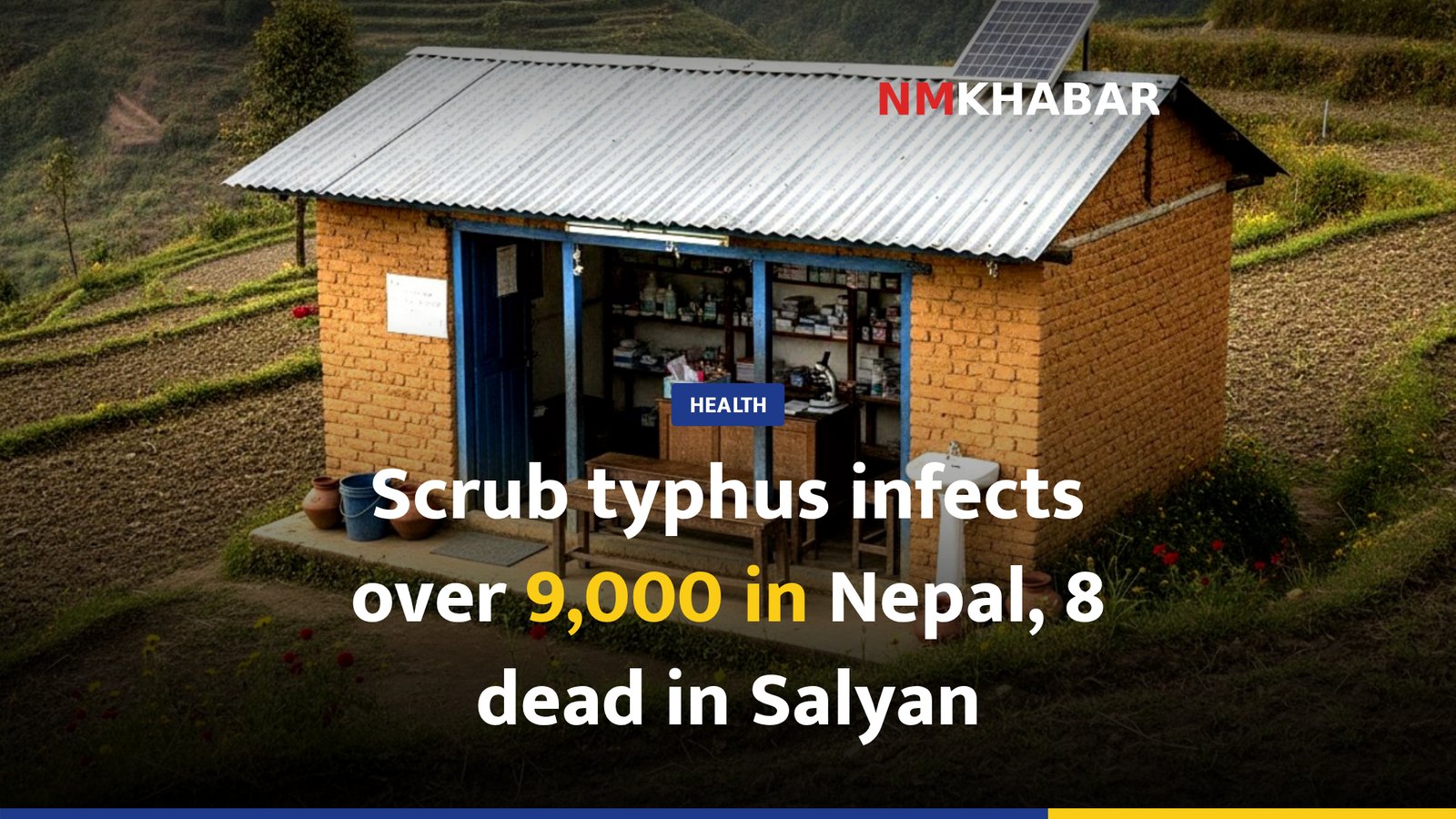
More than 9,000 people across 74 districts in Nepal have been infected with scrub typhus since January 2026, with eight deaths confirmed in Salyan’s Darma Rural Municipality, according to the Epidemiology and Disease Control Division (EDCD).
Outbreak details and expert concerns
The Epidemiology and Disease Control Division (EDCD), a division under the Department of Health Services, reported that the infection, which originated in Darma Rural Municipality in Salyan, has now spread nationwide. Darma alone has seen 600 confirmed cases, and all eight deaths, affecting individuals aged 12 to 82, occurred within the last month (before October 1, 2026). In the same period, 2,718 new cases were confirmed across the country.
While the Salyan District Administration Office stated that approximately 480 cases were confirmed in Salyan by October 1, 2026, and the infection rate is declining, health experts emphasize the need for continued vigilance. Dr. Gokarna Dahal, chief of the Vector-borne Disease Branch at the EDCD, noted that scrub typhus is an annual occurrence. “We are investigating why a single rural municipality has reported so many deaths this year,” he said.
Dr. Dahal explained that the infection can exacerbate pre-existing conditions, making it difficult to ascertain if scrub typhus is the direct cause of death. He added that no deaths from scrub typhus have been reported in other districts.
Understanding scrub typhus
Scrub typhus is an acute febrile illness caused by the bacterium Orientia tsutsugamushi, transmitted to humans through the bite of infected mites. These mites are typically found in bushes, fields, forests, and overgrown areas around homes. The disease is not transmitted from person to person.
Symptoms include fever, headache, swollen lymph nodes, loss of appetite, cough, pneumonia, body aches, excessive sweating, red eyes, and diarrhea. A characteristic red rash or scab may appear at the bite site, which can later turn black. If left undiagnosed, the disease can lead to severe complications such as pneumonia, and problems with the liver, kidneys, and respiratory system.
While scrub typhus has been present in Nepal for years, its incidence significantly increased after the 2015 earthquake. The collapse of homes displaced rats, which are hosts for the infected mites, leading to a wider spread of the disease. In 2019, scrub typhus affected 63 districts, with 554 infections and three deaths.
Response and prevention efforts
In response to the outbreak, health workers have been deployed at the local level in Salyan, and a team of experts from the Department of Health Services has been dispatched to the district. Bandana Kumari KC, Chief District Officer of Salyan, assured the public that medicine supplies are adequate and there is no need for panic. Government health facilities provide free scrub typhus medication.
Dr. Dahal emphasized that scrub typhus is fully curable with timely treatment. He advises anyone experiencing fever to seek immediate medical attention and suggests doctors consider scrub typhus testing. Dr. Anup Bastola, director of Sukraraj Tropical and Infectious Disease Hospital, added that blood tests can easily diagnose the disease, and prompt treatment leads to full recovery.
Authorities recommend regular cleaning of bushy areas in rural settings and exercising caution when working in fields or dense vegetation. They also noted that the actual number of infected individuals might be higher than official records indicate, as not all cases are reported.