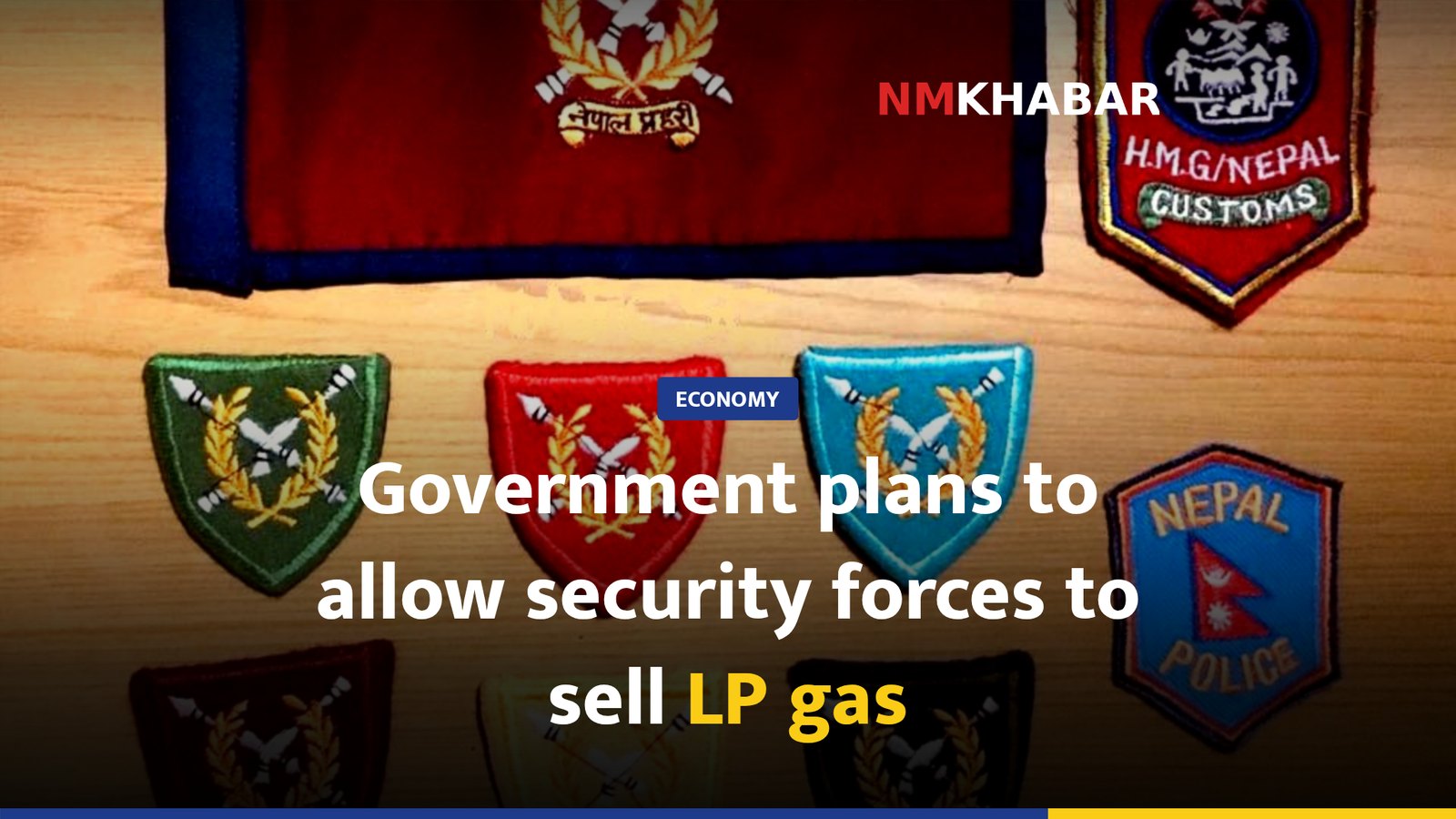
Nepal’s government is preparing to allow security bodies, including the Nepali Army, Nepal Police, and Armed Police Force, to sell cooking gas (LP gas) through their existing outlets. Rudrasingh Tamang, Secretary at the Ministry of Industry, Commerce and Supplies, announced the plan on Friday during a meeting of the National Assembly, the upper house of parliament’s Development, Economic Affairs and Good Governance Committee.
Secretary Tamang stated that allowing security bodies to distribute LP gas from their outlets would significantly ease the problem of gas shortages. The Nepali Army, Nepal Police, and Armed Police Force currently operate petroleum product sales points, and the plan is to add at least one or two LP gas sales centers to these existing outlets. Secretary Tamang said this initiative is expected to make gas more accessible to consumers and improve the overall distribution system.
Addressing Persistent Gas Shortages
Nepal has faced recurrent LP gas shortages, a long-standing issue for consumers. The problem led to the resignation of then-Minister of Industry, Commerce and Supplies, Gauri Kumari Yadav, on Bhadra 25 (BS) after controversy over her statements regarding gas supply. Following her resignation, Deepak Kumar Sah, a Rastriya Swatantra Party Member of Parliament from Sunsari-4, was appointed as the new Minister of Industry, Commerce and Supplies on the same day.
The Ministry has been actively working to mitigate supply issues. A Quick Response Team was formed on Saun 20 (BS) to address complaints and facilitate supply. On Saun 21 (BS), the Ministry formally requested the Indian government to provide 60,000 metric tons of gas per month for three months. Additionally, a landslide at Krishnabhir from Bhadra 10 to 20 (BS) had disrupted road access, further exacerbating gas supply problems.
Distribution System Weaknesses
Nepal Oil Corporation, the government-owned enterprise responsible for importing and distributing petroleum products in Nepal, has consistently claimed that the market does not suffer from a real gas shortage but rather from problems in the distribution system. The Nepal LP Gas Industry Association announced on Friday that the LP gas shortage observed across Kathmandu Valley and the country is gradually easing, with 60,000-70,000 cylinders being supplied daily to Kathmandu. Despite the easing supply, distribution challenges, such as dealers selling directly from their counters instead of supplying smaller shops, have led to consumer inconvenience.
Next Steps and Unanswered Questions
Minister Deepak Kumar Sah stated on Ashwin 5 (BS) that the Ministry is continuously working on immediate, medium-term, and long-term solutions to ensure smooth gas supply. The process to formally permit security bodies to sell LP gas is currently in the preparation phase, with the government anticipating that this arrangement will streamline supply management during shortages or emergencies.
However, several details remain unclear:
- The exact date for the formal approval of LP gas sales by security bodies has not been specified.
- A detailed action plan outlining the number and locations of gas sales centers to be operated by security bodies has not yet been made public.
- Further information regarding the pricing mechanism for gas sold by security bodies and the management of their supply chain is not available.
- The potential reactions of the public and gas industrialists to this new distribution system are yet to be seen.