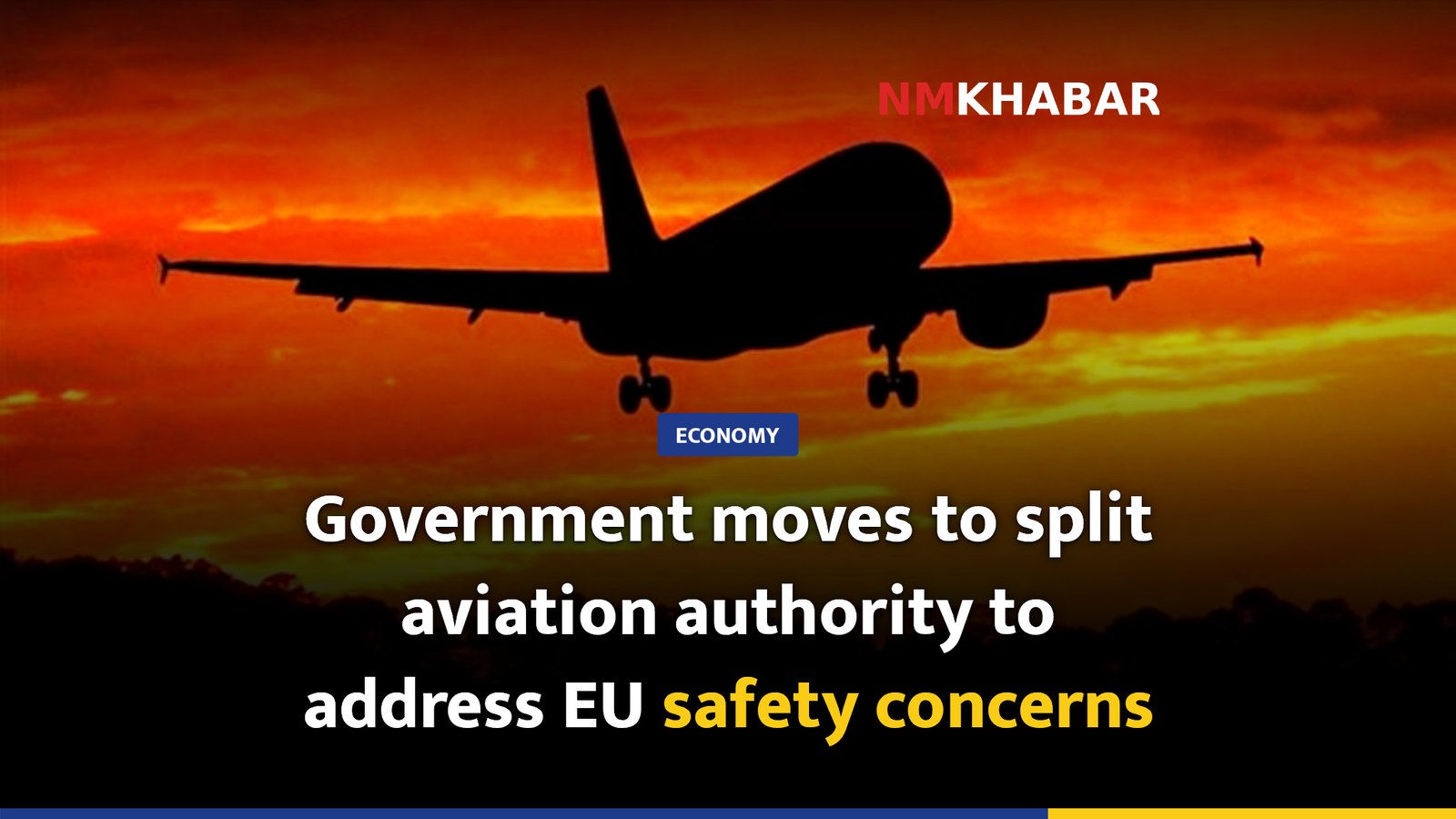
Nepal’s government has initiated the process to split the Civil Aviation Authority of Nepal (CAAN), the country’s aviation regulator and service provider, into two separate entities. This move aims to address long-standing international aviation safety concerns, particularly those raised by the European Union (EU) and the International Civil Aviation Organization (ICAO).
Two bills, the ‘Nepal Air Service Authority Bill, 2083’ and the ‘Nepal Civil Aviation Authority Bill, 2083’, were registered in the House of Representatives, the lower house of the federal parliament, on October 2, 2026. Culture, Tourism, and Civil Aviation Minister Khadakraj Paudel registered the bills, which propose to establish CAAN purely as a regulatory body, separating its service provider functions.
The theoretical concept and economic commentary of the bills acknowledge that CAAN’s existing dual role has adversely affected flight safety. Currently, CAAN performs both regulatory and service provider functions simultaneously within Nepal’s civil aviation sector. Once the new legislation is passed, CAAN will transform into a specialized institution solely focused on regulatory tasks.
Addressing International Concerns
The dual role of CAAN has been a continuous international concern for over a decade and a half. The issue was first highlighted in May 2009 during Nepal’s audit under ICAO’s Universal Safety Oversight Audit Programme. Subsequent audits have consistently recommended that the government prioritize the clear separation of service provider and regulatory functions.
The European Union (EU) has kept Nepal on its aviation safety list, often referred to as a “blacklist,” citing a conflict of interest arising from a single entity regulating and providing services in a sensitive area like air transport, which directly involves passenger safety. The government believes that the new legislation, by separating regulatory and service provision tasks into distinct institutions, will completely eliminate this conflict of interest.
The Auditor General’s Office has also recommended the swift passage of the two bills related to the Civil Aviation Authority of Nepal that have been presented to the federal parliament. This institutional reform is expected to directly help address the existing flight safety concerns of ICAO and the EU regarding Nepal’s civil aviation.
Timeline and Expectations
The EU first placed all Nepali airlines on its aviation safety list on December 5, 2013, primarily due to CAAN’s dual role and perceived shortcomings in effectively adhering to international standards. As of December 16, 2024, all 20 airlines licensed by CAAN remain on this safety list. Nine Nepali airlines, including Buddha Air, Yeti Airlines, Nepal Airlines, and Shree Airlines, are specifically listed in Annex A of the EU’s air safety list.
While Nepal was placed on ICAO’s Significant Safety Concern (SSC) list in 2013, it was removed in July 2017 after implementing necessary improvements. Previous attempts to split CAAN, including a bill registered in the National Assembly, the upper house of parliament, in February 2020 and passed in August 2021, lapsed with the end of the House of Representatives’ term.
Culture, Tourism, and Civil Aviation Minister Khadakraj Paudel expressed confidence that the new acts will lead to safer air services by ending the conflict of interest. Dr. Binod Prakash Singh, Secretary at the Ministry of Culture, Tourism, and Civil Aviation, had previously asserted on March 12, 2025, that the CAAN split bills would be passed soon, leading to Nepal’s removal from the EU safety list. Experts estimate that if the reforms are enacted this year (2026), the most realistic timeframe for removal from the EU ban could be by the end of 2027.
Uncertainties Remain
While the bills have been registered, a clear timeline for their discussion and passage in parliament is not yet available. The government anticipates that the split will address the EU’s concerns; however, the EU has not made any definitive announcement regarding when Nepal might be removed from its safety list. Specific implementation challenges beyond the general need for independent regulation and autonomous service provision have not been fully detailed. Past disagreements among employee organizations regarding the potential impact on staff services, benefits, and career development after the authority’s division also lack current information.