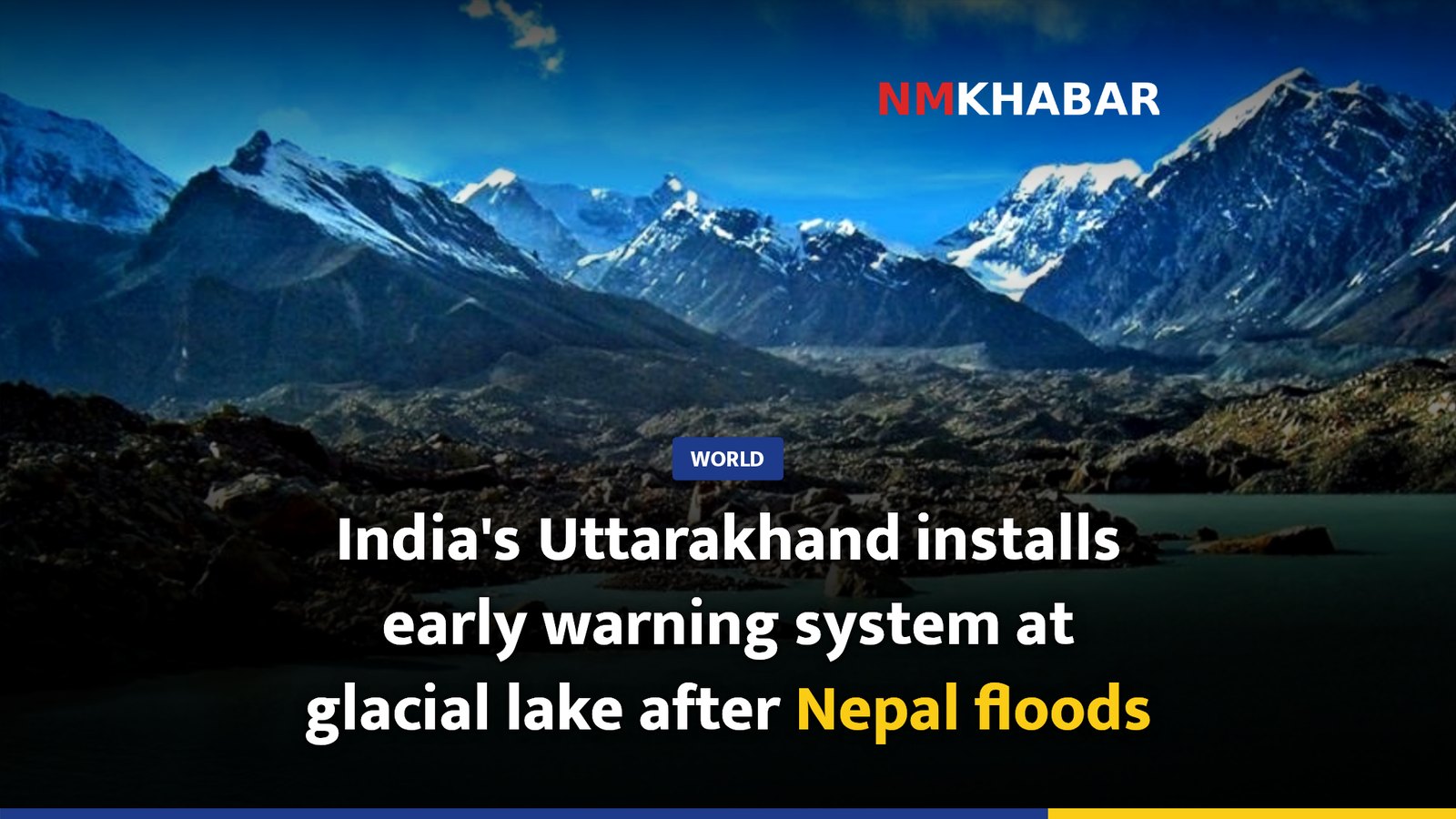
India’s Uttarakhand state has begun installing its first early warning system at the Vasudhara glacial lake in Chamoli district, a move prompted by the devastating floods in Nepal’s Rasuwa district on August 26, 2026. A team of scientists and technical experts departed Dehradun on Tuesday to set up the system, which aims to monitor the rapidly expanding lake and mitigate risks to downstream communities.
The state-of-the-art system, the first of its kind in Uttarakhand, will utilise advanced sensors, satellite communication, and real-time data to track changes in the Vasudhara lake. This will allow for timely prediction of potential hazards, according to the Uttarakhand government. The initiative is part of a broader effort to strengthen monitoring and early warning systems in the high-altitude Himalayan region.
Glacial Lake’s Rapid Expansion
The Vasudhara lake, also known as Vasundhara lake, has seen a significant increase in its water spread area. According to a 2024 report by the National Remote Sensing Centre (NRSC), the lake’s area has expanded nearly fivefold over the past six decades, growing from 10.53 hectares in 1962 to 51.07 hectares in 2024. This lake is formed on the surface of a glacier, reportedly from the confluence of several smaller lakes. The increasing size of the lake and the potential risk to settlements and critical infrastructure downstream are key reasons for installing the continuous monitoring and early warning system.
The installation campaign, which began on September 29, 2026, is proposed to continue until October 15, 2026. The team includes scientists and technical experts from the Central Building Research Institute (CBRI) in Roorkee and the Wadia Institute of Himalayan Geology in Dehradun. Security personnel from the State Disaster Response Force (SDRF), National Disaster Response Force (NDRF), and Indo-Tibetan Border Police (ITBP) are also accompanying the team to ensure safety and provide logistical support in the challenging high-altitude terrain.
Prompted by Nepal’s Rasuwa Floods
A catastrophic flood struck Nepal’s Rasuwa district on August 26, 2026. This sudden deluge, triggered by a massive rock-ice avalanche and an abrupt water surge from the Tibetan side into the Bhote Koshi river system, caused extensive damage in Rasuwa, Nuwakot, Dhading, and other areas downstream along the Trishuli River. As of September 30, 2026, 5,285 people remain missing, and 1,454 bodies or human remains have been recovered, though only 112 have been identified. Insurance companies have received claims totalling Rs 20.98 billion for damages from the Rasuwa floods.
Uttarakhand Chief Minister Pushkar Singh Dhami stated that the government is committed to strengthening modern monitoring and early warning systems in high-altitude areas through coordination among scientific institutions, experts, and disaster management agencies. The region itself has experienced similar disasters, including a glacial lake outburst flood in Chamoli in February 2021, which resulted in over 200 deaths or disappearances.
Comprehensive Monitoring and Warning
According to Dr. Amit Kumar, a scientist from the Wadia Institute of Himalayan Geology and a member of the expedition team, the current work focuses on four aspects: lake monitoring, early warning systems, public information dissemination, and risk reduction measures. Once the system is in place, it will provide real-time data on water level fluctuations, enabling continuous monitoring. “If necessary, people can also be alerted through sirens,” Dr. Kumar told BBC Hindi.
The project also involves mapping potentially affected areas, identifying homes, dams, and other structures downstream. Hydrographic surveys have already determined the lake’s water volume. The next step is to assess how quickly water would reach lower settlements if the lake burst, which will help determine response times and optimal locations for sirens and public awareness campaigns. Studies will also explore the feasibility of controlled water drainage to reduce the risk of future outbursts. The NRSC’s 2023 report identified 344 glacial lakes in Uttarakhand, with 13 classified as high-risk.