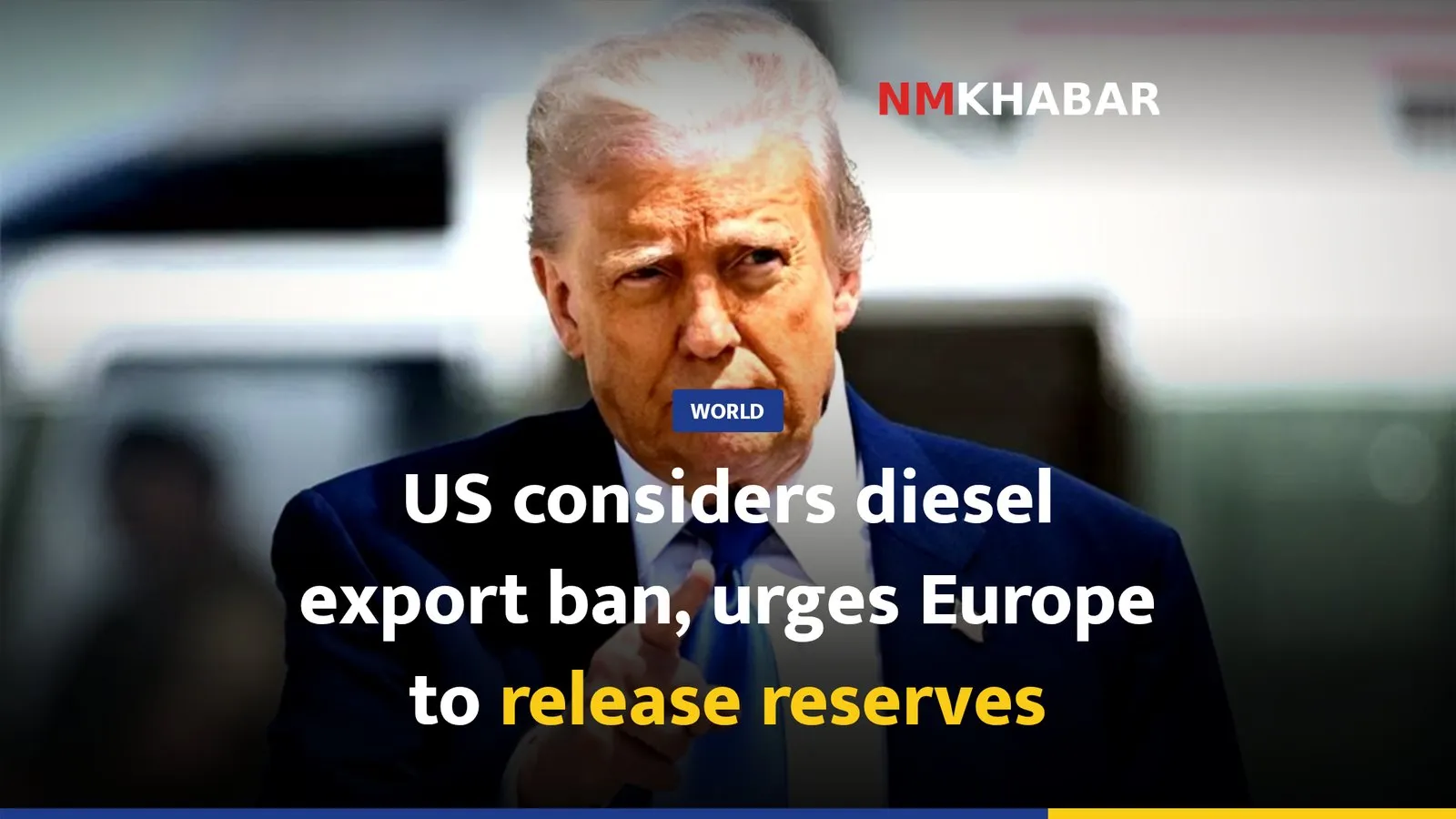
US President Donald Trump is considering banning diesel exports and has urged European nations to release their strategic reserves, as domestic inventories are at a 44-year record low percentile and prices remain historically high. The move comes as the US faces a deepening diesel crisis, exacerbated by global market volatility and upcoming midterm elections.
US Treasury Secretary Scott Bessent stated that the burden of rising prices should not fall on American farmers, truck drivers, and businesses. His remarks followed President Trump’s indication that he might ask European countries to release a portion of their diesel stockpiles into the market if needed.
According to the US Energy Information Administration (EIA), as of September 18, 2026, US diesel reserves stood at a mere 107.4 million barrels. This figure places reserves in the 14th percentile over a 44-year record, marking them as historically low. Of particular concern are East Coast reserves, which are at the first percentile in 37 years.
The average price of diesel in the US reached a record high of $6.53 per gallon on September 22, 2026. While it slightly decreased to $6.382 per gallon by September 28, it remains significantly elevated. Globally, Brent crude oil prices surged to $102.30 per barrel on Friday, October 2, 2026, driven by the ongoing conflict in Iran and the risk of disruptions in the Strait of Hormuz.
Europe under pressure to release reserves
The United States is a major global supplier of diesel, exporting approximately 1.2 to 1.5 million barrels daily. Experts warn that an American ban on diesel exports could intensify price pressures and supply shortages in other countries.
In response to US pressure, major European nations held emergency talks on Thursday, October 1, 2026, to discuss how to react to calls for releasing strategic fuel reserves. The European Union is coordinating a joint stance on the matter. UK Local Energy Minister Martin McCluskey also discussed the release of diesel reserves with European partners on Thursday.
However, European Trade Chief Maros Sefcovic commented that a potential US export ban would be “unexpected for Europeans,” suggesting a divergence in understanding between the two sides. Despite this, US Energy Secretary Chris Wright anticipates that European countries will soon announce plans to bring more fuel to the market.
Midterm elections and coordinated response
Fuel prices and supply have become a critical issue for American voters ahead of the US midterm elections, scheduled for November 3, 2026. The Trump administration views an export ban as a potential option to address these concerns.
European Union member states are set to meet with the European Commission on Friday, October 2, 2026, to discuss a coordinated response to the escalating fuel prices. The final decision on whether the US will implement a diesel export ban has not yet been publicly announced. It also remains unclear how much and when European countries will release their strategic diesel reserves in response to American pressure. The long-term implications of the Iran conflict on oil market stability also continue to be a source of uncertainty among oil executives.