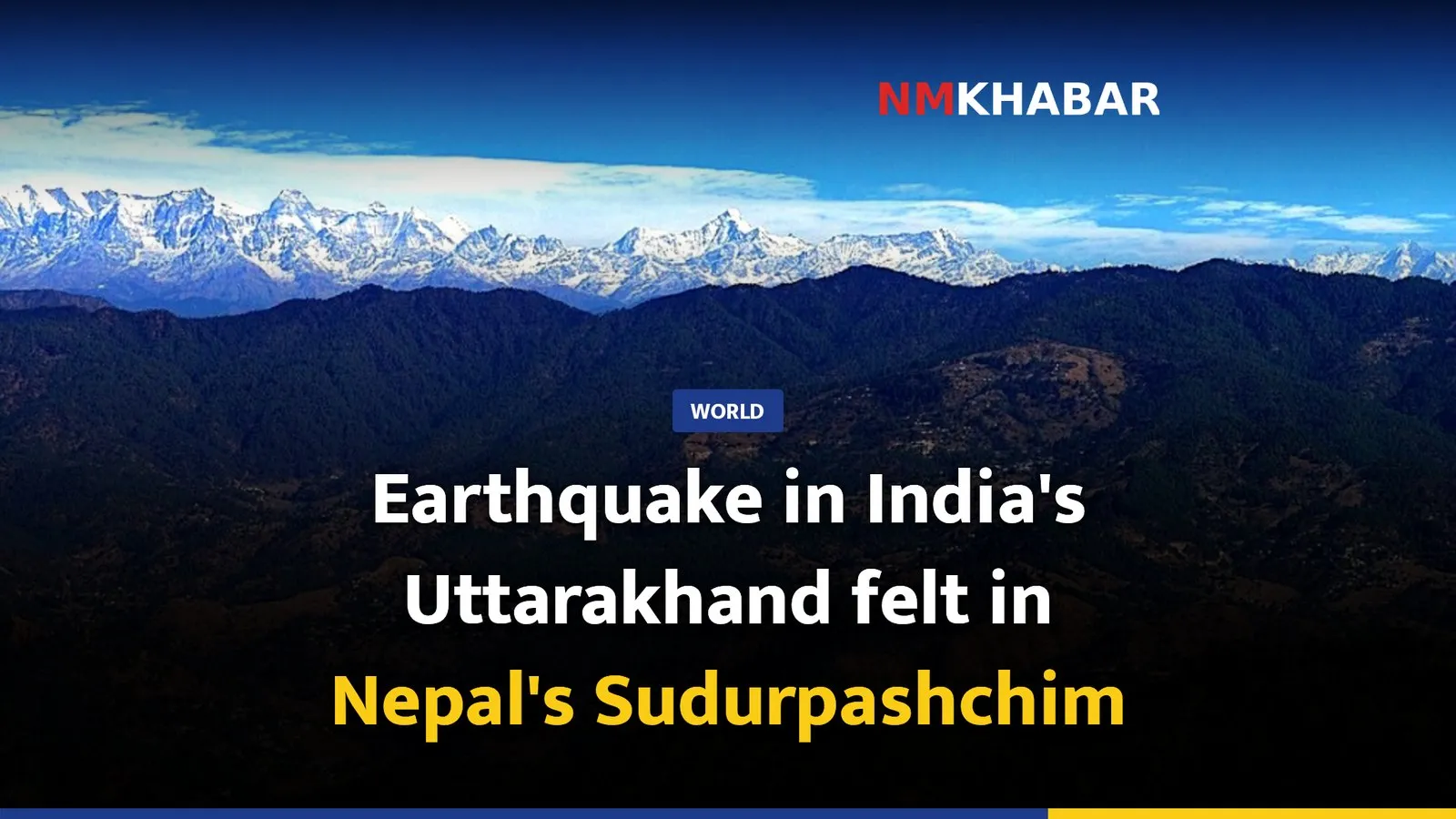
A 5.1-magnitude earthquake struck India’s Uttarakhand state on October 6, 2026, with tremors felt across Nepal’s Sudurpashchim Province, according to Nepal’s National Earthquake Monitoring and Research Centre (NEMRC). The earthquake, which occurred at 10:38 PM, had its epicenter in the vicinity of Uttarakhand, approximately 100 kilometers from Darchula, Nepal.
While no human casualties or material damage have been reported in either India or Nepal so far, the magnitude of the earthquake remains a point of discrepancy. The NEMRC recorded it at 5.1, but Indian media outlets reported magnitudes of 3.5 in Bageshwar and 4.9 in Chamoli, both in Uttarakhand, around 10:23 PM. Tremors were also felt in the hilly and plain regions of Uttarakhand, as well as in Delhi-NCR.
Series of tremors across Nepal and border regions
The Uttarakhand earthquake is one of several tremors experienced in Nepal and its border areas over recent days. On October 6, 2026, at 9:53 PM, a 4.6-magnitude earthquake was felt in Kathmandu, with its epicenter near the Nepal-China border, approximately 61 kilometers from Manang in Gandaki Province.
Earlier, on October 5, 2026, a 5.0-magnitude earthquake struck near the Nepal-China border, centered in Dinggye County, Shigatse, China, with tremors felt in Nepal’s northern regions. The same day, at 11:14 AM, a 4.1-magnitude quake occurred with its epicenter at Charangephedi, Dhading.
Nepal has witnessed an increase in seismic activity, with over 20 earthquakes exceeding 4.0 magnitude recorded in its eastern and western regions since Kartik 2079 (BS).
Nepal’s seismic vulnerability and expert warnings
Nepal is situated in one of the world’s most active seismic zones, the Himalayan tectonic region, and has a long history of devastating earthquakes. Notable past events include the 1255 (7.8 magnitude), 1934 (8.3 magnitude), 1988 (6.9 magnitude), and 2015 Gorkha (7.6 magnitude) earthquakes. Experts suggest that Nepal experiences 8-magnitude earthquakes every 500 to 1,000 years and 7-magnitude quakes every 100 years.
Uttarakhand, India, is also a highly earthquake-prone state. Scientists have warned since July 2026 of continuous geological stress accumulating under the Main Himalayan Thrust (MHT), indicating the potential for moderate to large earthquakes in the future.
The August 26, 2026, earthquake near the Nepal-China border (recorded at 5.2 magnitude by USGS) triggered snow-rock avalanches, devastating landslides, and flash floods in Rasuwa, Nepal, resulting in at least 98 deaths in Nepal and three in Tibet. This event highlighted the potential for seismometers to detect and provide early warnings for such secondary hazards.
Calls for improved disaster preparedness and policy
Dr. Dharmaraj Upreti, Executive Chief of the National Disaster Risk Reduction and Management Authority (NDRRMA), emphasized on October 5, 2026, that post-disaster reconstruction standards must vary according to the nature of the disaster. He noted that current earthquake reconstruction standards, which provide Rs 50,000 in two installments for temporary housing, are insufficient for flood victims. Dr. Upreti advocated for incorporating scientific information into policy-making and enhancing institutional capacity for disaster risk reduction.
President Ramchandra Paudel, on April 25, 2026, underscored the importance of adopting effective measures for earthquake risk reduction and raising public awareness regarding preparedness, response, and protective actions. Nepal observes National Earthquake Safety Day on Magh 2 (BS) to commemorate the Great Earthquake of 1990 BS (1934 AD).
The full extent of damage from the October 6, 2026, earthquake in India’s Uttarakhand and Nepal remains unclear. Official responses or further details from Indian authorities have not yet been received.