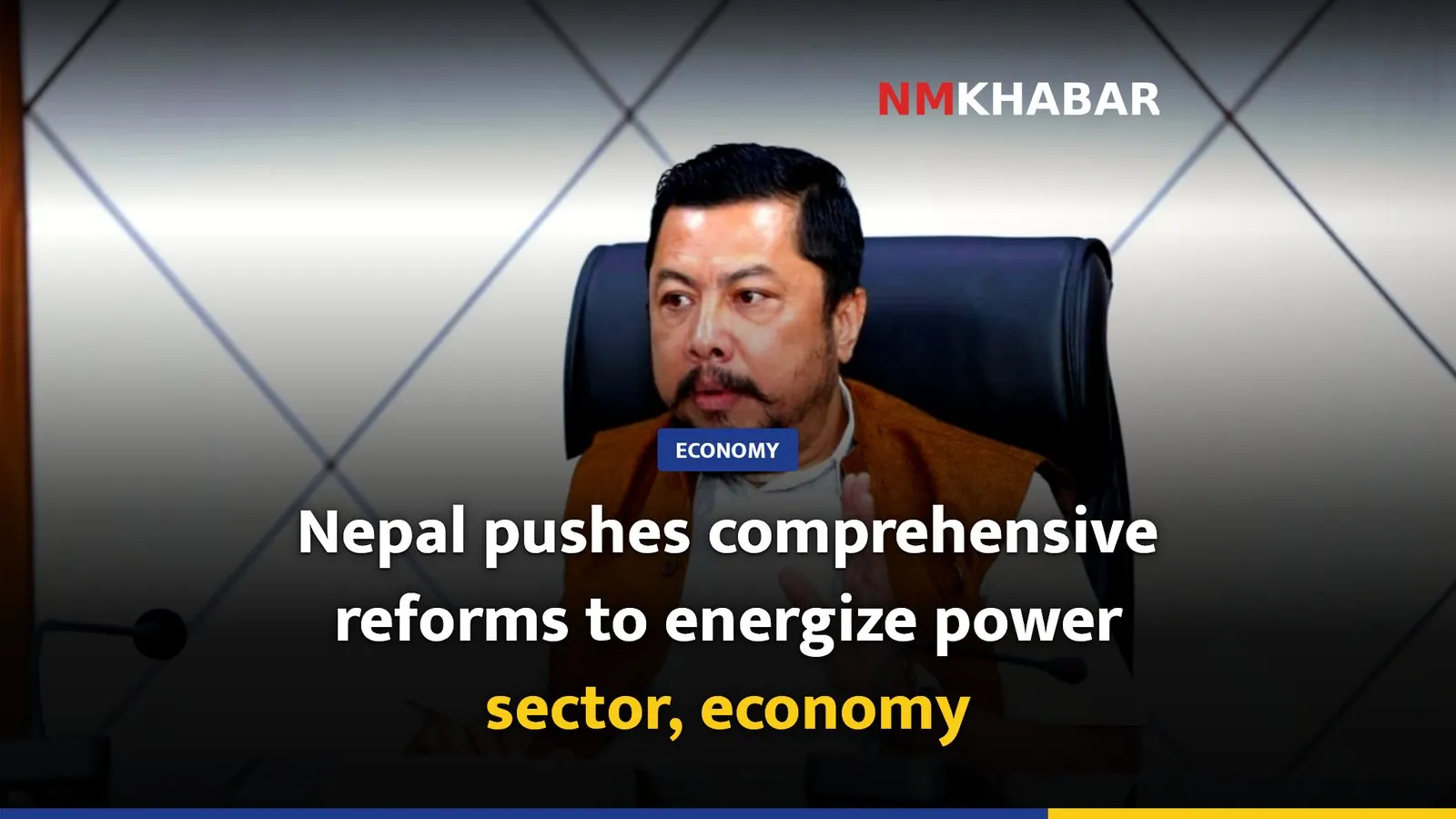
Nepal’s energy sector is undergoing a significant transformation, moving beyond mere electricity production to become a pivotal driver of the national economy. Under the leadership of Energy, Water Resources, and Irrigation Minister Birajbhakta Shrestha, the government is implementing a series of reforms aimed at revitalizing stalled investments, attracting new capital, and integrating power generation with transmission and market access.
The initiatives encompass extending project completion deadlines, establishing new Power Purchase Agreement (PPA) standards, promoting private sector involvement in transmission infrastructure, setting grid usage fees, and amending the Electricity Act to facilitate private power trading.
Project Completion and PPA Standards
In a crucial move to expedite development, Nepal Electricity Authority (NEA), Nepal’s energy sector’s primary institution, has extended the Required Commercial Operation Date (RCOD) for 27 projects, totaling 540.47 megawatts (MW), in its first phase. Currently, 320 projects with a combined capacity of 8,292 MW are under construction. Projects are categorized into four groups based on progress and PPA obligations, with ‘C’ category projects slated to receive a Notice of Default. Private energy producers have expressed satisfaction with this process.
Furthermore, a subcommittee formed by the Nepal Electricity Authority (NEA) Board to prepare criteria for opening new Power Purchase Agreements (PPAs) has submitted its report. The decision and implementation of these standards, which consider project readiness, transmission access, and financial arrangements, now rest with the NEA Board. Energy producers had previously voiced concerns over delays and policy instability, and they now anticipate practical clarity.
Transmission and Market Access
Addressing the persistent challenge of power projects being ready while transmission lines lag, the government is actively engaging the private sector. The West Seti 400 kV transmission line, approximately 145 kilometers long with an estimated cost of Rs 20 billion, is being advanced under a Public-Private Partnership (PPP) model. A separate company has already been registered for this project, following a public notice issued on Shrawan 15, 2083 (July 30, 2026). The NEA has also initiated a Competitive Bidding (TBCB) process, inviting Expressions of Interest (EOI) from private and international companies for the development of four other transmission lines.
To facilitate direct electricity transactions between producers and consumers, Nepal Electricity Regulatory Commission (NERC), the autonomous body regulating electricity generation, transmission, distribution, and trade, has determined wheeling charges for the fiscal year 2083/84. For medium and long-term access, the charge is set at Rs 413,000 per MW per month, while short-term access will cost 57 paisa per unit. This aims to create a financial framework for competitive electricity trading.
Electricity Trading and Storage Reforms
The private sector’s entry into electricity trading remains a key focus. Currently, private companies are not licensed for power trading, a privilege enjoyed by a subsidiary of the NEA, leading to complaints of discrimination from private players. A proposal to amend the Electricity Act, incorporating provisions for electricity trading, has been sent for amendment, according to the Ministry. Once the amendment is passed and regulatory frameworks are established, private companies can be issued licenses.
In the interim, the Ministry has advanced proposals to issue No Objection Certificates (NOCs) or Letters of Intent (LOIs) to prospective private power trading companies. These are preparatory steps for a future market, not final trading licenses, and do not automatically grant rights for specific power volumes or cross-border trade.
Recognizing the increasing integration of intermittent renewable sources like solar power, the NERC’s roadmap includes developing rates and guidelines for power purchase from energy storage projects. Discussions are ongoing to finalize these rates, crucial for maintaining grid stability and balancing supply with demand.
Outlook and Unresolved Questions
These comprehensive reforms are expected to stimulate project construction, generate employment, mobilize investments in the banking sector, and boost export earnings. However, the actual impact hinges on the timely completion of these projects. Last fiscal year, the government only managed to connect 561 MW to the national grid against a target of 942 MW.
The success of these interconnected initiatives hinges on the effective implementation of PPA standards, timely completion of RCOD-extended projects, accelerated transmission line construction, progress on the Electricity Act amendment, and finalization of Battery Energy Storage System (BESS) rates. These factors will determine whether Nepal’s energy sector truly transforms from merely adding megawatts to driving broader economic change.
Several aspects remain unclear, including the detailed criteria for categorizing projects for RCOD extensions, the specific names of the four transmission lines under the TBCB process, the comprehensive draft of the Electricity Act amendment, and the timeline for its re-submission to parliament. The name of the separate company registered for the West Seti transmission line is also yet to be publicly disclosed.