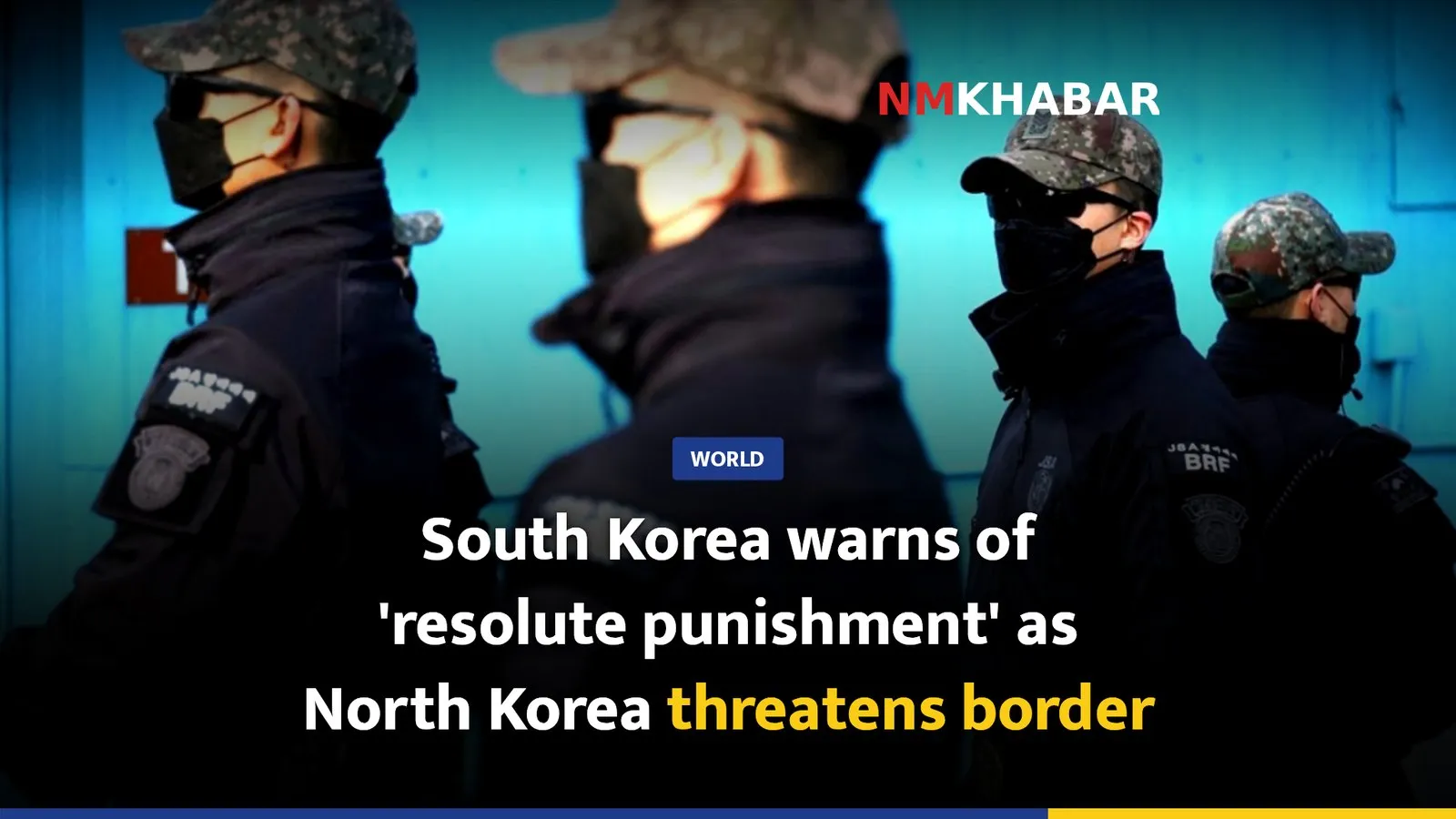
South Korea on Tuesday vowed a stern response if North Korea acts on threats to strengthen its military posture along the border, which have fueled tensions on the Korean Peninsula. Seoul’s Defence Ministry expressed grave concern over Pyongyang’s threats to deploy additional tactical strike weapons along the border and resume loudspeaker broadcasts towards the South.
This escalation and exchange of threats risks undercutting diplomatic gains made by South Korean President Lee Jae Myung soon after he took office in June 2025.
Escalating military threats at the border
The Defence Ministry said South Korea’s broadcasts and warning shots near the Military Demarcation Line (MDL) were a “legitimate defensive measure” aimed at preventing incursions and forcing North Korean troops who crossed the line to withdraw. “If North Korea uses our legitimate measures as a pretext to carry out further provocations, we will punish it resolutely,” the ministry said.
South Korea’s Joint Chiefs of Staff Chairman Jin Young-seung reviewed military readiness while visiting a frontline army command, and ordered operations aimed at strengthening Seoul’s initiative in the Demilitarized Zone. Jin stated that South Korea “cannot tolerate North Korea falsely characterising our legitimate operational measures as provocations and shifting responsibility for heightened military tensions onto our military.”
The warnings from Seoul came after North Korea’s Kim Yo Jong, sister of leader Kim Jong Un, accused the South Korean military of endangering North Korean soldiers by firing warning shots during Pyongyang’s work to fortify the border. Her threat to revive North Korean loudspeaker broadcasts risks reversing a key de-escalation measure that President Lee Jae Myung had touted as an early achievement of his efforts to restart diplomacy with Pyongyang.
Border fortification and landmine legacy
North Korea has been installing mines, barriers, and strategic roads along the MDL since April 2024. South Korea said this month that Pyongyang had deployed as many as 7,000 workers to the area this year and that North Korean personnel had crossed the MDL on about 50 occasions. Last month, South Korean soldiers were seriously wounded by landmines planted south of the MDL, an incident Seoul called “a clear provocation” and a violation of the armistice agreement.
South Korea first began propaganda broadcasts via loudspeakers in the 1960s, stopping in 2004, resuming in 2015 after border incidents and a nuclear test in 2016, and then halting again in 2018 amid improved inter-Korean diplomacy. In June 2024, Seoul resumed loudspeaker broadcasts after North Korea sent trash-filled balloons into the South. However, on June 11, 2025, newly elected President Lee Jae Myung ordered a halt to South Korea’s loudspeaker broadcasts, and on August 5, 2025, the removal of cross-border loudspeakers began.
Nepal’s concern and future challenges
The escalating tensions on the Korean Peninsula are also a concern for Nepal. As of August 18, 2026, approximately 100,000 Nepali citizens reside in South Korea, making them the sixth-largest foreign community in the country. The Nepali government has confirmed intensive discussions on efforts to establish peace and denuclearisation on the Korean Peninsula and has long maintained a supportive stance for Korea’s peaceful reunification.
Analysts warn that the standoff increases the risk of a military clash. Hong Min, a senior research fellow at the Korea Institute for National Unification, stated, “If North Korea’s threshold falls below South Korea’s existing rules of engagement, the simple repetition of current procedures could be enough to create the conditions for a clash.” Michael Bosack, founding director of the Parley Policy Institute and a former UN Command official, cautioned that troops could mistake warning shots for missed attacks, risking “misinterpretation of intent and potential counterfires.”
South Korea has urged Pyongyang to stop making what it called groundless claims, halt incursions across the MDL, and respond to efforts to resolve differences between the two sides over the line. North Korea is considering resuming loudspeaker broadcasts against South Korea and deploying more tactical strike weapons along the southern border. North Korea’s border fortification project is expected to be completed around 2028.
The specific details of the “additional tactical strike weapons” North Korea has threatened to deploy remain unclear. It is also unclear how North Korea will redefine inter-Korean relations in its constitution, especially after leader Kim Jong Un declared them “two hostile states,” or if it will remove the principle of peaceful reunification with South Korea from its constitution.