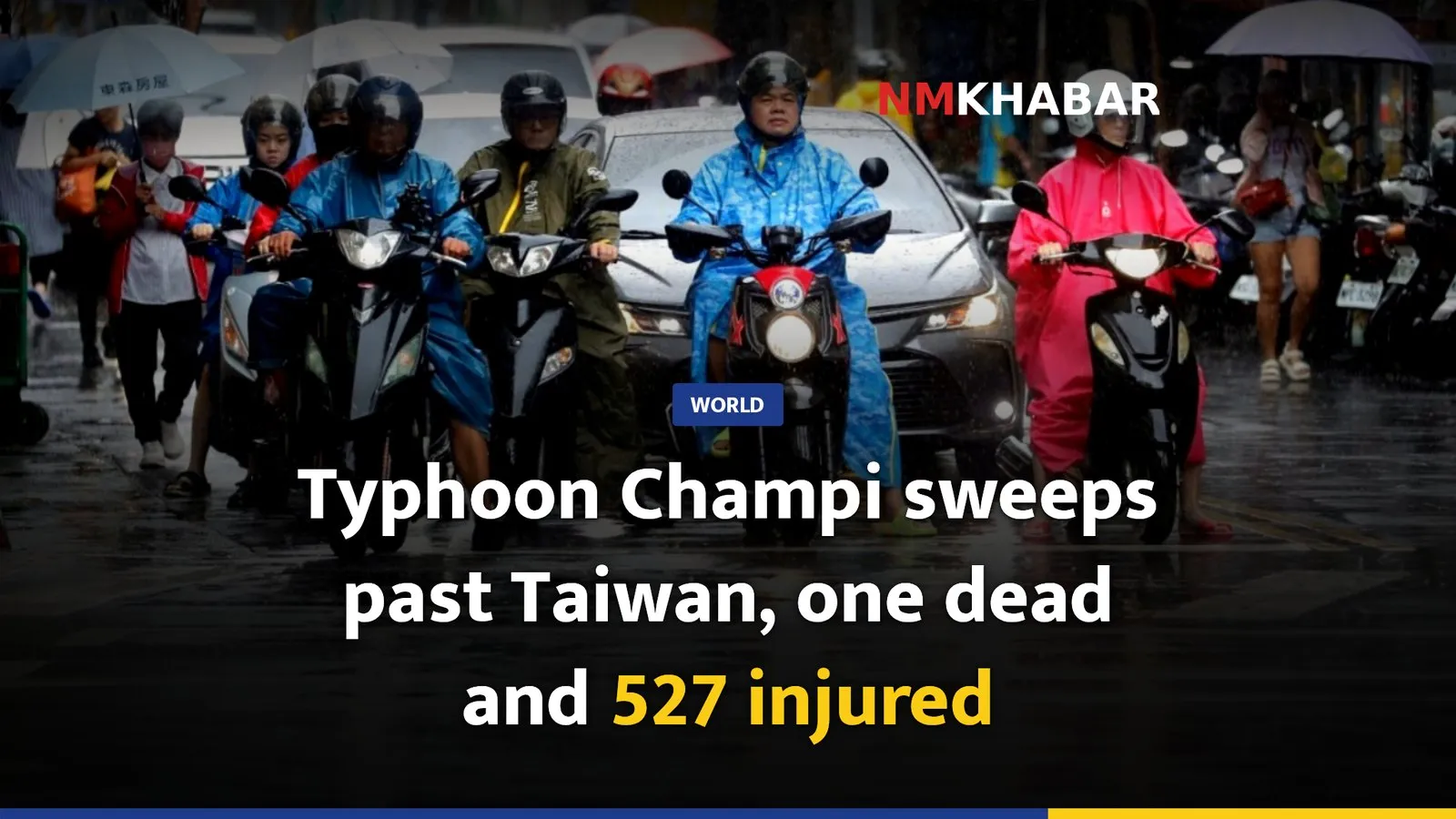
Typhoon Champi swept past Taiwan on Saturday, killing one person and injuring 527 others, according to Taiwan’s fire department. The storm downed trees, severed power, and caused widespread disruption as it continued to weaken and head north toward the Chinese coast.
The fatality was a man swept away by waves from the island of Liuqiu, the fire department reported. At one point, more than 167,000 homes lost electricity, though most had been reconnected, said Taipower, Taiwan’s electricity supply company.
Taiwan’s Central Weather Administration (CWA), the government agency providing weather information, stated that while the typhoon is weakening, it is still packing gusts of around 126 kilometers per hour (78 mph) near its center. The storm was approximately 150 kilometers (93 miles) east of Taiwan, having glanced the island’s northeast coast in the early hours of Saturday.
In the capital Taipei, residents experienced downed trees and intermittent squally rain showers. A swathe of northern and central Taiwan, including Taipei, declared a second day of office and school closures on Saturday.
The transport ministry announced 242 flight cancellations, a significant improvement from Friday, October 23, 2026, when nearly 1,000 flights were canceled due to the storm.
Storm’s Trajectory and Prior Warnings
The storm’s forecast track indicates it is now turning north toward the Chinese coast and is expected to eventually move into southern Japan. Typhoon Champi was at one point a super typhoon and one of the strongest storms in the Pacific this year.
On Friday, October 23, 2026, 94 people were injured in Taiwan due to Typhoon Champi, and more than 1,200 people were evacuated from their homes. The CWA had reported more than 200 millimeters of rainfall in some areas of Taipei within 24 hours at that time.
Taiwan’s President Lai Ching-te had urged the public on Thursday, October 22, 2026, to prepare for the typhoon and avoid mountainous and coastal areas. The CWA had also warned on Thursday, October 22, 2026, that the typhoon’s impact could last for approximately two days, with winds exceeding 227 kilometers per hour (141 mph) near its center and a range extending up to 320 kilometers (199 miles).
Ongoing Impacts and Future Outlook
Taiwan is generally well-prepared for typhoons, which helps keep casualties low, although these storms can strike in autumn as well as summer. Authorities had advised people to avoid beaches and mountainous areas, and those in landslide-prone northeastern coastal areas were evacuated.
The full extent of the damage caused by Typhoon Champi in Taiwan is not yet clear. There is currently no official data or information available regarding the number of Nepali citizens in Taiwan or how they have been affected by the typhoon. Detailed information about the impact on Taiwan’s agricultural sector is also unavailable, as are further details on the total number of canceled flights and passenger inconveniences.
Typhoon Champi is the latest storm in this year’s busy Pacific typhoon season, fueled by unprecedented temperature increases in the equatorial Pacific due to the El Niño weather phenomenon. The United Nations stated on Friday, October 23, 2026, that the El Niño system is peaking, and countries need to take immediate steps to prepare for the worst, with its humanitarian impacts expected to continue into 2027 and beyond.