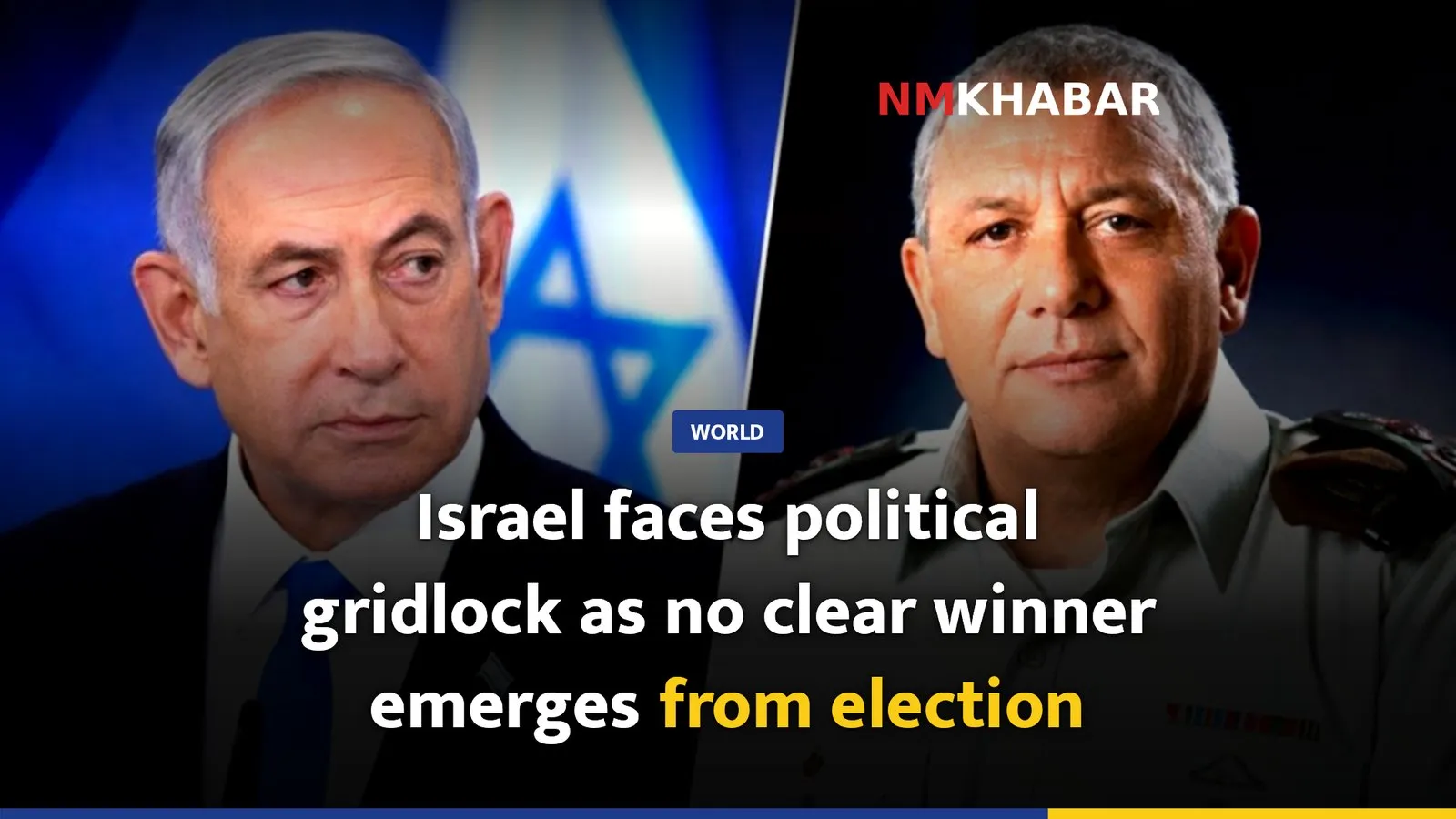
Israel is facing political gridlock after its parliamentary election on October 27, 2026, as neither Prime Minister Benjamin Netanyahu’s coalition nor the opposition led by Gadi Eisenkot secured the necessary 61 seats for a majority in the 120-member Knesset.With 85.6 percent of the votes counted, Netanyahu’s coalition has garnered 53 seats, while Eisenkot’s coalition has secured 48 seats, according to data released by Israel’s Central Election Committee. Arab parties collectively obtained 19 seats, leaving both major blocs short of the required majority to form a government. The full election results are expected to be announced by Thursday evening or Friday morning (October 29, 2026).This outcome has sparked debate over four potential options for forming a new government: a national unity government under Netanyahu, an Eisenkot-led coalition supported by Arab parties, Netanyahu’s attempt to secure a majority by including right-wing opposition parties, or a new election.One possibility involves Netanyahu inviting Eisenkot to join a national unity government. However, this would require Eisenkot to backtrack on his primary campaign pledge to remove Netanyahu from power. Eisenkot had previously urged Netanyahu to ‘announce his retirement from political life today,’ criticizing what he called Netanyahu’s ‘culture of lies’ and divisive political style.Alternatively, an Eisenkot-led government could seek support from Arab parties. While an independent Arab party formally joined Israel’s coalition government in 2021, that administration was short-lived. Most Jewish parties in Eisenkot’s coalition have historically rejected forming a government with Arab parties. However, Arab parties performed notably well in this election, projected to secure a record 19 seats, driven by increased voter turnout among the Arab community, many of whom identify as Palestinian-Israelis.The United Arab List is estimated to win around seven seats and has indicated a willingness to join an opposition government, while the Joint List, projected to win about 12 seats, has stated it would support a government from outside. Only Yair Golan of the Democrats has openly advocated for such an alliance among Jewish leaders.In the absence of a clear majority, Israel’s President Isaac Herzog will consult with representatives from each elected party in the Knesset before tasking a candidate with forming a government. The designated candidate will have 28 days to build a coalition, with a possible 14-day extension.If the first candidate fails, a second candidate will be given the same opportunity. Should both attempts fail, a 21-day period begins during which at least 61 Knesset members can request a specific member to form a government. If no candidate succeeds after 14 days, or if no candidate is nominated, the Knesset will be dissolved, and a new election will be scheduled within 90 days. The outgoing government will remain in a caretaker capacity until a new government is formed.
Background
- Israel has experienced a prolonged political crisis from 2018 to 2022, leading to five consecutive elections.
- The current uncertainty follows a period of intensified military operations in Gaza and other areas after the Hamas attack on October 7, 2023.
- In Israel, voters do not directly elect the prime minister; they vote for political parties, and the election system is based on proportional representation.
- A new government will remain in a caretaker capacity until a new government is formed.