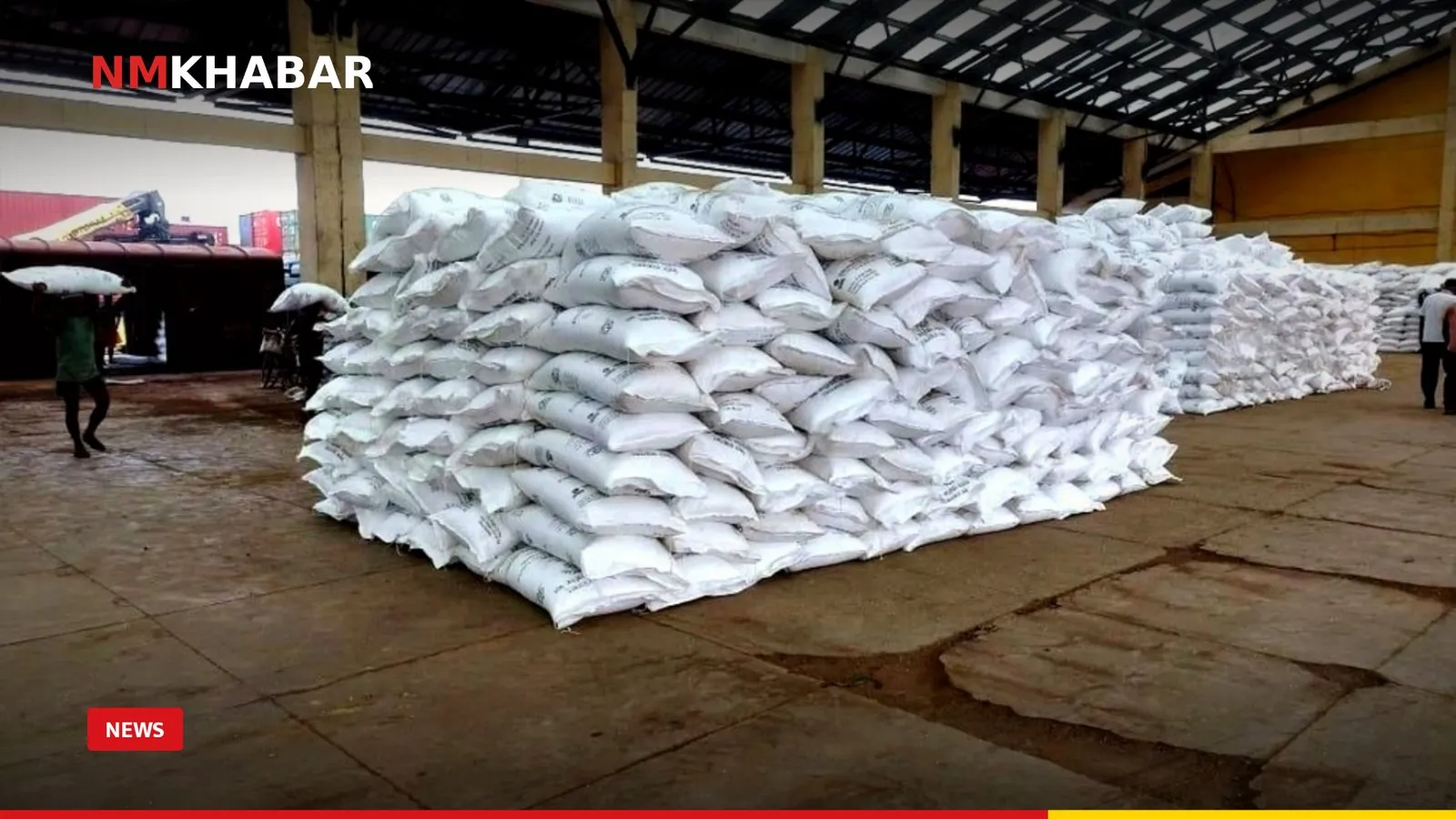
Nepal has received 18,715 tons of chemical fertilizers, including 11,630 tons of urea and 7,085 tons of DAP, through the Birgunj customs point in Madhesh Province over the past six weeks. This import is part of a government-to-government (G2G) agreement with India and is intended to support the upcoming winter crops.
According to Dinesh Sharma, chief of the Agriculture Inputs Company’s provincial office in Birgunj, this consignment represents 38 percent of the total 50,000 tons of urea and DAP purchased from India through the G2G process. The remaining fertilizer will be distributed to provincial offices in Biratnagar and Bhairahawa, with some of the supply for Bhairahawa also arriving via Birgunj.
The Agriculture Inputs Company, a fully government-owned entity, stated that the imported fertilizer will be distributed for winter crops, especially wheat and oilseed cultivation, which typically see increased demand for urea and DAP. Sharma confirmed that arrangements are being made to send the fertilizer received in Birgunj to its respective provincial offices.
Nepal requires approximately 700,000 metric tons of chemical fertilizer annually, though 520,000 metric tons can suffice. In the last fiscal year, 538,436 metric tons of chemical fertilizer were supplied, with the government providing Rs 39.75 billion in subsidies. From mid-March to mid-October of the current fiscal year, 257,000 metric tons of fertilizer have been imported, supported by Rs 18.90 billion in subsidies, as reported by Dr. Rajendra Prasad Mishra on October 1, 2026.
The Ministry of Agriculture and Livestock Development projects that 177,000 metric tons of urea will be available for wheat cultivation from mid-October to mid-January, exceeding the required 136,000 metric tons. Additionally, the government is moving forward with the purchase of an extra 25,000 metric tons of DAP through its agreement with the Indian government.
Effective from July 17, 2023, the subsidized selling prices for chemical fertilizers are Rs 25 per kilogram for urea, Rs 50 per kilogram for DAP, and Rs 40 per kilogram for potash. These prices were adjusted after the government reduced the subsidy rate from 70.82 percent to 59.04 percent on March 13, 2023, leading to an increase of Rs 11 per kilogram for urea, Rs 7 for DAP, and Rs 9 for potash.
While the current imports are expected to meet the immediate needs for winter crops, the long-term plan for establishing a chemical fertilizer factory in Nepal remains in the study phase. Investment Board Nepal has indicated that a task force is reviewing a detailed feasibility study report submitted by the German company DIEC Industries. However, the current year’s budget does not mention a fertilizer factory, and Hari KC, spokesperson for the Ministry of Agriculture and Livestock Development, stated that there are no concrete plans for a chemical fertilizer factory within the Ministry.
Background
- The use of chemical fertilizers in Nepal began after 1950.
- The Agriculture Inputs Company Limited was established in 1966 under the Ministry of Agriculture to facilitate fertilizer imports.
- The government started providing subsidies on fertilizers in 1974, and since the fiscal year 2065/66 (2008/09 AD), it has been subsidizing urea, DAP, and muriate of potash based on cost-sharing.
- A memorandum of understanding was signed between the Nepali and Indian governments on February 28, 2022, for a five-year G2G agreement to purchase chemical fertilizers, with 150,000 tons (100,000 metric tons of urea and 50,000 metric tons of DAP) expected in the first year.