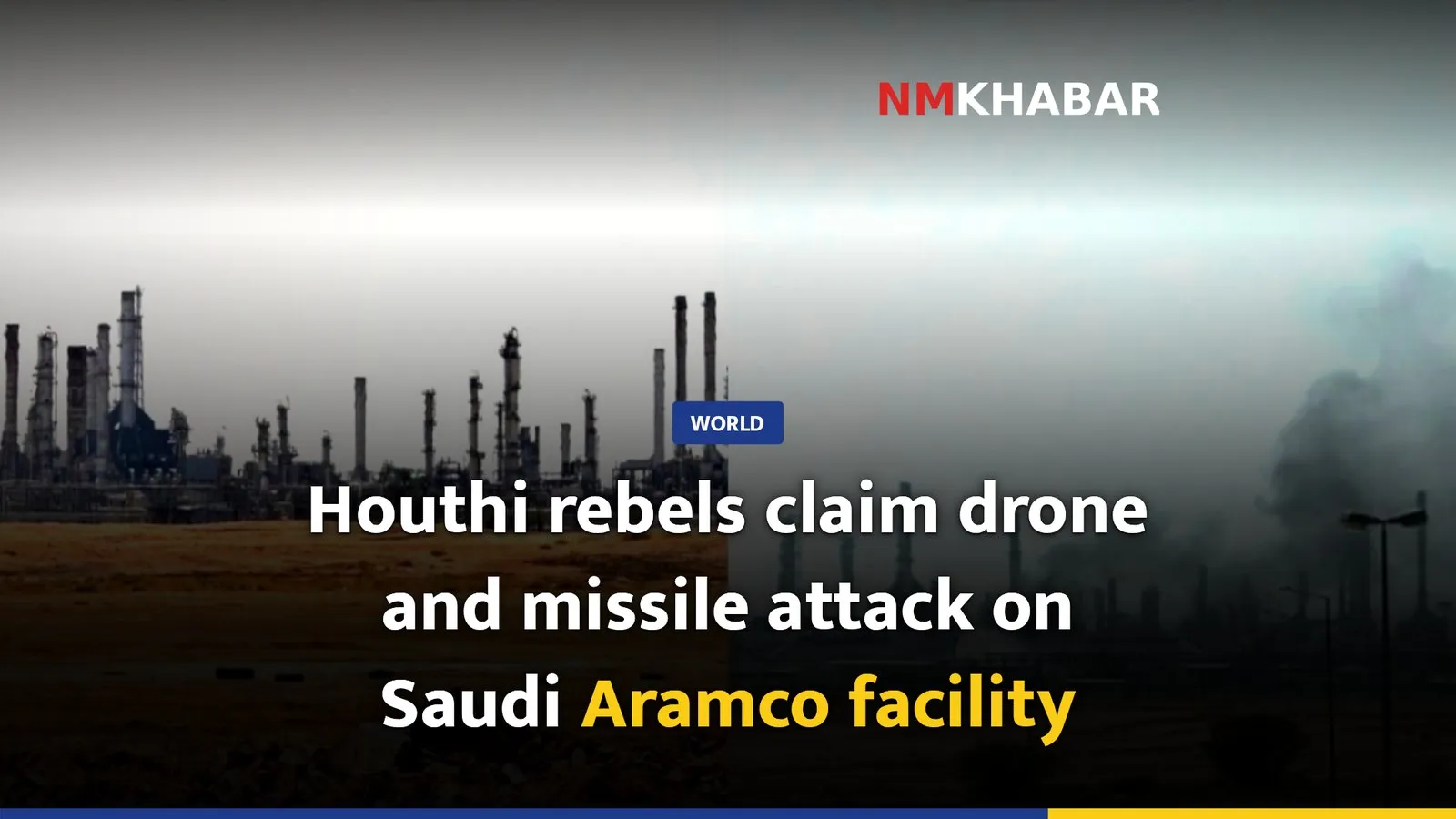
Yemen’s Iran-backed Houthi rebels claimed responsibility for a drone and ballistic missile attack on a Saudi Aramco oil processing plant near Saudi Arabia’s capital, Riyadh, on Saturday, October 3, 2026. The group stated the attack was a direct response to Saudi airstrikes in Yemen.
Houthi military spokesperson Yahya Saree announced in a televised statement the group targeted the Aramco oil processing plant located south of Riyadh. He claimed the attack damaged the targeted area and achieved its objectives.
On Saturday afternoon, a large plume of smoke and fire was observed near an Aramco oil processing plant south of Riyadh, with firefighters reportedly deployed to the scene. However, Saudi officials or Saudi Aramco, Saudi Arabia’s state-owned oil and natural gas company and one of the world’s largest oil producers, have not yet provided any immediate information regarding the incident’s cause or the extent of any damage.
Turki al-Maliki, spokesperson for the Saudi-led coalition supporting Yemen’s internationally recognised government, dismissed the Houthi’s claim of targeting Riyadh as “misleading.”
Escalation of Conflict
Saree stated the attack was in retaliation for Saudi Arabia’s aerial operations in Yemen’s capital, Sanaa, and other regions. He claimed approximately 60 airstrikes had occurred in Houthi-controlled areas of Yemen over the past 24 hours, bringing the total number of strikes since the recent escalation began to between 1,350 and 1,420.
The Houthi group, also known as Ansarallah, has consistently warned of further attacks on Saudi Arabia. This latest incident marks a significant escalation in the long-running conflict between Saudi Arabia and the Houthi rebels, which has seen various infrastructures, including oil facilities, targeted by both sides.
Background to the Yemen War
Saudi Arabia has led a military coalition supporting Yemen’s internationally recognised government against Houthi forces since March 2015. The Houthis gained control of Sanaa and several provinces in September 2014. Hostilities reignited after a four-year fragile truce when Iran sent a Houthi delegation-carrying plane to Sanaa without Saudi permission. Riyadh responded by attacking Sanaa airport, prompting the Houthis to launch their first attack on Saudi territory since 2022.
In July 2026, the Houthis declared a naval blockade on Saudi Arabia, which they described as a response to the Saudi naval and aerial siege on Houthi-controlled areas in Yemen. The group has previously targeted Saudi energy infrastructure and cities, including Aramco facilities in Yanbu and Riyadh’s King Khalid International Airport. Saudi Arabia has also reported Houthi attempts to target the holy cities of Mecca and Medina.
What Happens Next
Regional and Western officials have indicated that Saudi Arabia is planning an offensive against the Houthis. Options under consideration include a coastal push to secure Red Sea shipping lanes or multi-front attacks. This campaign, expected to commence in the coming weeks, would be led by Riyadh-backed Yemeni forces and supported by Saudi airstrikes. Houthi spokesperson Yahya Saree has warned that the group will respond to “blockade with blockade and tension with tension.”
Top cabinet members of US President Donald Trump’s administration reportedly met on October 2, 2026, to discuss the conflict in Yemen and Iran.
Uncertainties Remain
Saudi officials and Aramco have yet to officially confirm the attack or the extent of any damage. Independent verification of the Houthi’s claims regarding the damage is also pending. The precise type and origin of the ballistic missiles and drones used in the attack have not been disclosed by official sources. The full impact of this attack on Saudi oil production or global oil supply remains unknown. Additionally, there are slight discrepancies in the reported number of Saudi airstrikes in Yemen over the past 24 hours (60 or 94) and the total number since the escalation (1,420 or 1,350).