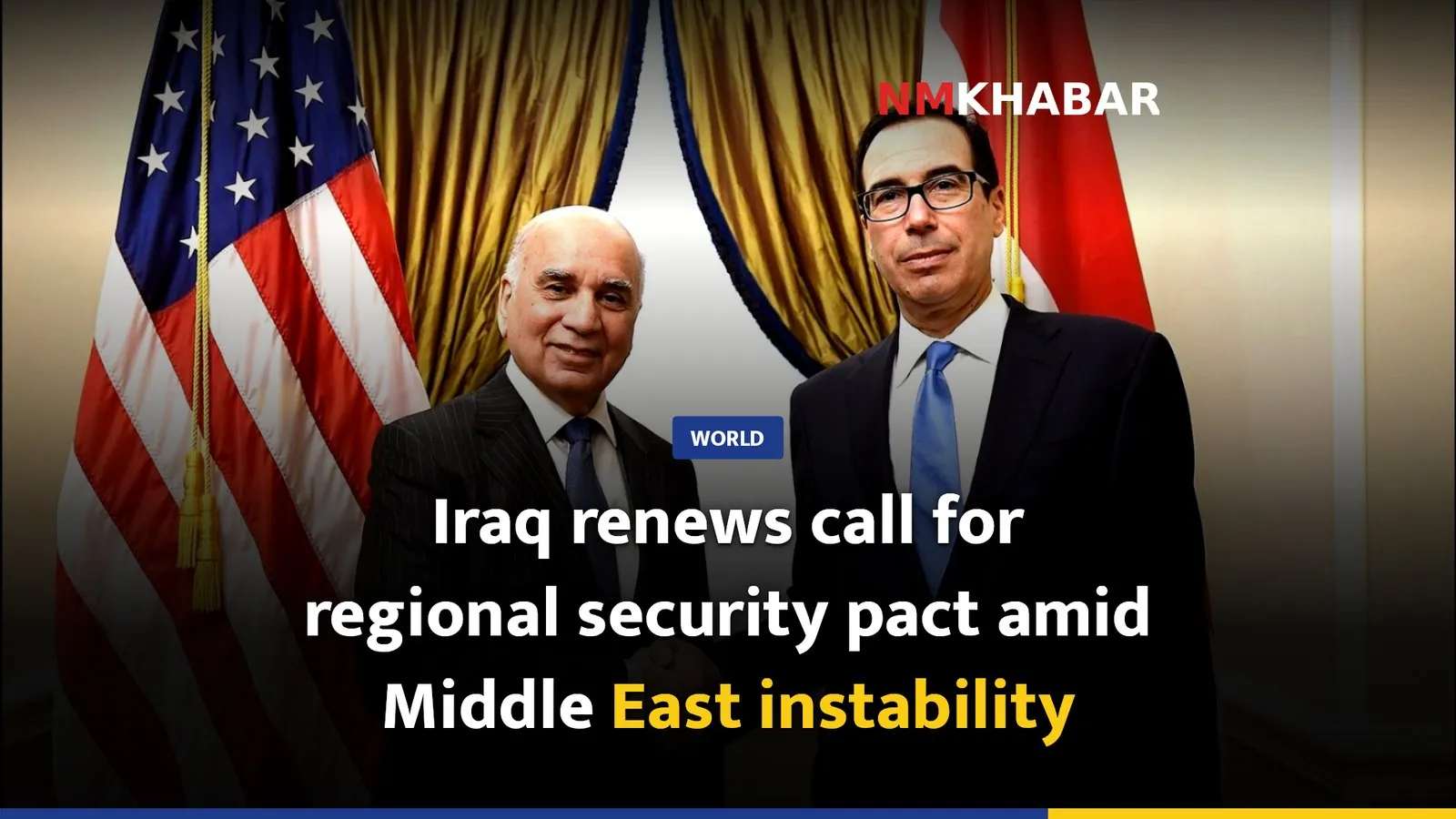
Iraq’s Foreign Minister Fuad Hussein has renewed calls for a security dialogue with Gulf states, emphasizing that stability in the Middle East must come from within the region itself, not from external powers. His remarks followed a high-level meeting of the Organisation of Islamic Co-operation (OIC) Council of Foreign Ministers in Baghdad, the first in the Iraqi capital in 45 years.
Hussein described the security situation as critical, stating, “We cannot buy security from abroad, we need internal security, and that internal security is the co-operation between the countries of the region.” The meeting is seen as part of Iraq’s broader effort to reassert itself as a regional mediator.
Renewed ‘6+2’ initiative amid escalating tensions
The Middle East is currently experiencing a new wave of instability, marked by the war in Gaza, escalating tensions in Lebanon and the Red Sea, ongoing friction with Iran, and threats to shipping in the Gulf. Amid this complex environment, Hussein highlighted security and stability as the top priority.
Three years ago, Iraq proposed a security framework, referred to as the ‘6+2’ initiative, aimed at bringing together the six Gulf Co-operation Council (GCC) member states, Iraq, and Iran. However, Hussein acknowledged that “due to certain circumstances there was no response to this initiative” at the time. The initiative was revisited after the Iran war began in February.
According to Hussein, there have recently been “important contacts between the concerned countries, especially between Gulf states, Iraq and Iran, to activate this initiative.” He added that Iraq is working to hold a meeting in Baghdad in this regard and looks forward to it. However, he noted that the initiative still requires “intensive contacts.”
If a meeting is held between these countries, Hussein stated that “the issue of security will be raised, the issue of stopping the war will be raised, and initiatives to start peace and stability will be raised.”
Impact on Nepali workers in the Middle East
The escalating instability in the Middle East could directly impact the safety of hundreds of thousands of Nepali workers in the region and Nepal’s economy. As of December 16, 2025, approximately 30,000 Nepalis are employed in Iraq and its autonomous Kurdistan region. Despite a Nepali government ban on working in Iraq, imposed after 12 Nepali workers were killed there on September 1, 2004, thousands have continued to work in Iraq and Afghanistan for US contractors since then.
In March 2026, Nepali workers in Gulf countries faced heightened stress due to ongoing Iranian attacks following US and Israeli airstrikes in Iran. Nepal Rastra Bank, the central bank, reported that the ongoing conflict in the Middle East directly affected the safety of Nepali workers, remittances, and fuel prices. From mid-July 2025 to mid-January 2026, Nepal received Rs 1.062 trillion in remittances, with 40 to 42 percent originating from 17 Gulf countries. Saudi Arabia and Qatar each accounted for 12 percent, the UAE for 8 percent, and Kuwait for 5 percent of these remittances.
According to the Ministry of Foreign Affairs, a total of 1,729,288 Nepalis reside in 12 Gulf countries for employment, study, and other purposes.
Next steps and unresolved questions
Iraq is actively working to organize a meeting between Gulf countries and Iran to discuss security, ceasefire initiatives, and peace and stability in the region. Foreign Minister Hussein emphasized that “intensive contacts” are still necessary for the initiative to succeed.
The formal responses of Gulf countries and Iran to Iraq’s proposed ‘6+2’ or ‘6+1’ security initiative remain unclear. The specific timeline and location for Iraq’s planned security meeting have not yet been announced.