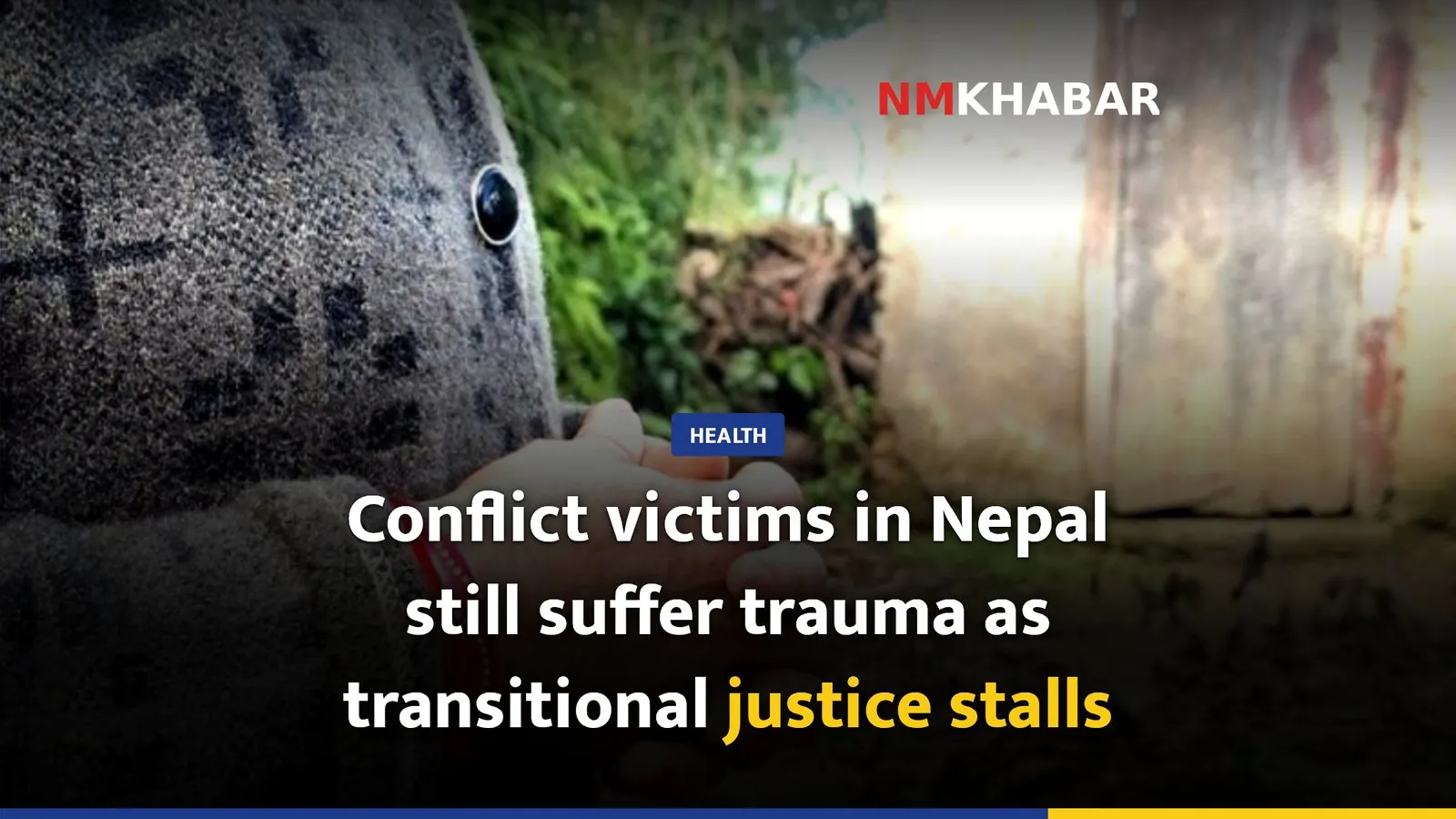
Many victims of sexual violence during Nepal’s decade-long armed conflict (1996-2006) continue to suffer severe psychological trauma, with the transitional justice process still incomplete two decades after the Comprehensive Peace Accord (CPA), the agreement that formally ended the armed conflict.
Dilmaya, then 15, from Rolpa district, was sexually assaulted by two Nepal Army personnel in December 2001, shortly after a state of emergency was declared. Her brother witnessed the assault, which left a deep scar, causing her to withdraw socially and avoid her family home. “The war took everything from me. It took my happiness, my family,” she said, adding that she often blames herself.
Similarly, Nirmala, also from Rolpa, was sexually assaulted by three combatants of the then-CPN (Maoist) in Asar 2061 (BS) while her husband was abroad. The incident shattered her marriage and led to severe social stigma, with her family and community accusing her of ‘losing her honour’. She developed depression, anxiety, and an aversion to men, still waking up startled by imaginary knocks on the door.
Lingering trauma and societal stigma
These incidents are among numerous sexual violence cases that occurred during the conflict, which ran from February 13, 1996, to November 21, 2006. Advocate Sushila Chaudhary, a human rights activist, highlighted that women not involved in the war became victims of both state and rebel forces, with sexual violence affecting girls as young as 12 and women up to 62 years old.
The profound psychological impact on victims contributes to a rapid increase in mental health problems across Nepal. The National Mental Health Survey Nepal, 2077, revealed that 10 percent of individuals over 18 suffer from mental health issues, including anxiety (3 percent), depression (2.9 percent), and suicidal thoughts (7.2 percent). Among adolescents aged 13-17, 5.2 percent experience mental health problems. Suicide is the third leading cause of death for young people aged 15-29.
Despite the widespread issues, less than one percent of Nepal’s health budget is allocated to mental health. An estimated 5 to 6 million people in Nepal have some form of mental health problem, with 80 percent lacking access to healthcare.
Stalled transitional justice process
The Comprehensive Peace Accord (CPA), signed by then-Prime Minister Girija Prasad Koirala and then-Maoist Chairman Pushpa Kamal Dahal on November 21, 2006, formally ended the armed conflict. It mandated the formation of a high-level Truth and Reconciliation Commission (TRC), tasked with investigating human rights violations and promoting reconciliation, and the Commission of Investigation on Enforced Disappeared Persons (CIEDP), responsible for investigating disappearances and recommending action to address human rights violations.
However, the transitional justice process remains incomplete. A transitional justice bill is currently pending in a parliamentary committee as of October 2026. Prime Minister Balen Shah and top leaders of the ruling coalition have publicly stated their commitment to passing the bill by consensus during the winter session of parliament. The process for appointing officials to the TRC and CIEDP is reportedly in its final stages.
Conflict victims are demanding the immediate passage of a victim-friendly and gender-sensitive transitional justice bill, the formation of independent commissions, and a truth-seeking process that meets international standards. Human rights networks have raised concerns that the proposed bill might offer impunity to perpetrators of serious human rights violations. The agreement to conclude transitional justice as stipulated in the CPA has yet to be fully implemented, and an official total count of people suffering from mental health problems in Nepal is still unavailable.