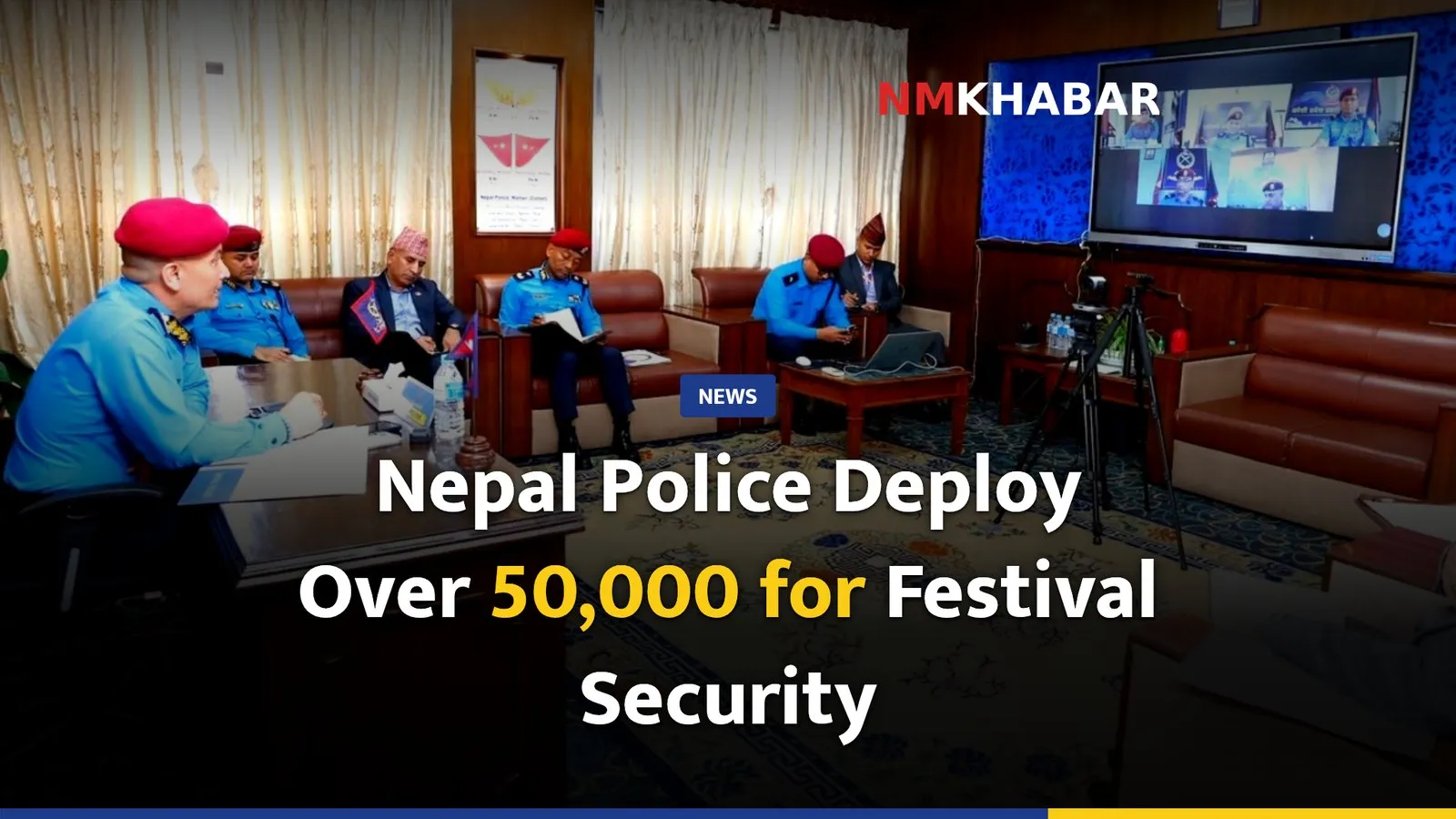
The Nepal Police have initiated the ‘Chhadparva Lakshit Bishesh Suraksha Yojana, 2083’ (Festival-Targeted Special Security Plan, 2083), deploying approximately 50,458 personnel across the country. The plan, which commenced on October 8, 2026 (Ashwin 22, 2083 BS), aims to control criminal activities and manage public grievances during the festive period.
As part of the initiative, 28,126 personnel from the Armed Police Force have been deployed, with an additional 4,500 on standby. Inspector General of Police (IGP) Dan Bahadur Karki emphasized the need for effective police mobilization and professionalism to address potential crimes such as looting and theft during the festivals. He urged all police personnel to develop necessary security plans for their respective areas and collaborate with local authorities and stakeholders to provide professional, accountable, and responsive police services.
Madhesh Province Security Measures
In Madhesh Province, a specific deployment of 7,229 police personnel is in effect from October 15 to November 15, 2026 (Ashwin 29 to Kartik 30, 2083 BS). The security plan in this region identifies potential challenges including theft, smuggling, crowd management at religious sites, traffic congestion, black marketeering, gambling, and the use of firecrackers. Measures will also be in place to monitor and control the spread of misinformation and rumors on social media that could incite social tension.
Special security arrangements are being made to prevent theft and robbery at gold and silver shops, banks, and other cash transaction points. Surveillance will be intensified to control the smuggling of illegal liquor, drugs, and banned substances, as well as to combat black marketeering, artificial shortages, and unreasonable price hikes.
Broader National Directives
IGP Karki also stressed the importance of coordinating with all stakeholders to reduce traffic accidents during the festive season through awareness programs. He called for heightened vigilance against any incidents that could disrupt social harmony. Furthermore, controlling criminal activities and smuggling at border crossings, along with apprehending absconding defendants, are prioritized tasks requiring effective intelligence gathering and analysis.
The IGP reminded police personnel to adhere to professional ethics and discipline, particularly regarding the use of social media. He urged them to prioritize organizational objectives over personal interests and warned that police personnel involved in unprofessional activities would face legal action. Provincial and district police chiefs have been instructed to conduct monitoring, supervision, and inspections to promptly address any shortcomings.
Background and Context
The formal establishment of the Nepal Police Force dates back to the enactment of the ‘Police Act, 2012’ (2012 BS). However, the history of police organization in Nepal can be traced to 1914 AD (1971 BS) with the issuance of the ‘Police Sawal’ by Chandra Shumsher. The Ram Dal Paltan was established in 1938 AD (1995 BS) for traffic control, with its personnel later integrated into the Nepal Police and converted into the Traffic Police.
The current security plan is a proactive measure during a period known for increased travel and potential for criminal activity. The deployment aims to ensure public safety and maintain order throughout the nation.
Looking Ahead
The ‘Chhadparva Lakshit Bishesh Suraksha Yojana, 2083’ is currently in effect and will continue throughout the festive season. The specific metrics for evaluating the success of this plan, beyond its immediate implementation, are not detailed in the provided information.