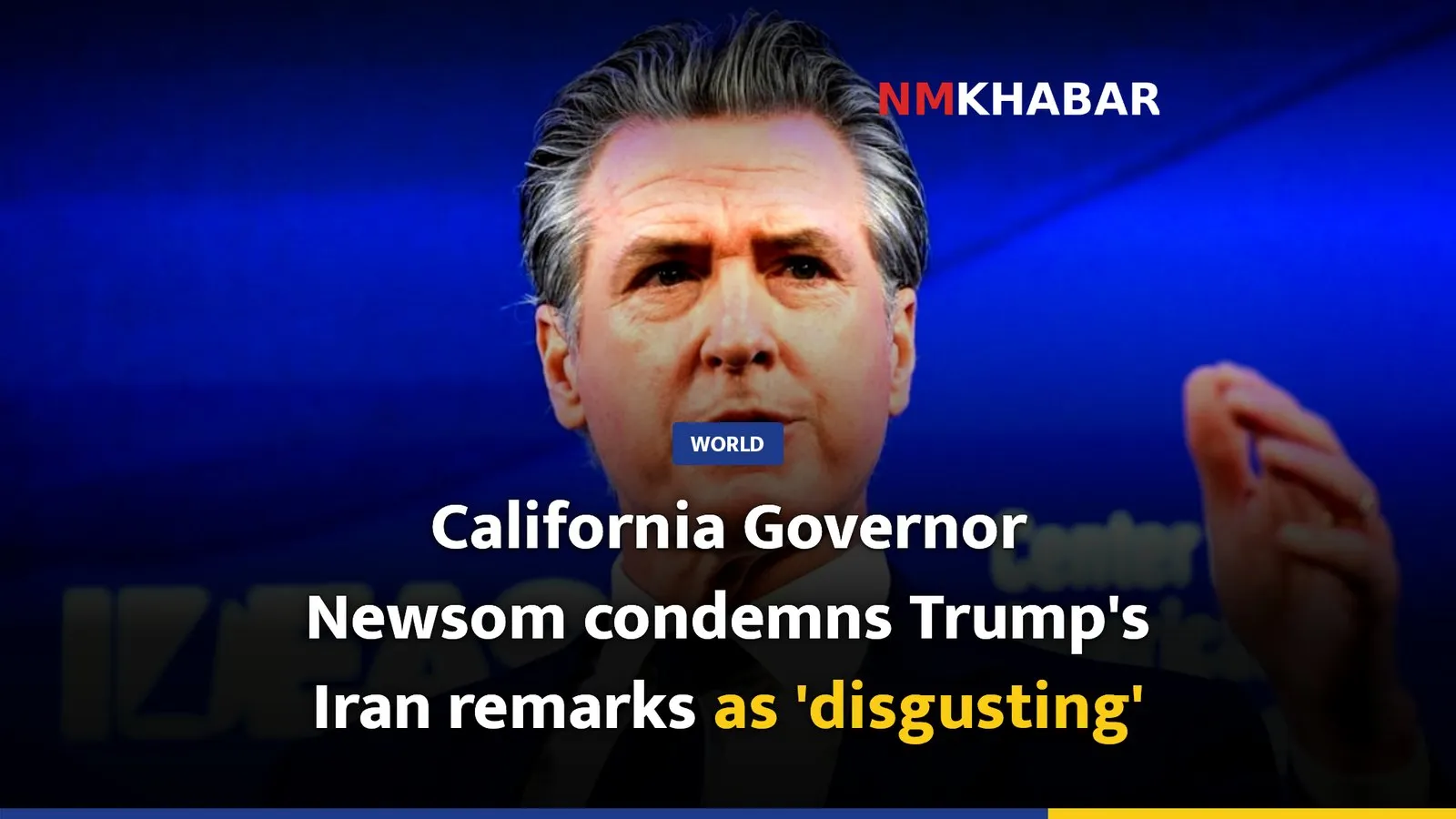
US President Donald Trump’s suggestion that Iran could “take out” major American cities like Los Angeles or San Diego has drawn sharp criticism from California Governor Gavin Newsom, who on Tuesday called the remarks “disgusting and disqualifying.” The comments were made during a political rally in Grand Island, Nebraska, on Monday, October 5, 2026, amidst the ongoing war between the United States and Israel against Iran and its regional allies, which began on February 28, 2026.
Governor Newsom took to X, formerly Twitter, to condemn President Trump’s statements, writing, “Donald Trump’s remarks were dangerous – if not treasonous – putting a target on two of our biggest cities and one of America’s largest naval hubs.” Newsom said he directed the State Threat Assessment Centre to actively monitor the situation “in the event that foreign actors interpret the President’s remarks as an invitation to target California.” Los Angeles Mayor Karen Bass also criticized the comments, stating, “The role of a president is to protect the country, not to actively threaten it and encourage attacks on American lives.”
The White House, however, defended President Trump, with Communications Director Steven Cheung stating that the comments were taken out of context. Cheung argued that Trump was asserting that American actions had prevented a nuclear Iran from threatening US cities, making America safer. During the rally, President Trump had said, “They can take out a city. Let them take out Los Angeles, let them take out San Diego,” in a broader discussion about the economic sacrifices of wartime and the upcoming midterm elections.
Escalating Tensions and Ongoing Conflict
Tensions between the US and Iran escalated in January 2026 following the killing of anti-government protestors by Iranian security forces. This culminated in hundreds of US and Israeli airstrikes across Iran on February 28, 2026, targeting military objectives and leadership, including the assassination of Supreme Leader Ali Khamenei. Iran retaliated by launching missile and drone attacks on Israel and US military bases in the Middle East, and by blocking the Strait of Hormuz.
A two-week ceasefire, brokered by Pakistan, commenced on April 8, 2026, but was frequently violated before expiring on July 8, 2026. Currently, low-intensity fighting persists, and diplomatic negotiations remain stalled. The Federal Bureau of Investigation (FBI) had warned California law enforcement in March 2026 about the potential for Iran to attempt drone attacks on unspecified targets in California from an unknown vessel at sea, though this information was described as “unverified” and “cautionary.”
Political Implications and Future Outlook
President Trump and his Republican party are facing increasing pressure ahead of the November 3, 2026, midterm elections, largely due to high fuel and other commodity prices, and the ongoing, albeit muted, war with Iran. The President has indicated that the war with Iran “will be over very soon, one way or another,” and stated that US military action could resume after the midterm elections if a satisfactory agreement is not reached. Diplomatic talks between the US and Iran are ongoing but remain stalled, with both sides prioritizing different issues—the US focusing on Iran’s nuclear program, and Iran on the security of the Strait of Hormuz.
The US is reportedly preparing for a potential escalation of the conflict later this year, increasing its military presence in the region. An estimated 10,704 to 21,000 Nepalis reside in California. This comes amidst recent changes in US immigration policies affecting Nepali citizens, including the suspension of the Diversity Visa lottery process since December 2025 and intensified deportations since January 2025.
The precise meaning of President Trump’s comments about Iran’s capability to “take out” US cities remains a point of contention. Furthermore, specific details regarding the FBI’s warning about potential Iranian drone attacks—such as the timing, method, targets, or perpetrators—were not provided and the information was deemed “unverified.” The current leadership structure in Iran following the death of Supreme Leader Ali Khamenei also remains unclear.