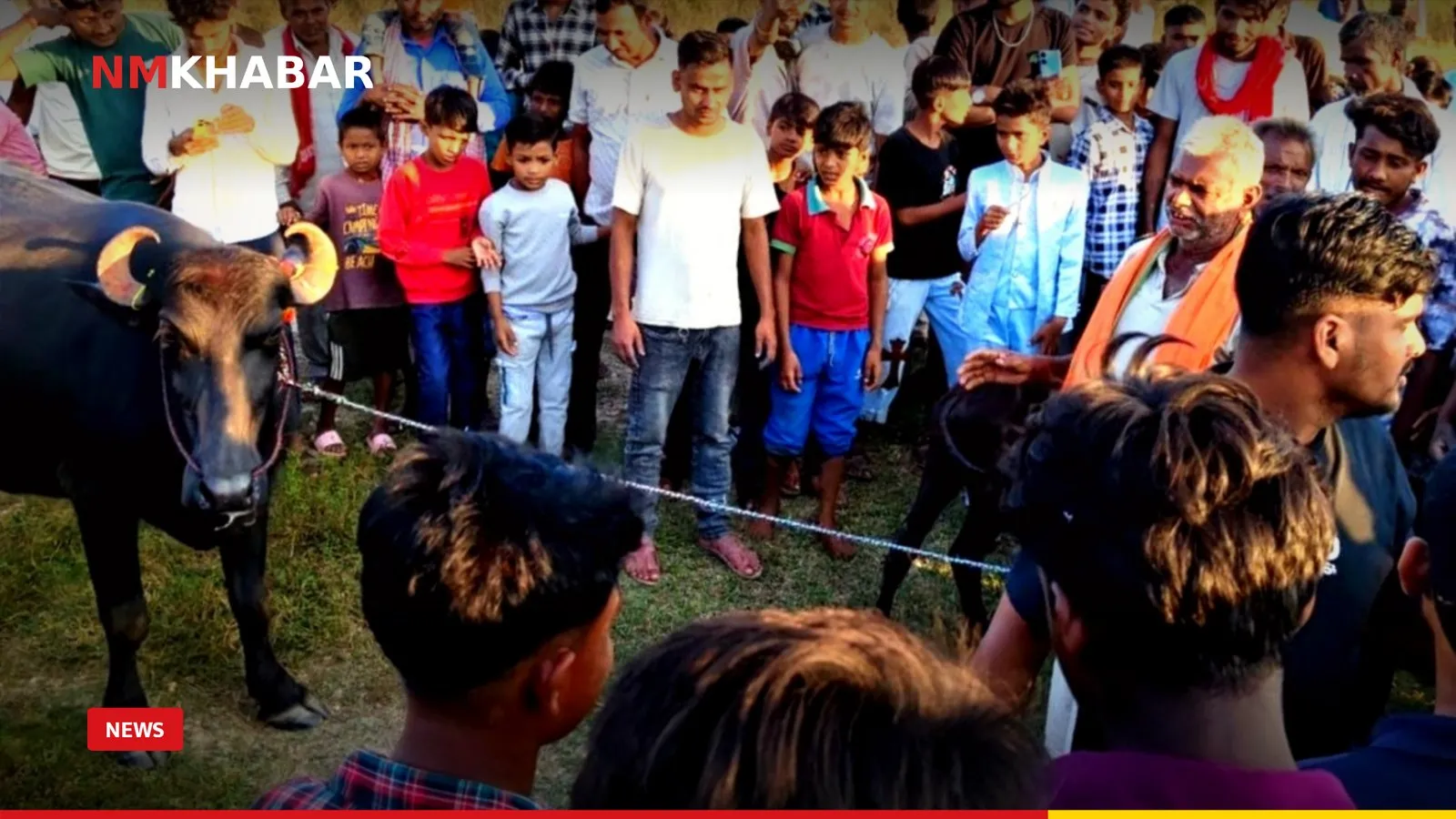
The centuries-old Soharaiya festival was celebrated on Monday in Petbhara, Fatuwa Bijaypur Municipality-6, Rautahat, with more than 200 cattle participating and thousands of locals observing the traditional event.
The festival, which takes place the day after Lakshmi Puja, saw farmers preparing their cows, buffaloes, and oxen from early morning. They bathed, adorned, and fitted their animals with new nose rings and ropes before bringing them to the field. Cattle from Petbhara, Tengraha, Fatuwa, and surrounding settlements were gathered at a central location.
Background
- The Soharaiya festival is a centuries-old cultural tradition linked to animal husbandry, celebrated the day after Lakshmi Puja.
A central attraction of the festival is the tradition of dragging a piglet tied with a rope among the cattle. The sound of the piglet causes the cattle to run, a practice known locally as ‘Dadh Bolaune’. As the animals ran, participants cheered with shouts of ‘Hiyalolo’. The event also featured traditional wrestling competitions and a stick-breaking ceremony, adding to the festivities.
Local residents of Petbhara have maintained the Soharaiya festival for generations, actively involving younger generations to keep the tradition alive. Local journalist Dipendra Rajak emphasized the importance of preserving, promoting, and continuing such festivals to connect new generations with their indigenous culture and traditions.
While the Soharaiya festival was once widely celebrated in various villages across Rautahat, local experts note that it is gradually fading in many areas due to changing lifestyles, the influence of modernity, and declining interest among the younger generation in indigenous cultures. However, Petbhara continues to uphold this tradition.
Farmers hold a strong religious and cultural belief that participating in Soharaiya enhances the disease-fighting capacity of their cattle and keeps their livestock healthy. This festival not only highlights the relationship between farmers and animal husbandry but also represents the social unity, collective participation, and local identity of the village.