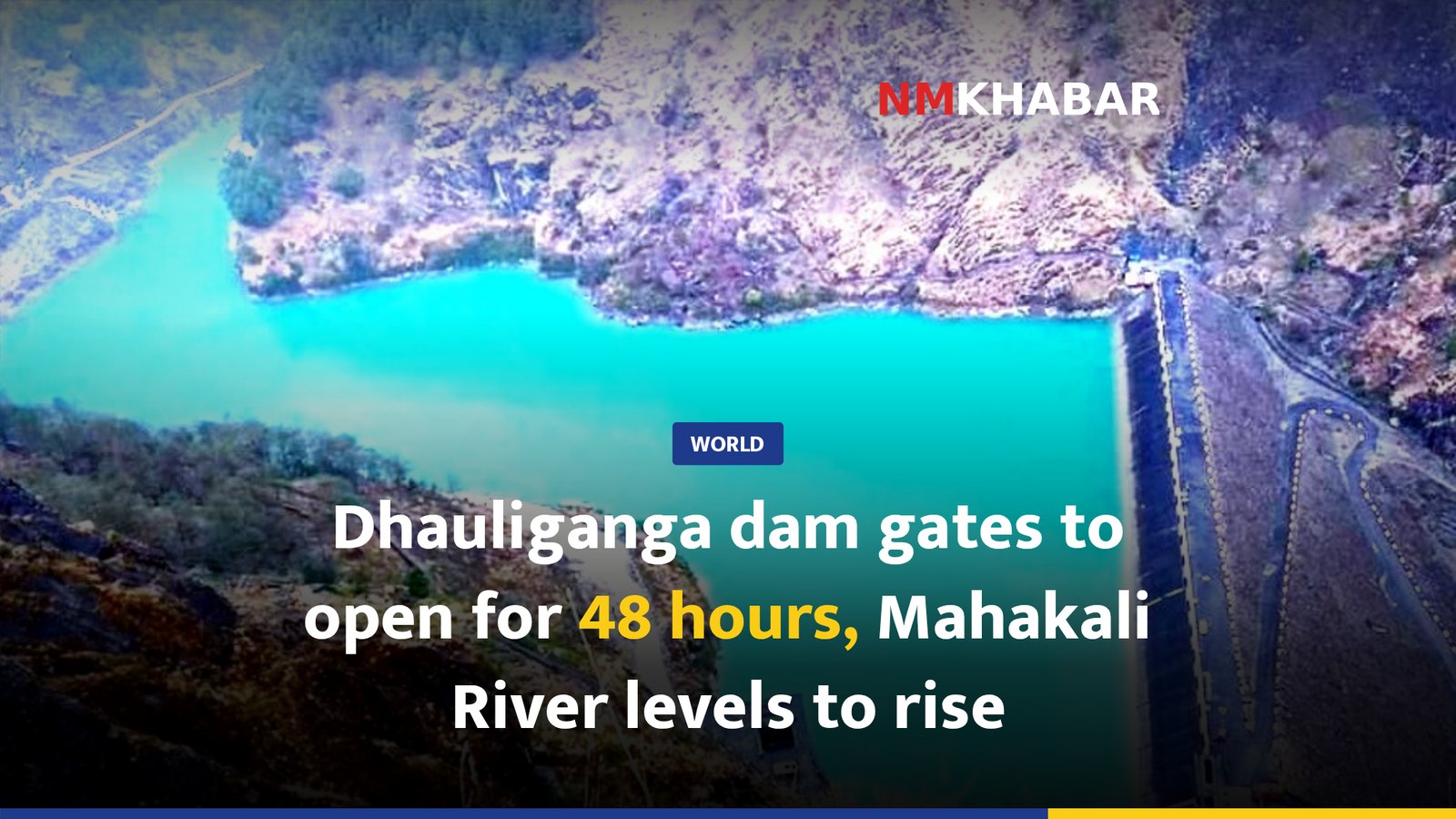
The Dhauliganga hydroelectric project in Uttarakhand, India, will open its dam gates for 48 hours starting Saturday, October 3, 2026, at 1 AM. This operation, intended for silt cleaning, is expected to increase water levels in the Mahakali River, prompting the Kanchapur District Administration Office, a Nepali government administrative body, to issue a high alert for residents in the riverine areas.
The gates of the Dhauliganga Hydroelectric Project, a 280-megawatt facility in Chirkilla, Pithoragarh district of Uttarakhand, India, operated by NHPC Limited, will remain open until Monday, October 5, 2026, at 1 AM. The Kanchapur District Administration Office has urged all citizens residing along the Mahakali River banks and those using the river for passage to take precautionary measures.
Chief District Officer of Kanchapur, Madan Koirala, stated that the increased water flow during this period could pose potential risks. Residents are advised to avoid entering the river or its banks and to secure themselves from potential dangers. The administration also warned that water levels might remain elevated for some time even after the dam gates are closed, necessitating continued vigilance.
Previous postponements and concerns
This scheduled silt cleaning was initially planned for September 27 and 28, 2026, but was postponed due to high water levels in the Mahakali River. Ashish Joshi, Sub-District Officer of Dharchula, had requested a new date, citing adverse weather conditions and the risk of the Mahakali’s water level exceeding danger thresholds.
On September 30, 2026, the government was urged to allocate budget and initiate long-term projects for embankment construction and river control to protect bridges and nearby structures from potential floods and erosion. Earlier, on September 2, 2026, water levels in the Mahakali River in Dadeldhura had already surpassed the danger mark, leading to warnings for downstream residents.
Background on the Dhauliganga Project and Mahakali River
The Dhauliganga Hydroelectric Project regularly opens its dam gates for silt cleaning, which invariably leads to an increase in the Mahakali River’s water flow. The Mahakali River is recognized as a border river between Nepal and India under the Mahakali Treaty, signed in 1996 (Bikram Sambat 2053, Ashwin 4). This treaty outlines 12 articles for the integrated development of the Sharda Barrage, Tanakpur Barrage, and Pancheshwar Multipurpose Project.
A devastating flood in the Mahakali River on June 16, 2013 (Bikram Sambat 2070, Ashar 2), completely destroyed 156 houses in Darchula district headquarters, Khalanga, causing an estimated loss of Rs 325.6 million.
What happens next and remaining unknowns
As the Dhauliganga dam gates open, the Department of Hydrology and Meteorology has forecasted increased flow in rivers from Koshi to Mahakali, urging caution in risk-prone areas.
However, specific data or forecasts regarding the exact extent of the Mahakali River’s water level increase are currently unavailable. Detailed studies or information on the potential impact and damage to the riparian areas are also not yet public. Furthermore, there is no information available about new mechanisms or discussions for enhanced coordination between Nepal and India regarding the Mahakali River’s water flow and dam operations.