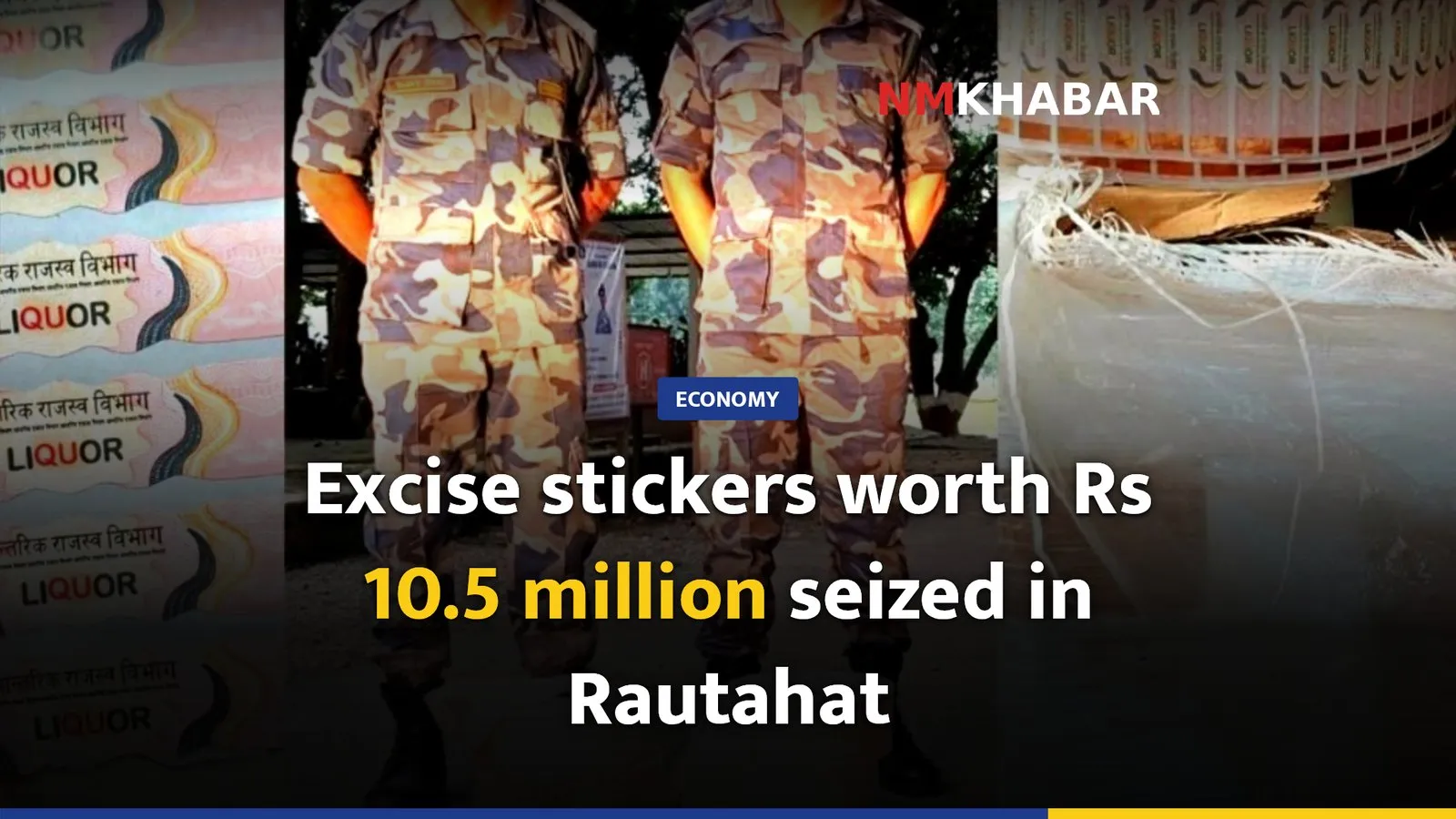
Nepal’s Armed Police Force (APF) seized 120,000 excise stickers, with an estimated excise duty value of over Rs 10.5 million, in Rautahat district on Friday, October 2, 2026. The seizure near the India-Nepal border has raised significant concerns about potential tax evasion and the security of the government’s revenue collection system.
A team from Armed Police Force Nepal, Border Outpost (BOP) Sarmujawa, intercepted the stickers as they were being smuggled into Nepal from India near Tejapakad, Paroha Municipality-3, Rautahat. According to SP Chet Raj Joshi, chief of Armed Police Force Number 11 Battalion, smugglers dropped the materials and fled after spotting the police patrol. No arrests have been reported so far.
The seized stickers are designed for 50 UP 180 ml alcohol bottles, issued by the Department of Internal Revenue. They were found in six rolls, each containing approximately 20,000 stickers, totaling 120,000 pieces. Based on an excise duty rate of Rs 88.20 per sticker, the total value of the excise duty represented by the seized stickers is approximately Rs 10,584,000.
The incident has sparked debate over whether the recovered stickers are genuine government-issued items or sophisticated counterfeits. If they are genuine, it points to a severe breach in the government’s supply chain for excise stickers. If they are fake, it suggests a large-scale operation capable of producing high-quality replicas, undermining the entire revenue system.
The Internal Revenue Office, Simara, which covers Rautahat and Bara districts, has taken custody of the seized materials for further investigation. This office will determine the authenticity of the stickers and their origin. The potential misuse of such a large quantity of stickers could lead to substantial revenue loss for the state and create unfair competition for legitimate alcohol producers who comply with tax regulations.
The smuggling and use of fake and illegal excise stickers have been a persistent problem in Nepal. In a previous incident on March 7, 2024, 2,860 fake excise stickers, reportedly printed in India, were seized in Kathmandu along with counterfeit alcohol. Similarly, on December 3, 2023, a trader was arrested in Morang with 3,140 fake excise stickers marked ‘Ready-made Tobacco’.
Concerns about irregularities in excise sticker printing have also led to legal action. On June 23, 2024, the Commission for the Investigation of Abuse of Authority (CIAA), Nepal’s anti-graft body, filed a corruption case against 12 individuals, including then-Chief Secretary Baikuntha Aryal, regarding alleged irregularities in excise sticker printing. Past contracts awarded to India’s Madras Security Printers (MSP) were also marred by accusations of sticker misuse and illegal sales, which an official at the Ministry of Finance estimated caused an annual revenue leakage of Rs 15 billion to Rs 20 billion.
The government has been working to implement ‘track and trace’ technology and promote secure domestic printing to curb the misuse of excise stickers and control revenue leakage.
The Internal Revenue Office, Simara, will proceed with legal action under the prevailing economic acts and conduct a thorough investigation into the nature (fake or genuine) and source of the seized stickers. SP Joshi stated that the Armed Police Force has increased surveillance in border areas to combat the potential trade of illegal excise stickers and the smuggling of alcohol products.
However, several questions remain unanswered: Are the 120,000 seized excise stickers genuine government property or counterfeits? If genuine, how did they illegally cross the border from India into Nepal? If fake, how was such a large quantity produced to resemble government stickers? The identities of the smugglers involved and the extent of their network are also under investigation.