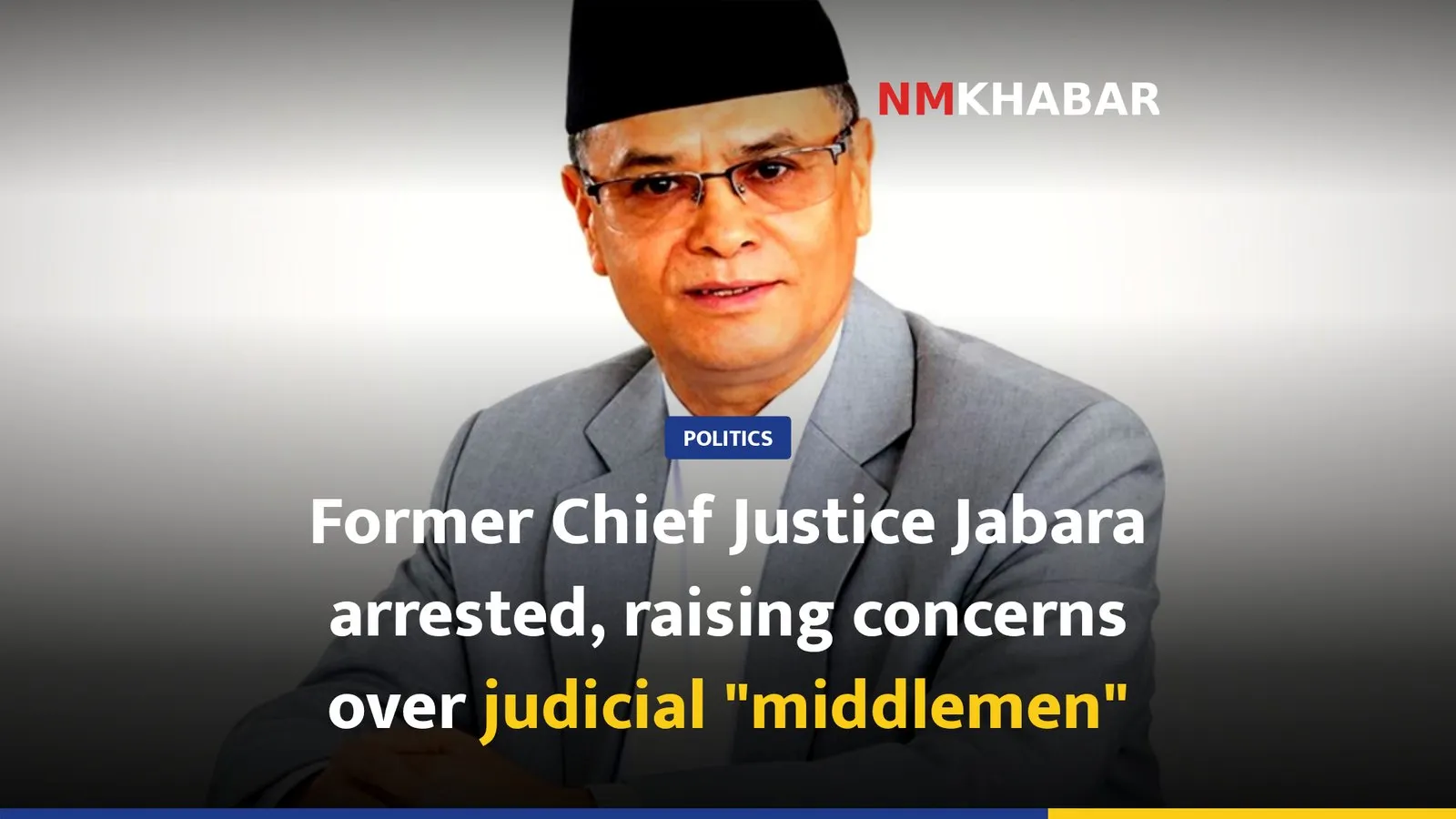
Nepal’s former Chief Justice Cholendra Shumsher Jabara was arrested on September 27, 2026, and released on September 28, 2026, from his residence in Maharajgunj, Kathmandu. The arrest has reignited a critical debate among legal experts and within the judiciary regarding the influence of “middlemen” in court cases and the integrity of the judicial system.
Senior advocate Hari Upreti strongly criticized the recent activities surrounding Jabara, stating it is “extremely shameful” for retired chief justices to engage in “selling” cases and associating with political parties, disregarding judicial conduct and dignity. He emphasized that such actions undermine public trust in the entire judiciary.
Former Chief Justice’s arrest and Supreme Court’s response
A team from the Crime Investigation Office, Teku, arrested former Chief Justice Cholendra Shumsher Jabara on the night of September 27, 2026. However, the specific charges against him have not been publicly disclosed by the police. He was held for approximately 10-11 hours before being released into his family’s custody on the afternoon of September 28, 2026.
On September 28, 2026, an emergency full bench of the Supreme Court of Nepal, the country’s apex judicial body, expressed serious concern over Jabara’s detention, stating it occurred without proper legal procedure. The court affirmed its commitment to preventing external or internal influence on any judicial proceedings.
The following day, on September 29, 2026, during another full bench meeting of the Supreme Court, judges openly criticized the work style of Chief Justice Dr. Manoj Kumar Sharma. They questioned why “middlemen” had become active again after Jabara’s retirement.
Concerns over judicial integrity
Upreti argued that when former leaders who once held the scales of justice act as “middlemen” to influence verdicts, it erodes public faith in the judiciary. He also suggested that political parties exploit judicial figures to conceal their inefficiencies, while former chief justices aspire to roles like president or head of the executive, thereby jeopardizing the democratic system.
Upreti called for an impartial investigation into such retired individuals who illegally influence pending court cases and demanded immediate legal action to safeguard the judiciary’s reputation.
Background of Jabara’s tenure and “middlemen” issue
Cholendra Shumsher Jabara assumed the position of Chief Justice on January 1, 2019. He was suspended on February 13, 2022, after an impeachment motion was registered against him in parliament. The motion included 21 charges, notably accusing him of allowing “middlemen” into the judiciary.
Due to parliamentary terms and political developments, the impeachment process did not conclude, and his term as Chief Justice ended. On September 9, 2026, a constitutional bench of the Supreme Court, led by Chief Justice Dr. Manoj Kumar Sharma, quashed a writ petition challenging a letter from the then-Secretary General of the Parliament Secretariat that declared Jabara’s impeachment inactive. This decision paved the way for Jabara to receive pension and other benefits.
The problem of “middlemen” in Nepal’s judiciary is not new. A task force led by then-Justice Hari Krishna Karki had also highlighted this issue in its report, which subsequently led to the implementation of a lottery system for case allocation to reduce discretionary influence.
Unanswered questions and future challenges
The specific legal grounds and charges for former Chief Justice Cholendra Shumsher Jabara’s arrest on September 27, 2026, have not been officially disclosed by the police. The full details and confirmation of allegations regarding former chief justices’ involvement in “selling” cases and associating with “old parties” remain pending. The identity of these “old parties” has not been clarified.
The long-term impact of the recent arrest and the Supreme Court’s reaction on the independence and public trust in the judiciary is yet to be fully understood. The questions raised by judges about the resurgence of “middlemen” suggest increasing pressure for internal reforms and accountability within the judicial system.