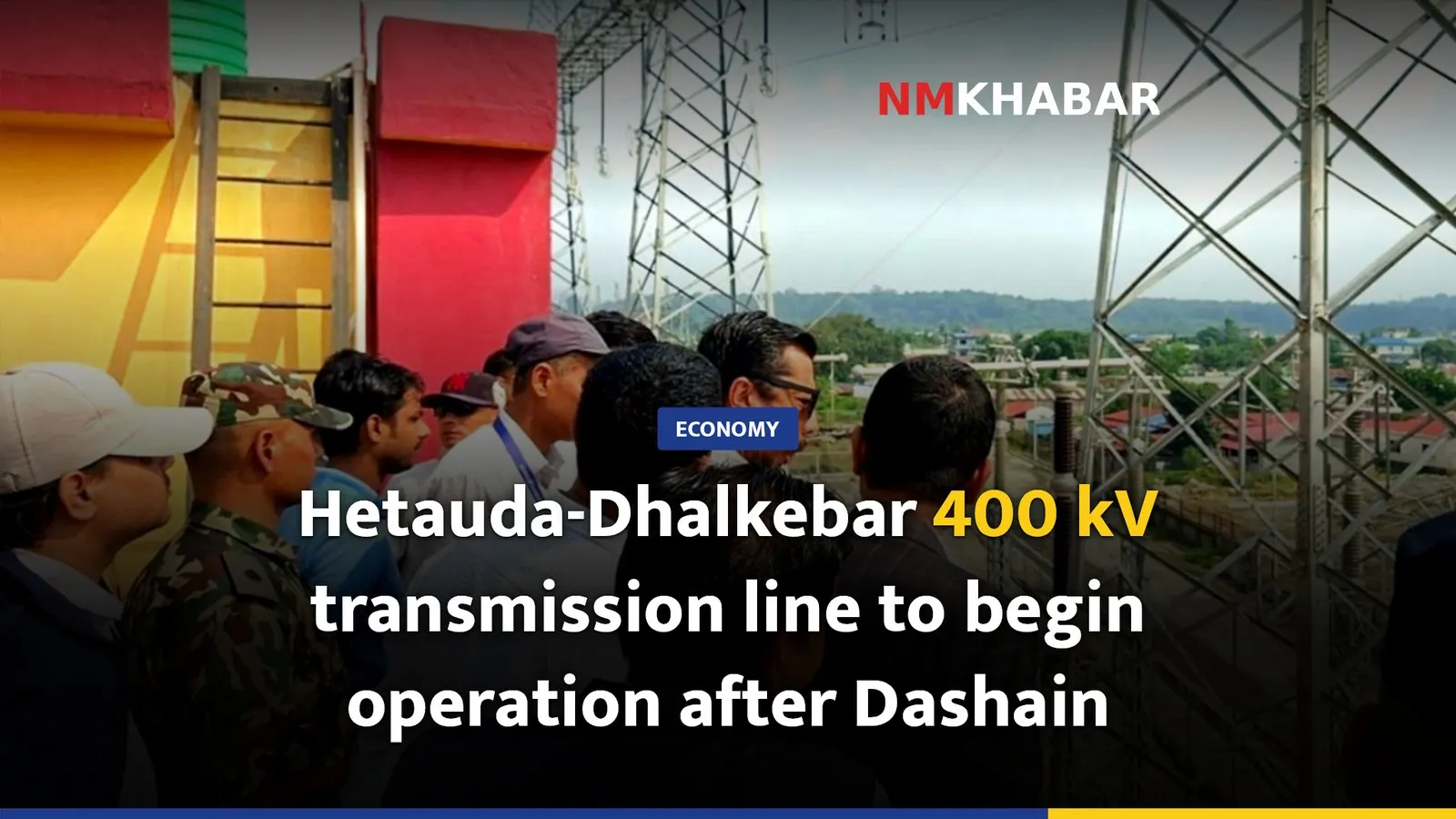
The Hetauda-Dhalkebar 400 kV transmission line, a critical energy infrastructure project stalled for 12 years, is expected to become operational shortly after Dashain, significantly boosting Nepal’s power capacity. This announcement follows an inspection by Biraj Bhakta Shrestha, the Minister for Energy, Water Resources and Irrigation, on October 3, 2026, at the Hetauda-Dhalkebar 400 kV substation.
The line will increase power flow capacity from 300 megawatts (MW) to 2,000 MW. Of the 16 towers, 14 double-circuit towers are complete, with the remaining two multi-circuit towers in their final stages. Minister Shrestha instructed Nepal Electricity Authority (NEA) officials to complete the work on time, calling the project the “backbone of the nation’s energy”.
Boosting Energy Reliability and Trade
Once operational, the transmission line will make Nepal’s energy system more balanced and reliable. It will strengthen the domestic power supply, meet growing industrial demand, and play a crucial role in cross-border electricity trade with India, preventing energy wastage during the monsoon season. The project is expected to enhance national grid reliability and expand opportunities for electricity trade.
Manoj Silwal, the Executive Director of Nepal Electricity Authority (NEA), the state-owned utility responsible for power generation, transmission, and distribution, confirmed that the project is in its final stages due to Minister Shrestha’s efforts. “The reliability of supply will increase significantly. We can boost both consumption and export,” Silwal said, adding that preparations are underway to charge the line immediately after Dashain.
Overcoming a Decade of Delays
The Hetauda-Dhalkebar-Inaruwa 400 kV transmission line project was initially launched under the Nepal-India Power Transmission and Trade Project with concessional loans from the Nepal government, NEA, and the World Bank. The Hetauda-Dhalkebar section faced a 12-year delay due to various reasons, primarily local obstructions and compensation disputes, despite billions of rupees already spent. After the World Bank loan ceased, the remaining work has been funded by the Nepal government and NEA.
Minister Shrestha, appointed on March 26, 2026, initiated the process by securing a decision from the Council of Ministers, Nepal’s executive body, to advance the project. Further impetus came when Prime Minister Balen Shah’s government prioritized the Dhalkebar-Hetauda 400 kV transmission line on July 9, 2026, clearing remaining hurdles. The Dhalkebar-Inaruwa section (154 kilometers) of the larger project was completed in June 2024.
With Dashain’s Tika falling on October 21, 2026, the Hetauda-Dhalkebar line is anticipated to be fully operational soon after this date, marking a significant milestone for Nepal’s energy sector.