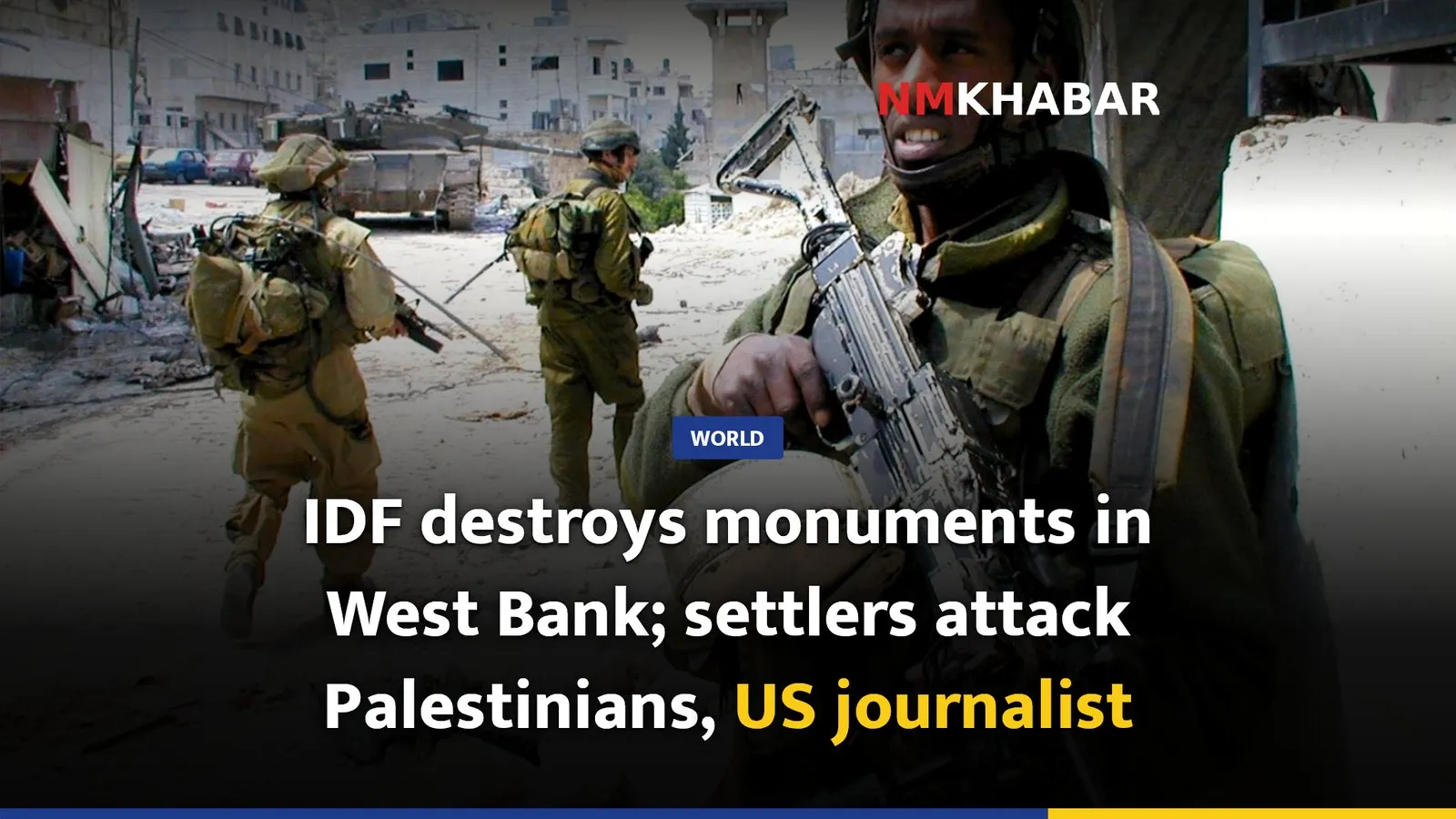
The Israel Defense Forces (IDF) have destroyed dozens of monuments and signs commemorating terrorists during counterterrorism operations across the West Bank over the past two weeks. Concurrently, Israeli settlers attacked Palestinians harvesting olives and a US photojournalist on Friday, October 16, 2026, injuring 12 people.
The IDF stated its operations targeted hubs associated with various terrorist organizations involved in inciting terrorism and supporting Hamas’s October 7 attack. The military searched thousands of locations, arresting dozens of wanted individuals and issuing multiple warnings. Israeli troops also seized thousands of shekels in terror-related funds and weaponry, including handguns and drones.
Settler Attacks Injure Palestinians and Journalist
A BBC team witnessed one of several attacks in farmland near the Palestinian village of Abu Falah. A local official reported that 12 Palestinians were injured in the attacks, including four dual Palestinian-American citizens. American photojournalist Heidi Levine, working for The Washington Post, was also among those hurt.
Levine described being ambushed by dozens of settlers while reporting at the scene. She stated, “I got jumped. I was on the ground and they were kicking me and I was trying to hold onto my camera and my bag.” Matt Murray, executive editor of The Washington Post, expressed outrage over the attack on a clearly identifiable journalist and called for a thorough investigation.
The United Nations reported that the past two weeks have seen more attacks by violent Israeli settlers than during the entire harvest season last year.
IDF Vows Continued Counterterrorism Efforts
The IDF vowed to continue carrying out counterterror measures and combating incitement in the West Bank to safeguard the security of Israeli citizens. On Wednesday, the IDF also announced raids on alleged charities in the West Bank acting as funding fronts for terrorist organizations, including Hamas and the Popular Front for the Liberation of Palestine (PFLP). Five terrorist collaborators were arrested, and computers, documents, and checkbooks with Hamas-associated markings were seized.
Nepal’s Ministry of Foreign Affairs expressed deep concern on March 1, 2026, regarding the escalating tensions in the Middle East, urging all parties to exercise maximum restraint and ensure the safety of civilians. The Nepali government highlighted the significant presence of Nepali workers in the region and advised them to stay safe, follow official directives, and maintain regular contact with Nepali embassies.
Background of the Israeli-Palestinian Conflict
The conflict between Israel and Palestine began in the early 20th century, escalating into war after the declaration of the State of Israel in 1948. In 1993, Palestine and Israel signed the Oslo Accords, assigning the Palestine Liberation Organization (PLO) responsibility for governing the West Bank and Gaza Strip. Hamas launched a large-scale attack on Israel on October 7, 2023, involving rocket attacks and incursions into Israeli territory.
Nepal and Israel signed a government-to-government (G2G) labor agreement in 2020, which is currently in effect. Israel sent a new labor quota to Nepal in February 2026, but the recruitment process was halted due to Nepal’s parliamentary elections and increasing tensions in West Asia. Approximately 12,000 Nepalis are currently employed as caregivers for the elderly in Israel, making Nepal the second-largest source country for Israeli caregivers after the Philippines.