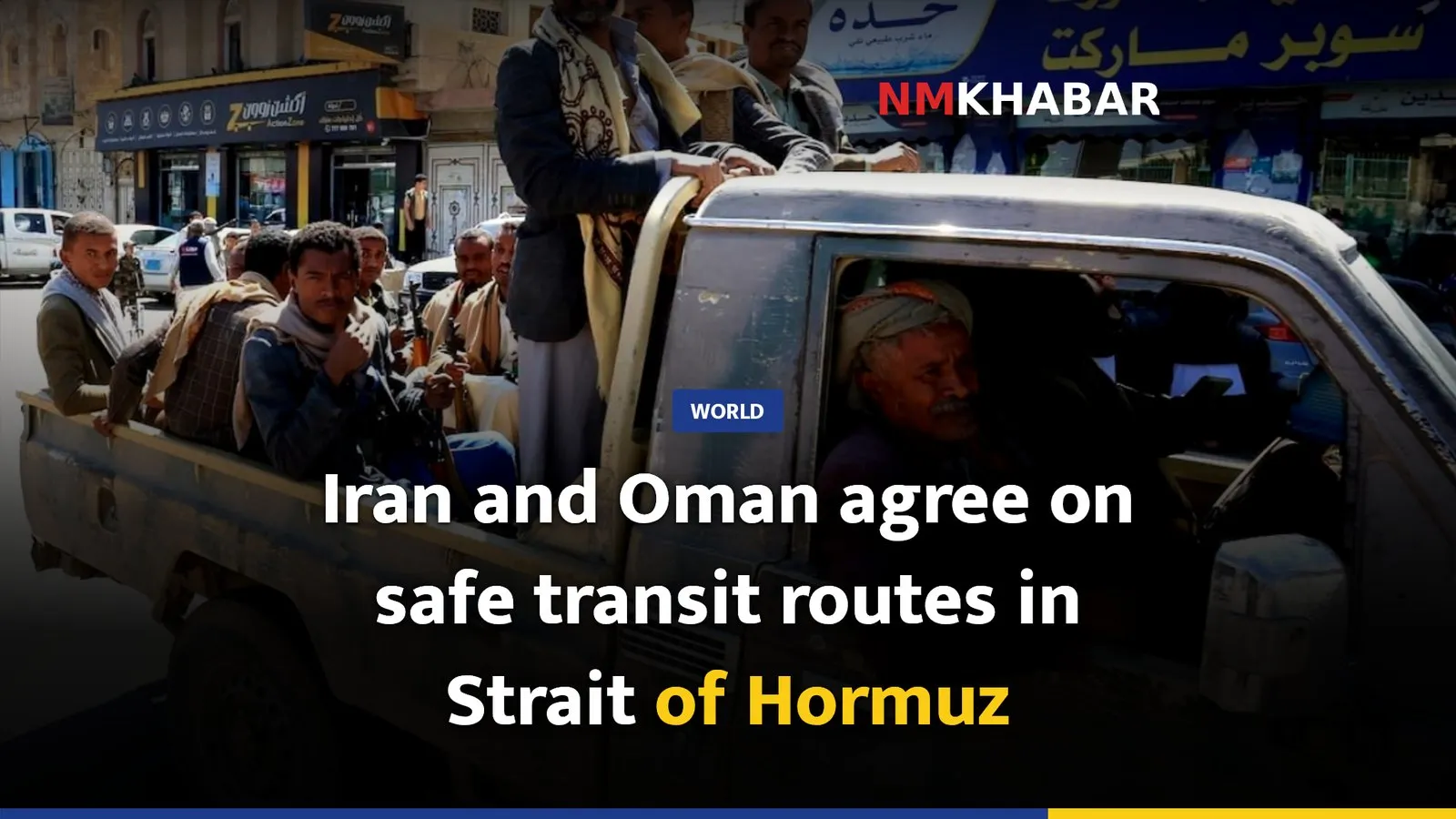
Iran and Oman have agreed on the geographical coordinates of designated safe transit routes for ships entering and leaving the Strait of Hormuz, a critical step towards maintaining security and stability in the world’s most important oil shipping lane. This agreement comes amidst persistent volatility in oil markets due to escalating regional tensions in the Middle East.Esmaeil Baghaei, spokesperson for Iran’s Foreign Ministry, told Iran’s state-run IRNA news agency on Wednesday, October 7, 2026, that the two countries also agreed on how to communicate the route coordinates to the relevant international maritime body. This agreement builds on a phased Iran-Oman framework for restoring navigation through the strategic waterway. Iran and Oman had previously agreed in August 2026 to establish a temporary navigational corridor, clear mines, and work towards a permanent corridor.The ongoing conflict in Yemen and attacks by the Houthi rebels in Saudi Arabia have heightened security risks in the Strait of Hormuz. Houthi military spokesman Yahya Saree claimed on Thursday, October 8, 2026, that their forces successfully targeted King Khalid International Airport in Riyadh, Saudi Arabia’s capital, with a ballistic missile, disrupting airport operations. This follows a previous attack on the same airport and Abha International Airport.Saudi authorities reported that three people were killed and 36 injured in the attacks on King Khalid International Airport and Abha International Airport. One Sudanese national died and eight were injured, including five Saudi citizens, two Egyptians, and one Pakistani, in the King Khalid International Airport attack. The Abha International Airport attack killed two women, one Moroccan and one Algerian, and injured 28, including Saudi citizens, one Bangladeshi, and one Filipino.Earlier, the Saudi-led coalition announced on Wednesday that it had destroyed 82 Houthi military targets across four Yemeni provinces. Coalition spokesman Major-General Turki Al-Maliki stated that the operation targeted sites in Saada, Hodeidah, Al-Jawf, and Marib, including 11 mountain-based ballistic-missile storage facilities, command-and-control centers, communication systems, missile and weapon depots, and Houthi gathering sites. Al-Maliki warned that attacks on civilian sites would not go unpunished. For more details on the coalition’s strikes, read our earlier report: Saudi coalition destroys 82 Houthi targets after deadly airport attacks.These developments contributed to volatile oil markets on Thursday, October 8, 2026. As of 8:08 am Tokyo time, WTI was priced at $88.93 per barrel (up 0.74%), Brent at $100.20 (down 0.38%), and Abu Dhabi’s Murban at $106.70 (up 0.47%). Despite improving oil flows in the Gulf, Brent has struggled to fall decisively below $100 due to persistent security risks around the Strait of Hormuz. Freight rates, war-risk insurance, and inefficient alternative shipping routes remain exceptionally expensive, with tanker attacks around Hormuz embedding a geopolitical premium in prices.The conflict in Yemen began in 2014 when Houthi rebels seized the capital Sanaa and several provinces. The Saudi-led coalition intervened in 2015 to support the internationally recognized government. A UN-brokered ceasefire in April 2022 broke down in July, leading to a resurgence of fighting. In September 2026, fighting intensified after Houthi forces captured strategic locations in Al-Hudaydah and Taiz provinces.The Government of Nepal has expressed deep concern over the evolving situation in the Middle East. Nepal’s Ministry of Foreign Affairs has urged all concerned parties to exercise maximum restraint, avoid further escalation of tensions, and ensure the safety of civilians. Nepal emphasizes that all disputes should be resolved through diplomacy and dialogue.Approximately 426,000 Nepalis reside in Saudi Arabia, with most being migrant workers and expatriates. According to updated figures released by the Ministry of Foreign Affairs on March 2, 2026, 384,865 Nepalis are legally residing in Saudi Arabia. More than two-thirds of the over 400,000 Nepalis in Saudi Arabia are classified as unskilled laborers. The Government of Nepal has prioritized the safety of Nepalis in the Middle East and has initiated preparations for emergency evacuations.Iran and Oman are expected to inform Gulf foreign ministers about the details of the new entry and exit routes in the Strait of Hormuz at a regional meeting in Muscat. However, this agreement does not automatically mean the Strait of Hormuz is fully open or that commercial vessels have an unconditional guarantee of safe passage. Iran has stated that reopening the waterway depends on the United States meeting its conditions. Earlier, Iran also mentioned on October 7, 2026, that it planned to close “illegal routes” near Oman’s coast.
Iran and Oman agree on safe transit routes in Strait of Hormuz
Iran and Oman have agreed on the geographical coordinates for safe transit routes for ships in the Strait of Hormuz, a crucial step for the vital oil shipping lane amidst ongoing regional tensions and volatile oil markets.
NM Khabar English Desk
8 October 2026, 9:34 am
4 min read
Size:
NM Khabar English Desk
Correspondent · NM Khabar
NM Khabar English desk. Stories are prepared with AI assistance and checked against their sources — how we work: https://nmkhabar.com/ai-policy/ . Report an error: info@nmkhabar.com