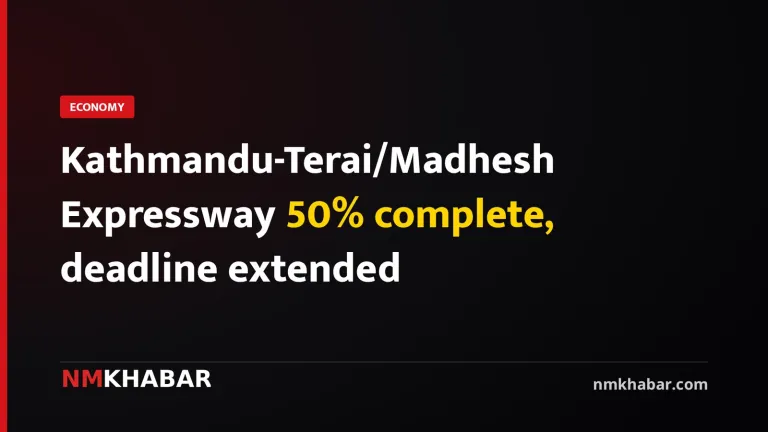
Janata Samajwadi Party, Nepal (JSP-Nepal) is undertaking a comprehensive self-assessment following its poor performance in the last House of Representatives election. The party’s central committee meeting, which began on Ashoj 21 in Lalitpur, is discussing a political report presented by Chairman Upendra Yadav that calls for a re-evaluation of its political direction, organisational state, leadership style, public relations, and social base.The report attributes the election results not merely to a defeat but to growing public dissatisfaction with traditional political parties and a search for new political alternatives. It acknowledges internal weaknesses within JSP-Nepal, including a lack of clear ideological foundation, insufficient political training, weak direct public engagement, factionalism among leaders, and slow organisational expansion.JSP-Nepal’s report highlights the emergence of the Rastriya Swatantra Party (RSP) as an example of a new political trend. The RSP, founded by former journalist Ravi Lamichhane on June 21, 2022, effectively used social media and algorithms to connect with voters by championing good governance and development. In the 2079 House of Representatives election, the RSP secured 125 out of 165 direct seats and 57 out of 110 proportional representation seats, gaining approximately 48 percent of the proportional votes.The report also points to the ‘Gen Z movement’ of Bhadra 2082 as a significant indicator of changing political psychology. This movement, which ran from Bhadra 23 to Bhadra 28, 2082, brought issues of corruption, unemployment, mismanagement, and accountability to the forefront of national debate. It resulted in 63 protestors, 10 prisoners, and 3 police officers being injured, with 19 media organisations incurring approximately Rs 599.3 million in damages. The government recognised the events of Bhadra 23 and 24 as the ‘Gen Z People’s Movement’ and signed an agreement with Gen Z representatives.JSP-Nepal’s political base has historically been rooted in the Madhesh movement and Madhesh-centric political issues. While acknowledging the achievements of this movement, the report also identifies its limitations, including divisions among Madhesh-centric parties, disagreements among leaders, and frequent party splits. The report proposes expanding the Madhesh agenda beyond regional boundaries to include issues faced by marginalised communities in Karnali, Sudurpashchim, hills, and mountains, transforming them into a national agenda.The party aims to develop itself as a socialist democratic, inclusive, transformative, and national alternative force, advocating for value-based politics for change rather than solely for power, and leadership for the people rather than for individuals. The central committee meeting, which concludes on Ashoj 23, is expected to discuss these proposals further. JSP-Nepal plans to conduct regular public gatherings and listen to public grievances at village and municipal levels, preparing for upcoming local and provincial elections. The report also suggests working with other progressive parties that share similar ideologies for functional unity and party unification.
Janata Samajwadi Party, Nepal, rethinks strategy after election setback
Janata Samajwadi Party, Nepal (JSP-Nepal) is re-evaluating its political strategy, organisational structure, and public relations after a disappointing outcome in the recent House of Representatives election. The party aims to broaden its appeal beyond its traditional Madhesh-centric focus.
NM Khabar English Desk
8 October 2026, 3:49 pm
3 min read
Size:
NM Khabar English Desk
Correspondent · NM Khabar
NM Khabar English desk. Stories are prepared with AI assistance and checked against their sources — how we work: https://nmkhabar.com/ai-policy/ . Report an error: info@nmkhabar.com