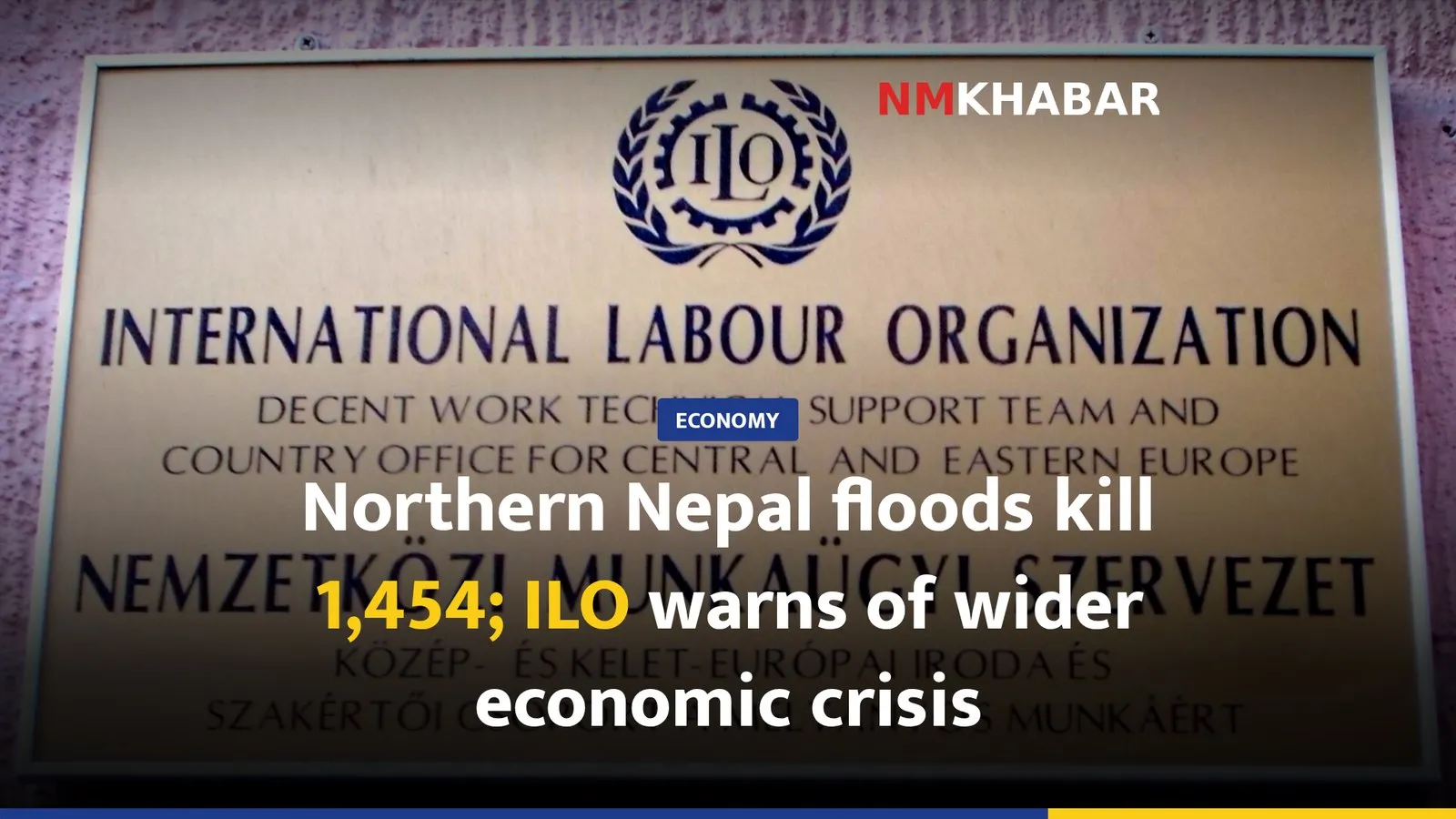
The International Labour Organization (ILO) has warned that the economic consequences of the deadly flash floods in northern Nepal will extend far beyond the directly affected areas, following the confirmed deaths of 1,454 people. The catastrophic flooding, triggered by a glacier collapse on the border with China on August 26, 2026, also left 4,718 people still missing, according to authorities.
In a preliminary assessment released on Thursday, the ILO stated that damage to transport links, electricity infrastructure, and trade routes could send shockwaves through supply chains, markets, and connected services, affecting workers and enterprises much farther away. Numan Özcan, ILO Country Director for Nepal, emphasized that the employment consequences would not stop at the edge of the flooded zone.
Widespread economic disruption predicted
The floods destroyed homes, workplaces, roads, bridges, and energy infrastructure. The National Disaster Risk Reduction and Management Authority (NDRRMA), Nepal’s disaster management body, confirmed 1,454 deaths and 4,718 missing persons, with 1,234 displaced citizens housed in holding centres. Property damage in Nepal is estimated to exceed Rs 200 billion. The Ministry of Energy, Water Resources and Irrigation has made a preliminary estimate of up to Rs 390 billion for the reconstruction of hydropower projects damaged by the Bhote Koshi and Trishuli floods.
The ILO estimates that approximately 21,400 employed people live within four kilometres of the “flood footprint,” experiencing disrupted economic activity and blocked access to jobs, markets, and essential services. Workers in tourism, agriculture, and transport, as well as those employed by small businesses, face significant pressure. This includes guides, porters, transport operators, and hotel, restaurant, and agricultural workers, who may experience reduced earnings, interrupted work, and difficulty accessing customers, inputs, and markets.
Given Nepal’s high level of informal employment, many workers have limited income and social protection. Daily-wage, casual, and informal workers, along with the self-employed and those with micro- and home-based businesses, are at heightened risk. The assessment also warned that women workers might face the combined effects of lost paid work and increased unpaid care responsibilities, and severe household income losses could increase the risk of child labour as a negative coping strategy.
Trade routes severely impacted
The disruption to the Nepal-China trade corridor could also affect companies and workers far beyond the flood-affected districts. Rasuwa, Tatopani, and Korala—three key overland routes connecting Nepal with China—are simultaneously closed. Rasuwa and Tatopani alone accounted for about 22 percent of Nepal’s imports from China over the past year. The floods severely damaged critical transport infrastructure in Rasuwa, which is responsible for nearly half of Nepal’s exports to China.
Ramchandra Parajuli, General Secretary of the Nepal Himalayan Cross-Border Commerce Association, estimates that about 700 containers bound for Nepal from China are stranded en route, with an estimated value of Rs 5 billion. These disruptions are expected to affect not only transport and border-related employment but also workers and enterprises involved in wholesale and retail trade, construction, manufacturing, agricultural processing, and other activities linked to imported inputs and export markets.
Government initiates recovery efforts
The ILO stressed that recovery and reconstruction efforts can protect livelihoods while creating decent employment, recommending immediate income support for households and businesses, employment-intensive reconstruction, and job matching and skills development.
The National Planning Commission is collecting details of affected individuals and property to prepare a Post-Disaster Needs Assessment (PDNA) report. The National Disaster Risk Reduction and Management Authority (NDRRMA) announced that the “search and recovery” phase has concluded, and a new phase of “search and recovery” has begun. Bagmati Province government has decided to request an immediate grant of Rs 1 billion from the Central Disaster Management Fund for the reconstruction of damaged infrastructure.
Legal complexities regarding the declaration of death for missing citizens are being addressed through a law amendment process. Minister for Infrastructure Development Sunil Lamsal stated that the government is simultaneously pursuing infrastructure development and diplomatic initiatives to reopen the Tatopani border crossing.