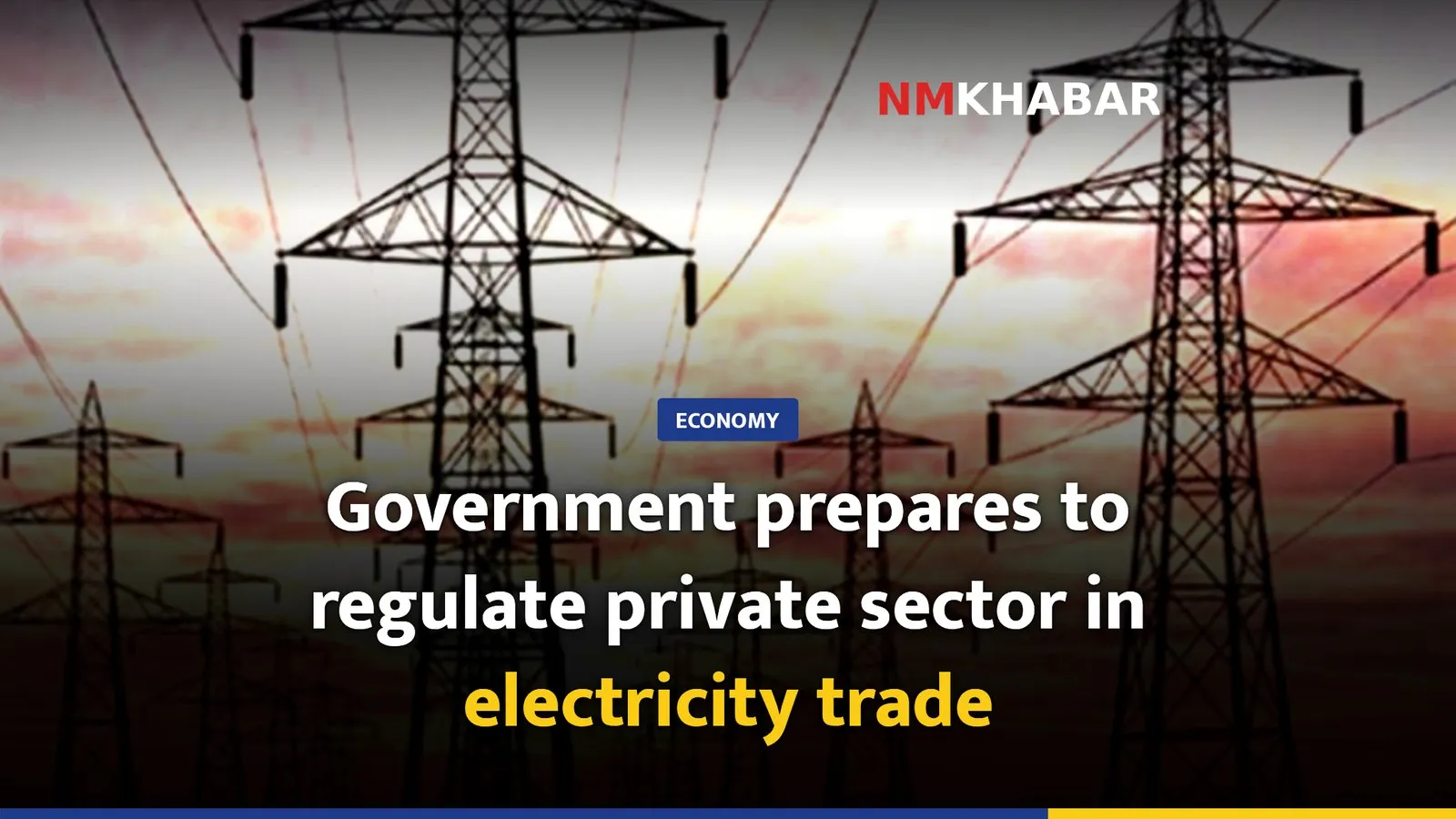
The government is preparing to regulate private sector participation in electricity trading, a move aimed at balancing growing domestic power generation with the need to expand into regional and cross-border markets. The Ministry of Energy, Water Resources and Irrigation (MoEWRI) states that strengthening the legal, regulatory, and institutional framework for electricity trade is essential to manage the expanding production capacity and secure new markets for surplus power in the coming years.
Nepal’s total installed electricity generation capacity reached 4,120 megawatts (MW) by the end of fiscal year 2082/83, with the private sector contributing 82.5% of the total. As generation continues to increase, the country faces the challenge of expanding internal consumption and developing the capacity to sell surplus electricity in regional and international markets. Electricity trade involves commercial processes such as market exploration, purchase-sale agreements, price and market risk management, transmission system utilization, scheduling, metering, settlement, and payments.
To facilitate this, the MoEWRI plans to create an environment that allows private companies to explore markets, identify trading partners, and manage market and financial risks. Proposed No Objection Certificates (NOCs) or Letters of Intent (LOIs) for private electricity trading companies will be considered as preparatory steps for future electricity markets, rather than final permits or licenses for immediate operation. These certificates aim to provide a basis for companies to advance necessary legal, institutional, financial, technical, and commercial preparations.
However, an NOC or LOI will not guarantee any specific electricity volume, purchase, or sale. It will also not automatically grant transmission capacity reservation, open access, or approval for cross-border electricity trade. Companies seeking to conduct actual electricity trade must comply with prevailing laws, regulations, technical standards, and obtain necessary approvals. Commercial risks, including market, price, counterparty, payment, and foreign exchange risks, will be borne by the respective trading entities.
Effective electricity market development requires more than just establishing trading companies, according to the MoEWRI. Clear and systematic provisions for open access, transmission capacity allocation, scheduling, metering, settlement, payment security, risk management, market conduct, and regulatory compliance are crucial. For cross-border electricity trade, market rules, government approvals, system operations, and cross-border trading mechanisms of the respective countries are also necessary, demanding clear roles and coordination among relevant bodies.
Regulatory provisions under the Electricity Regulation Commission Act, 2074 (2017), are being developed to govern electricity trade. Additionally, guidelines on open access to the electricity transmission and distribution system have been issued, with further regulatory and technical arrangements underway for their effective implementation.
Historically, the Nepal Electricity Authority (NEA), the state-owned utility, held a monopoly on electricity trading, with private sector involvement limited to generation under the Electricity Act 2049 (1992) and Hydropower Development Policy 2001. However, with increasing production, especially a surplus during the monsoon season, and the signing of a long-term agreement with India in January 2024 to export 10,000 MW over 10 years, the need for private sector participation has grown.
The MoEWRI is currently studying whether existing legal frameworks are sufficient or if new legislation is required to enable private sector involvement. A draft has been sent to the Ministry of Law, Justice and Parliamentary Affairs, according to then-Energy Secretary Sarita Duwadi on August 14, 2026. The government is positive about allowing private companies to seek international markets through a business-to-business (B2B) model in coordination with the NEA. The Electricity Regulation Commission has also been requested to set wheeling charges, which would facilitate private sector electricity trade with India. Furthermore, the Cabinet’s March 26, 2026, meeting approved a governance reform agenda, tasking the MoEWRI to prepare an energy export strategy within a month and arrange for high-value sales of peak-time electricity exports.
Despite these preparations, several challenges and uncertainties remain. The exact role, authority, and responsibilities of the NEA, and how state revenue will be protected, need clarification. The practical implementation of risk management and how necessary infrastructure and approvals will be provided after NOC/LOI issuance are also unclear. The five-year halt on Power Purchase Agreements (PPAs) has created problems for ongoing projects and deterred new investment, with banks hesitant to finance projects under a ‘take and pay’ model. Concerns have also been raised that the entry of the private sector, potentially driven by “limited business pressure” without adequate preparation, could lead to new problems for the energy sector.