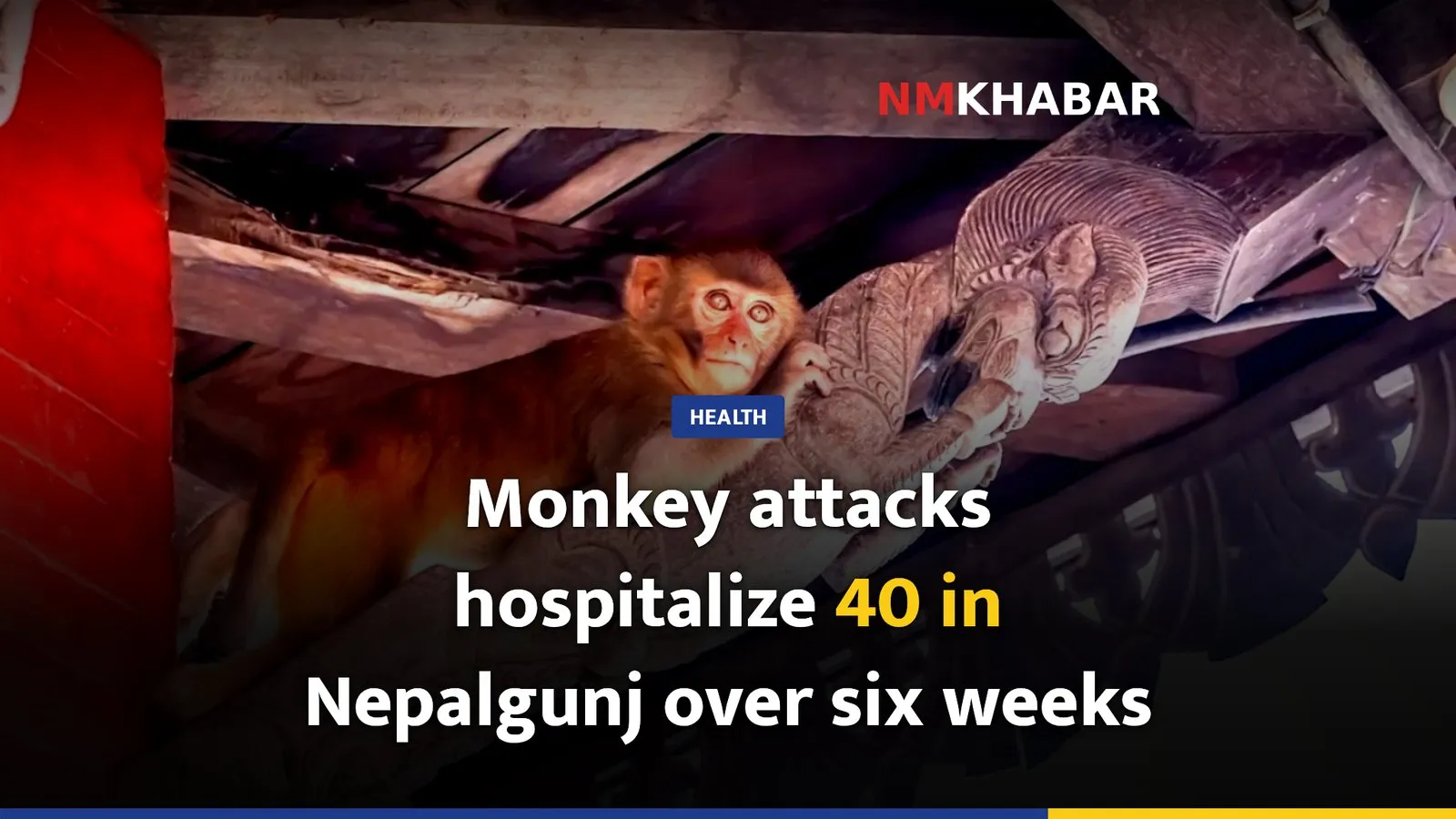
Forty people have sought medical treatment at Bheri Hospital in Nepalgunj, Lumbini Province, over the past six weeks due to monkey attacks, as incidents of monkeys entering homes and shops disrupt daily life and raise concerns among residents.
Dr. Badri Chapagain, a physician at Bheri Hospital, described the rise in monkeys entering private residences and businesses to attack people as a “concerning” trend. Local resident Pravez Khan reported that monkeys entered his home and attacked three of his relatives, according to Nepal News.
Rising Human-Wildlife Conflict
The escalating monkey attacks in Nepalgunj reflect a broader pattern of human-wildlife conflict, intensified by factors such as climate change, habitat destruction, and food scarcity. Experts suggest that these conditions are pushing wildlife into urban areas, leading to more frequent and dangerous encounters.
Dr. Nabin Darnal, Medical Superintendent at Bheri Hospital, noted that while dog and cat bites are common, the increase in monkey attacks within urban areas is unusual for the hospital. The hospital is treating these incidents as wild animal bites and providing rabies vaccinations.
According to Dr. Chapagain, Bheri Hospital recorded 1,036 animal bite cases in the 45 days leading up to September 21, 2026. This included 865 dog bites, 110 cat bites, 40 monkey bites, and 21 rat bites. Although monkey bites are numerically lower, the trend of monkeys entering homes makes these incidents particularly alarming.
Nepal has experienced severe weather events, including flash floods in August 2026 and other major river floods, which destroyed homes and bridges and damaged parts of a hydropower station. Such events simultaneously impact human settlements and animal habitats, potentially increasing human-wildlife conflicts.
Wider Regional Impact
The problem of human-wildlife conflict is not limited to Nepalgunj. Farmers in Madhesh Province annually suffer crop losses from wild animals such as nilgai, wild boars, deer, and elephants. In some areas, the threat from wildlife has forced entire villages to relocate, severely impacting daily life.
Between mid-July 2024 and mid-July 2025, Madhesh Province reported 14,821 incidents of human-wildlife conflict, resulting in 134 human deaths and 457 animal fatalities. This data highlights the severe and widespread nature of the conflict.
Local Government Response and Health Advice
Prashant Bisht, Mayor of Nepalgunj Sub-metropolitan City, stated on October 11, 2026, that the local government is developing a plan to address the monkey problem. However, specific details of these measures have not yet been released.
Medical professionals advise anyone bitten by a monkey to seek immediate medical attention and clean the wound without delay. They emphasize that even minor bites should be taken seriously due to the risk of infections, including rabies. The Centers for Disease Control and Prevention (CDC) recommends immediate first aid and considering antiviral therapy for anyone exposed to a macaque monkey.
The Rastriya Swatantra Party (RSP) had included measures for monkey control in its manifesto, such as sterilization, forest gardens, support for alternative crops, electric fences, and relocation. However, the party has not taken concrete steps since coming to power.