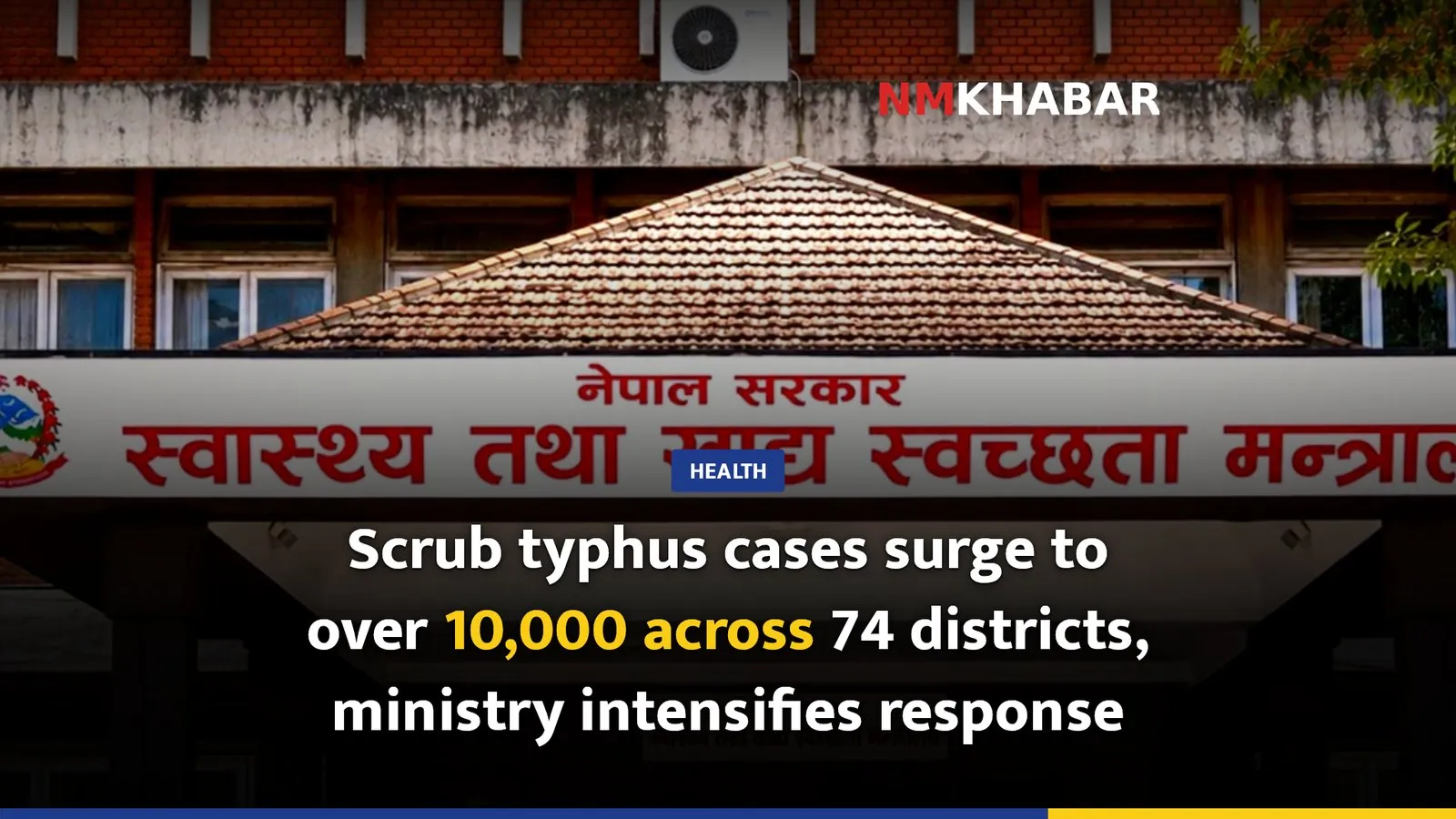
Nepal’s Ministry of Health and Food Hygiene has intensified its response to a widespread scrub typhus outbreak, with 10,210 cases and seven verified deaths reported across 74 districts since January 2026. The Epidemiology and Disease Control Division (EDCD), under the ministry, confirmed these figures on October 7, 2026, as it stepped up monitoring, testing, treatment, and public awareness campaigns.
The latest data from the EDCD indicates a rapid increase in infections. On October 1, 2026, 9,923 cases and seven deaths had been confirmed nationwide. By October 3, 2026, the number of confirmed cases was 9,872, before reaching the current total of 10,210 by October 7, 2026.
In response to the escalating situation, the Ministry of Health and Food Hygiene, led by Minister Nisha Mehta since March 27, 2026, and Secretary Dr. Bikash Devkota, has been coordinating with provincial and local authorities. Discussions on prevention and control have been ongoing since Asar (mid-June to mid-July) with chief officials and provincial secretaries across all seven provinces and several local levels.
The ministry is leveraging advanced disease surveillance systems, including the Early Warning and Reporting System (EWARS) and the Surveillance Outbreak Response Management and Analysis System (SORMAS), to regularly monitor the infection’s status and trends. Yashoda Aryal, the ministry’s spokesperson and head of the Health Coordination Division, along with co-spokesperson Dr. Samir Kumar Adhikari, are involved in these efforts.
To ensure timely testing and treatment, the ministry has dispatched rapid test kits to provinces and local levels based on need. Currently, 5,000 test kits are held in buffer stock at the Management Division of the Health Services Department. Essential antibiotics and other medications are also being supplied to affected areas.
The ministry is also focusing on enhancing the capacity of health workers for early diagnosis and effective case management. Virtual and in-person training and orientation programs on scrub typhus diagnosis and management are underway. The EDCD reported that approximately 1,000 doctors and health workers received such training and orientation during Asar alone.
Public awareness initiatives are being conducted through the National Health Education, Information and Communication Centre, which is broadcasting health education materials on scrub typhus prevention and control. The ministry stated it continues regular monitoring, expands access to testing and treatment, deploys health workers, and coordinates with local levels in high-risk areas.
Rising Incidence and Ministry Restructuring
Scrub typhus incidence has significantly increased in Nepal in recent years. Research conducted at Patan Hospital in 2004 first identified the infection in Kathmandu. Public awareness about the disease grew after 2015, particularly following the deaths of three children at the BP Koirala Institute of Health Sciences in Dharan in 2017, prompting government-led public awareness campaigns.
The EDCD attributes the rise in scrub typhus infections to increased outdoor work in grassy and bushy areas during the monsoon and post-monsoon seasons, when the mites carrying the disease are more prevalent.
The Ministry of Health and Food Hygiene received its current name as part of the government’s decision to reduce the number of ministries from 22 to 18.
Ongoing Challenges and Discrepant Data
Diagnosing scrub typhus remains challenging due to its symptoms mimicking many other infectious diseases. A lack of public awareness also poses a significant hurdle in disease control. Currently, no vaccine is available, making prevention and timely treatment the only options.
A discrepancy exists in the total number of scrub typhus-related deaths reported nationwide. While the EDCD verified seven deaths, separate reports indicate that Salyan district alone recorded 606 infections and nine deaths by October 6, 2026. These deaths occurred in Darma Rural Municipality (eight) and Chhatreshwari Rural Municipality (one). Earlier, by October 1, 2026, Darma Rural Municipality in Salyan had reported over 600 infections and eight deaths. This discrepancy highlights potential challenges in data collection.
An EDCD team, led by Dr. Gokarna Dahal, is currently conducting an on-site study in Salyan to further investigate the infection’s status, assess the situation, and formulate future strategies. The ministry has pledged to continue its intensified monitoring, expand access to testing and treatment, deploy health workers, and maintain coordination with local levels in highly affected areas.