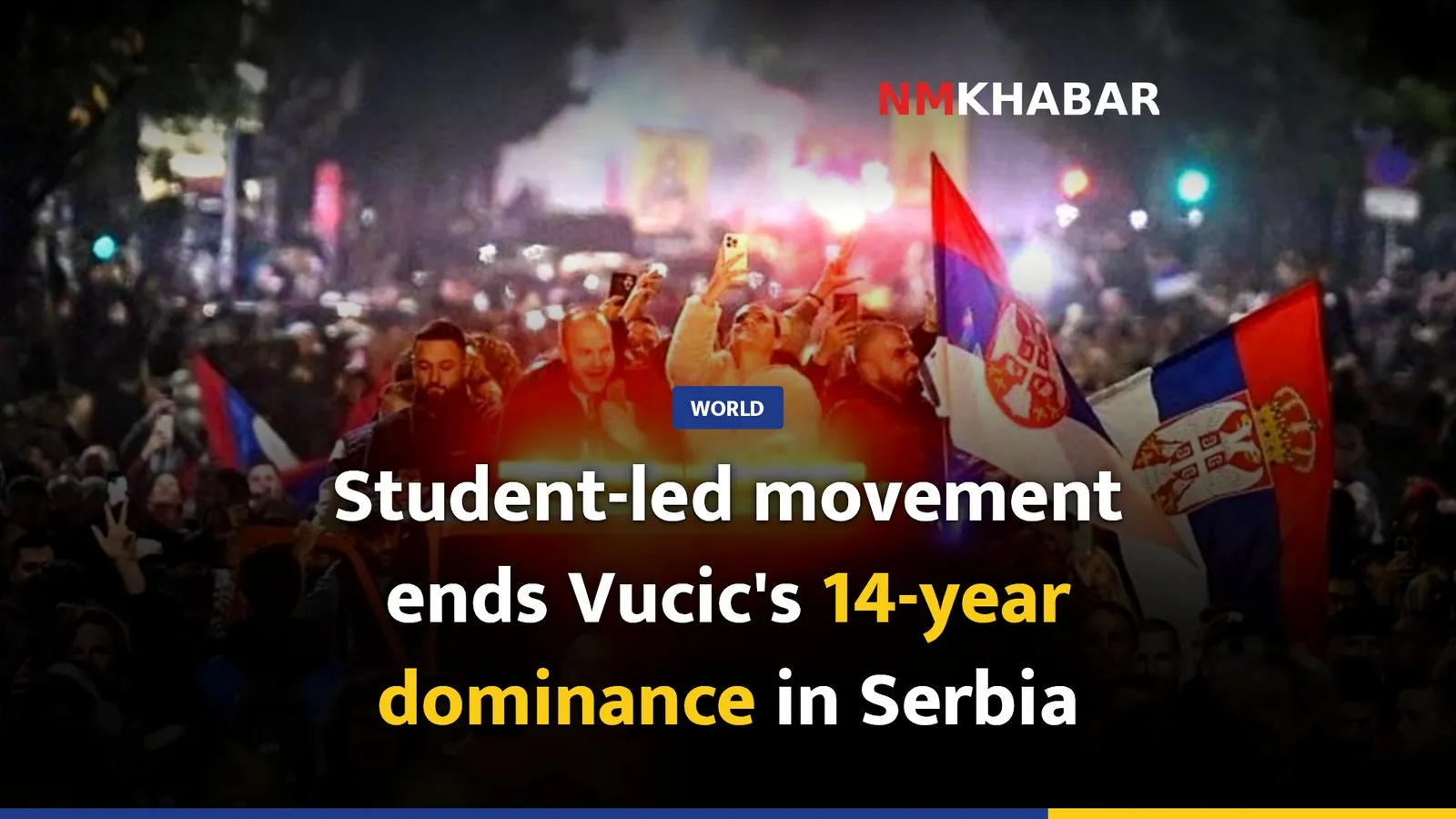
Aleksandar Vucic, Serbia’s long-serving leader, conceded defeat on Sunday in parliamentary elections, marking a seismic political shift that ended his 14-year dominance. The student-led ‘Students’ List’ movement triumphed over Vucic’s right-wing Serbian Progressive Party (SNS), leading to euphoric celebrations in the capital Belgrade and other Serbian cities.The outcome, announced by Vucic himself about an hour and a half after polls closed, followed two years of protests triggered by a deadly train station canopy collapse in Novi Sad in 2024. These demonstrations, which blamed high-level corruption and cronyism for the tragedy, ultimately coalesced into a powerful political force.Election results and Vucic’s concessionVucic, who had resigned as president last month to lead his party’s campaign for the prime minister’s post, admitted defeat at his party’s election night event. He projected that the ‘Students’ List’ would secure between 135 and 140 seats in the 250-member Parliament, while his SNS party would take around 105 seats. According to Vucic, the ‘Students’ List’ garnered approximately 2.2 million votes, compared to his party’s 1.7 million.Preliminary figures from Serbia’s election commission, the Republic Electoral Commission (RIK), indicated a record high turnout. Final official results from the RIK are still pending. In his concession speech, Vucic attributed his loss to Serbia’s independent media and alleged interference by unnamed European countries and an “American deep state.”However, Ilija Srdanović, a lead candidate for the ‘Students’ List’ and a cardiologist and professor at Novi Sad’s Faculty of Medicine, told BBC Serbian that the victory meant Serbia “will be a free state” and expressed hope to “free the country from tyranny.”Rise of the student movementThe ‘Students’ List’ movement emerged from university students’ protests following the Novi Sad train station incident on November 1, 2024, which killed 16 people and seriously injured one. Investigations into the cause of the collapse were ongoing as of April 2026. The movement, initially leaderless, gained popular support across Serbia by campaigning on a non-partisan effort to rebuild the country’s economy and restore its democracy.Despite being vilified by pro-government media, students used youthful energy to attract disillusioned voters, cycling and walking through rural areas—traditionally Vucic’s strongholds. The movement fielded a diverse list of candidates, including experts, athletes, farmers, and artists, rather than established politicians, to counter Vucic’s one-man rule and foster a sense of community.Impact on Nepalis in SerbiaThe political shift in Serbia could have implications for Nepali students and workers residing there. A January 2025 report indicated that Nepalis were among those irregularly entering Serbia from various countries. In December 2025, Nepali workers in Kragujevac, Serbia, faced protests from local residents, with chants like “Go back to Nepal.” Miodrag Pantovic, a Belgrade demographer, noted in February 2026 an increase in foreign citizens, including those from South Asian countries, in Serbia.The process for a Serbian student visa (Type D – Long-Stay Student) for Nepali citizens typically takes 15-30 working days. Upon arrival, individuals must apply for a temporary residence permit (Privremeni boravak) with the Ministry of Internal Affairs (MUP) within 30 days.What’s next for SerbiaThe final official results of the parliamentary elections are still awaited from the Republic Electoral Commission (RIK). It remains unclear how the ‘Students’ List’ will form a government and who will lead it, given the movement’s lack of an obvious leader. Serbia is also scheduled to hold presidential elections by December 26, 2026, with both the ‘Students’ List’ and the Socialist Party of Serbia announcing their participation.The international community will be closely watching the new government’s approach to its European Union accession process and its relationship with Russia, especially given Vucic’s past stance of backing EU candidacy while refusing to impose sanctions on Russia.
Student-led movement ends Vucic’s 14-year dominance in Serbia
A student-led movement has ended Aleksandar Vucic's 14-year political dominance in Serbia after he conceded defeat in snap parliamentary elections on Sunday.
Nmkhabar English Desk
3 min read
Size:
Tags:
#Parliamentary Election
Nmkhabar English Desk
Correspondent · Nmkhabar
NM Khabar English desk. Stories are prepared with AI assistance and checked against their sources — how we work: https://nmkhabar.com/ai-policy/ . Report an error: info@nmkhabar.com