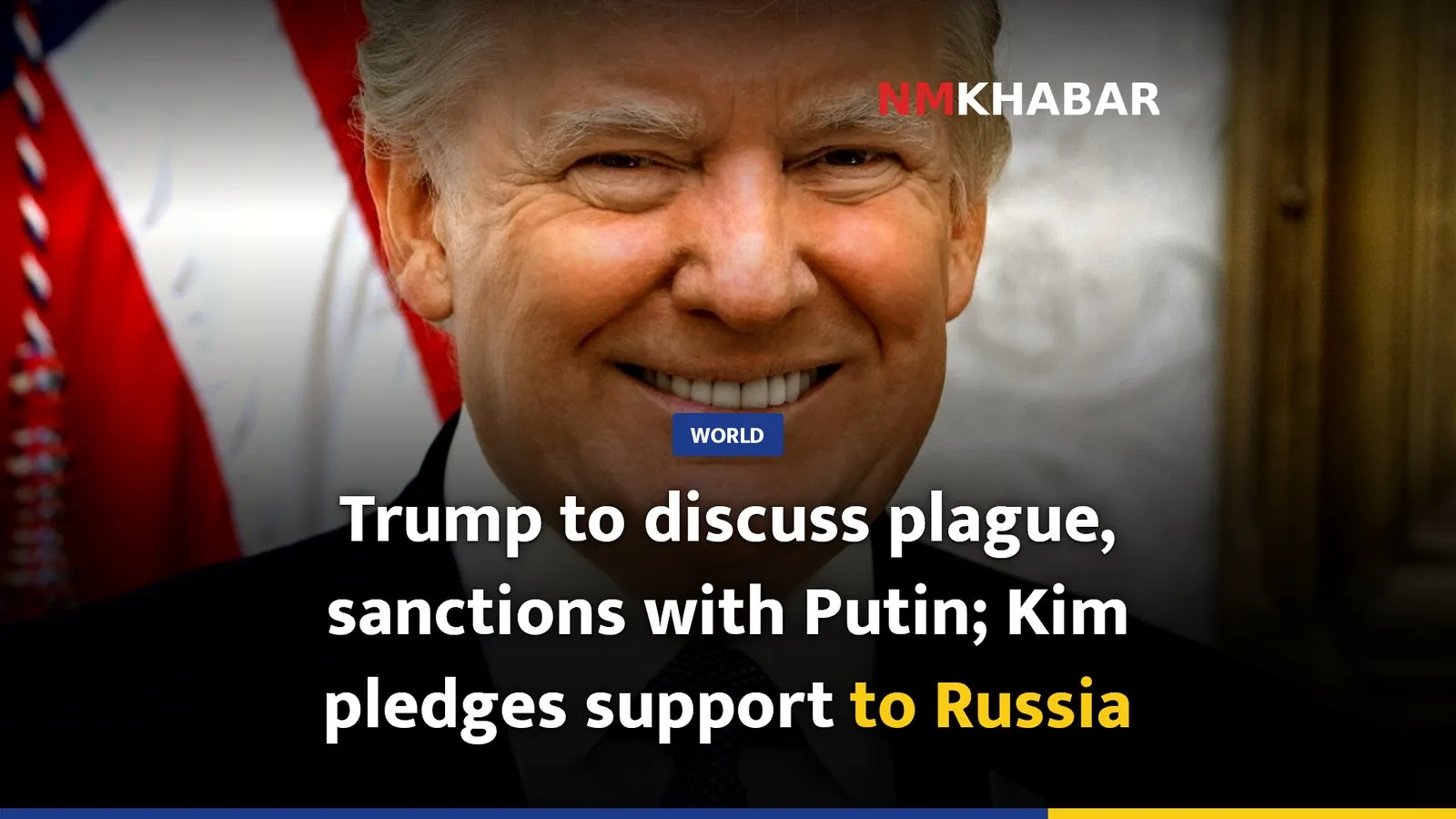
US President Donald Trump announced a call with Russian President Vladimir Putin on Tuesday, October 6, 2026, to discuss a possible plague incident in Siberia and impending US sanctions. Trump stated he would speak “very soon” and could report on the matter by “tomorrow,” October 7, 2026. Separately, North Korean leader Kim Jong-un pledged to deepen his country’s strategic partnership with Russia in a birthday letter to President Putin on Wednesday, October 7, 2026.
In his letter, Kim addressed Putin as “my dearest friend” and “my dear comrade,” vowing “invariable support” for Russia’s “sacred war of justice” to defend its “sovereignty, security interests and territorial integrity.” North Korea has provided military support to Russia’s war in Ukraine since 2024, with Ukrainian and South Korean estimates suggesting 14,000 to 15,000 troops have been sent. The ties between Russia and North Korea deepened following a mutual defense pact signed by the two leaders on June 18, 2024, which laid the groundwork for North Korea’s military assistance.
Trump’s announcement of the call with Putin comes as his administration faces an October 18, 2026, deadline to decide which Russian entities, if any, to sanction under the Lindsey O. Graham Sanctioning Russia and Iran Act of 2026. President Trump signed this law on September 18, 2026. The act, introduced by Senator Lindsey Graham (R-SC) on April 1, 2025, and passed by the Senate on August 7, 2026, and the House on September 16, 2026, was renamed in memory of Senator Graham after his death in July 2026. It allows for tariffs up to 500% on US imports from Russia and up to 100% on goods from the top five importers of Russian oil and natural gas or countries assisting in sanctions evasion.
Siberian Plague Incident
The potential plague incident in Siberia, which Trump said he would discuss with Putin, involves the death of Darya Shipilova, a 28-year-old laboratory employee at the Irkutsk Anti-Plague Research Institute of Siberia and the Far East. Shipilova died last week, around October 2, 2026, from what Russian authorities described as “pneumonia of unknown cause,” although some reports raised suspicions of pneumonic plague. Russian officials have denied to the World Health Organization (WHO), a United Nations agency, that Shipilova died from plague, stating no dangerous disease incidents have been recorded in Irkutsk. WHO spokesperson Christian Lindmeier stated on Tuesday, October 6, 2026, that the incident presents a “very low” risk outside Russia, “low” for the rest of Russia, and “moderate to low” for Irkutsk. The US Centers for Disease Control and Prevention (CDC) is monitoring the suspected case, noting its circumstances are “unconfirmed” with no current signs of widespread threat in the US. Approximately 200 contacts of the deceased employee were monitored, with no symptoms reported as of October 6, 2026. Trump had previously expressed willingness to assist Russia, calling plague a “rough disease” and remarking that “those microbes have gotten stronger and smarter. They’re like an army.”
New US Visa Provisions for Nepalis
Amidst these global developments, the US government has implemented new visa provisions affecting Nepali citizens. Effective January 21, 2026, B1/B2 (business and tourist) visa applicants from certain countries, including Nepal, are required to post a visa bond ranging from USD 5,000 to USD 15,000. The US government is closely scrutinizing visa compliance, citing high numbers of Nepali citizens utilizing publicly funded facilities, according to 2024 foreign arrival statistics. This scrutiny has led to a temporary suspension of immigrant visas for Nepali citizens due to concerns over adherence to immigration and public-benefit regulations. The Nepali Embassy in Washington D.C. issued a warning on January 30, 2026, urging Nepali citizens in the US to strictly comply with visa conditions and avoid misuse of government-assisted public facilities, which could lead to visa or permanent residency revocation.
Upcoming Decisions and Unanswered Questions
The Trump administration is set to decide on Russian sanctions by the October 18, 2026, deadline, with Ukraine having provided a “wish list” of Russian companies, vessels, and individuals it seeks to have sanctioned. US Energy Secretary Chris Wright stated on October 4, 2026, that President Trump would “evaluate the balance of trade” regarding sanctions and “leave every decision until the end.” WHO’s risk assessment for the plague incident will be updated as more information becomes available, and Trump indicated the US could report on the matter by October 7, 2026.
Key questions remain, including whether the Trump-Putin phone call actually took place and its outcome, the definitive cause of Darya Shipilova’s death and whether it was indeed pneumonic plague, and the specific pathogen responsible for her pneumonia. The exact entities the US will sanction by October 18, 2026, and the precise number of Nepali workers and students in Russia in 2026 are also yet to be confirmed.