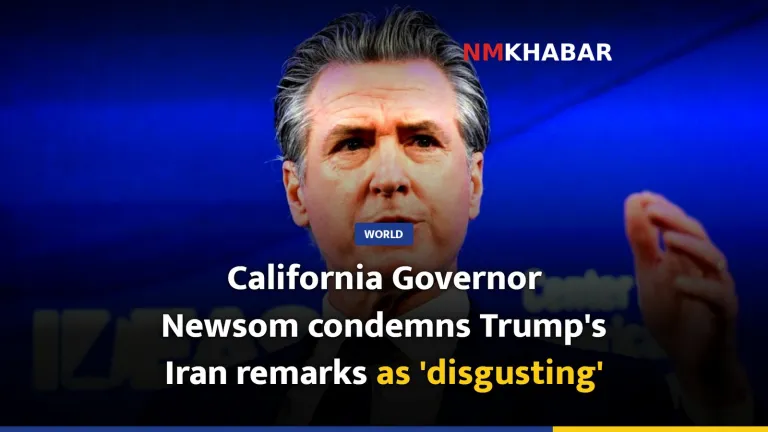
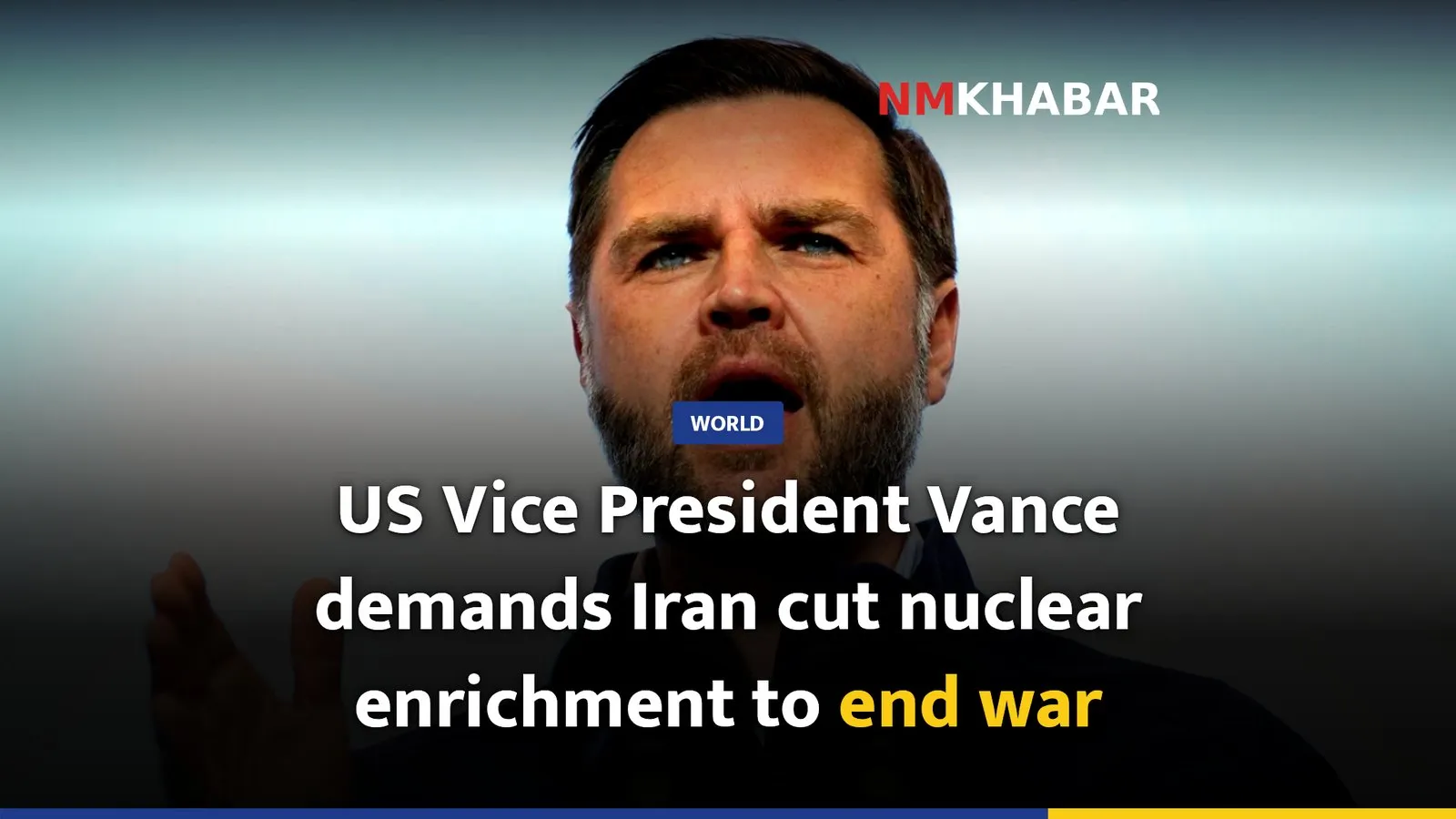
US Vice President JD Vance said on Monday that Iran must make a “meaningful” reduction in its nuclear enrichment capacity to satisfy US demands and end the countries’ seven-month war. Vance, speaking in an exclusive interview with Reuters, highlighted Washington’s uncertainty about how Tehran makes decisions in negotiations. Vance, who has taken a leading role in negotiating a settlement to the conflict, stated that any agreement would require Iran to reduce its nuclear enrichment capacity, rather than merely offer assurances of future nuclear drawdowns. “If you don’t want a nuclear weapon, then why do you need 60% enriched fuel? And if you want to show commitment to not building a nuclear weapon, don’t build highly enriched fuel. That’s a very basic threshold issue,” Vance said. Complicating peace efforts, Vance said the United States is uncertain about who makes decisions in Tehran. He noted that the US is in talks with Iranian President Masoud Pezeshkian and Foreign Minister Abbas Araqchi, but it remains unclear how much authority they wield within Iran’s power structure, especially after joint US-Israeli strikes at the start of the war killed Supreme Leader Ayatollah Ali Khamenei on February 28, 2026. Separately, President Donald Trump said on Tuesday that his “biggest problem” is not knowing who is running Iran. In response, Iran’s Foreign Ministry spokesperson Esmaeil Baghaei said on Sunday that US officials are well aware of their Iranian counterparts and Iran’s decision-making system. Baghaei stated that the problem lies in the “contradictory positions and mixed messaging from US officials.” Global Impact and Political Controversy The war, which began on February 28, 2026, with US-Israeli joint aerial attacks on Iran, has significantly impacted global energy markets. The Strait of Hormuz, a vital global energy shipping route, remains closed for commercial shipping due to war risk insurance costs, with only four ships passing on October 4 compared to a normal 85. Iran has attacked at least 12 tankers in the Strait between September 29 and October 5. Iran maintains the Strait will remain closed until the US meets its conditions, including ending the war on all fronts, removing naval blockades and sanctions, returning frozen Iranian assets, paying war reparations, recognizing Iran’s right to uranium enrichment, and accepting Iran’s role in the waterway. The conflict, with a reported monthly price tag of $3 billion, has become a key issue ahead of the November 3, 2026 midterm elections in the United States. Higher energy prices have put President Trump and fellow Republicans on the defensive in competitive states that will decide control of Congress. President Trump’s recent comments at a rally in Nebraska on Monday sparked controversy when he appeared to encourage Iran to “take out” Los Angeles or San Diego, stating it was a “small price to pay” for keeping the world safe. California Governor Gavin Newsom called these remarks “disgusting and disqualifying,” while Los Angeles Mayor Karen Bass described them as “dangerous – if not treasonous.” White House spokesman Steven Cheung defended Trump, saying his comments were taken out of context and were about US cities being threatened if a nuclear Iran had not been stopped. Nepal’s Concerns and Outlook For Nepal, the conflict has led to a travel advisory issued by the Ministry of Foreign Affairs on February 1, 2026, urging Nepali citizens in Iran to leave and others to defer travel. As of March 1, 2026, six Nepali citizens remained in Iran. One Nepali citizen, Amrit Jha, was detained by Iranian authorities on March 19, 2026, while working on a ship in the Strait of Hormuz. The Ministry of Foreign Affairs stated on March 1, 2026, that it was prepared for potential rescue operations, with 82,100 Nepalis having registered their details for security monitoring. Vance had brokered a provisional peace agreement in September that quickly fell apart. President Trump has since rejected Tehran’s latest offer to reopen the Strait of Hormuz within seven days and warned that military operations could intensify after the midterms. Satellite images on October 6, 2026, showed new activity at Iran’s Minzadehi nuclear site, previously bombed by the Israel Defense Force (IDF). The specific details and scope of the “provisional peace agreement” brokered by Vance in September, and the exact reasons for its rapid collapse, remain unclear. Furthermore, the precise nature and extent of Iran’s current nuclear enrichment activities at sites like Minzadehi and the Isfahan nuclear complex are not fully known, as the International Atomic Energy Agency (IAEA) had not inspected the Isfahan site by March 2026.
US Vice President Vance demands Iran cut nuclear enrichment to end war
US Vice President JD Vance stated on Monday that Iran must significantly reduce its nuclear enrichment capacity to end the seven-month war, even as Washington struggles to understand Tehran's decision-making.
NM Khabar English Desk
7 October 2026, 5:54 am
4 min read
Size:
NM Khabar English Desk
Correspondent · NM Khabar
NM Khabar English desk. Stories are prepared with AI assistance and checked against their sources — how we work: https://nmkhabar.com/ai-policy/ . Report an error: info@nmkhabar.com