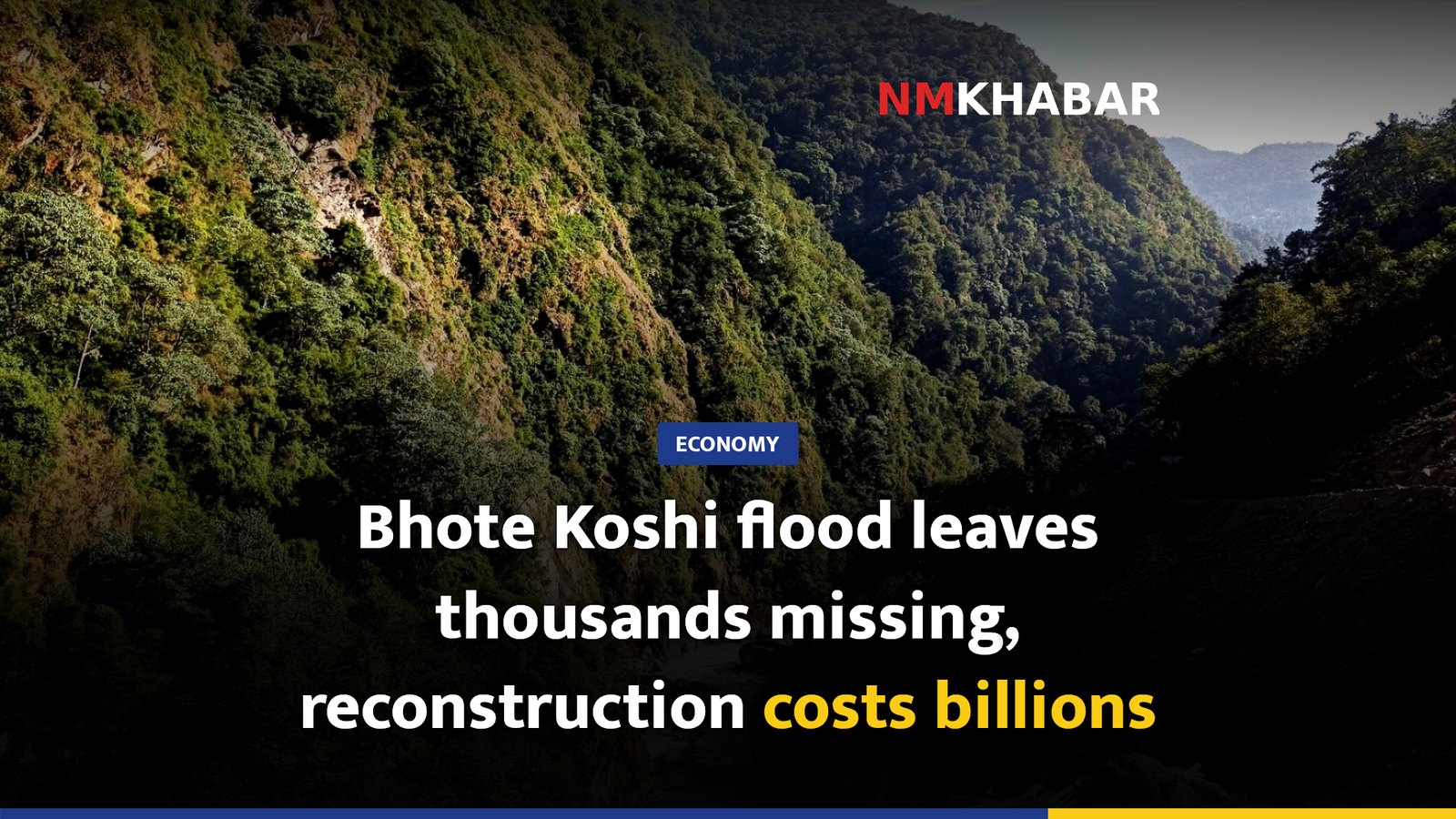
A devastating flood in Nepal’s Bhote Koshi river on August 26, 2026, has left 4,718 people missing and caused an estimated Rs 408.28 billion in damages, with a joint team of Nepali and Chinese scientists now conducting a 20-day field study to determine its source and evolution.
The flood, which originated from a massive ice and rock avalanche in the border region of Rasuwa, Bagmati Province, has also resulted in the recovery of 1,454 bodies by September 30, 2026, according to Nepal Police. Search operations for the remaining missing individuals are ongoing.
The scale of destruction is immense, with the National Disaster Risk Reduction and Management Authority (NDRRMA), Nepal’s apex disaster management body, estimating reconstruction and rehabilitation efforts will require Rs 723.31 billion. The flood damaged 7,570 private homes, completely destroying 7,500 of them. Additionally, 48 public buildings, 18 schools, seven health facilities, and 30 cultural heritage sites were affected. By October 4, 2026, 821 displaced individuals had received warm clothes and essential supplies at two holding centers in Swayambhu, Kathmandu.
Investigating the flood’s mysterious origins
The catastrophic event began around 8:40 AM on August 26, 2026, when a large mass of ice and rock fell in the border area of Rasuwa. This avalanche plunged into the Lhende Khola, blocking the stream and forming a temporary dam that subsequently burst. The resulting flood surged down the Bhote Koshi, reaching the Trishuli and Narayani river systems hundreds of kilometers downstream to Chitwan and Nawalparasi districts.
While initial assumptions pointed to an earthquake as the cause, scientists have concluded that the collapse of approximately two square kilometers of rock face and a large section of a glacier generated earthquake-like tremors. The descent of rock and ice from an altitude of about 5,100 meters to 3,750 meters released enormous energy. The flood traveled at an estimated speed of 88 kilometers per hour up to Rasuwagadhi, destroying critical water monitoring stations along the riverbanks without providing sufficient time for early warnings.
Scientists are considering several factors, including earthquake-triggered landslides, snow-rock avalanches, and glacial lake outbursts, as the Himalayas are warming rapidly. The joint Nepali and Chinese scientific team is conducting a 20-day field study to analyze the disaster’s source, evolution, and overall impact.
Reconstruction challenges and next steps
The flood significantly impacted Nepal’s energy sector, affecting 13 hydropower projects with a combined capacity of 759 megawatts, along with other projects totaling 24 megawatts. The Ministry of Energy, Water Resources and Irrigation estimates the preliminary cost for rebuilding affected energy infrastructure to be around Rs 390 billion. Furthermore, the immediate reconstruction of 33 completely washed-away suspension bridges is not feasible, as the necessary steel wire ropes are not available in Nepal, necessitating an international tender process.
The National Planning Commission (NPC), the government’s principal advisory body for planning, is set to release its Post-Disaster Needs Assessment (PDNA) report for the flood-affected areas before Dashain. Field research for the PDNA has been completed, involving direct engagement with over 7,000 households in the affected regions. The Nepal Insurance Authority has issued the ‘Rasuwa Flood Claim Payment Procedure, 2083’ to facilitate swift, transparent, and efficient settlement of insurance claims. By September 29, 2026, a total of 2,180 insurance claims, amounting to an estimated Rs 20.98 billion, had been filed.
The NDRRMA’s executive committee has decided to transition the search and rescue operations into a rehabilitation and recovery phase. While essential search efforts will continue, the focus will shift to identifying and managing bodies and human remains, rehabilitating affected citizens, and restoring basic infrastructure. However, reports indicate that two new temporary lakes have formed in the upper Lhende Khola area after the flood, posing an ongoing risk to downstream communities should they burst.
While the flood’s impact reached Chitwan and Nawalparasi, which are Terai districts, there is no further information available regarding direct impacts on Madhesh Province or other specific Terai regions.