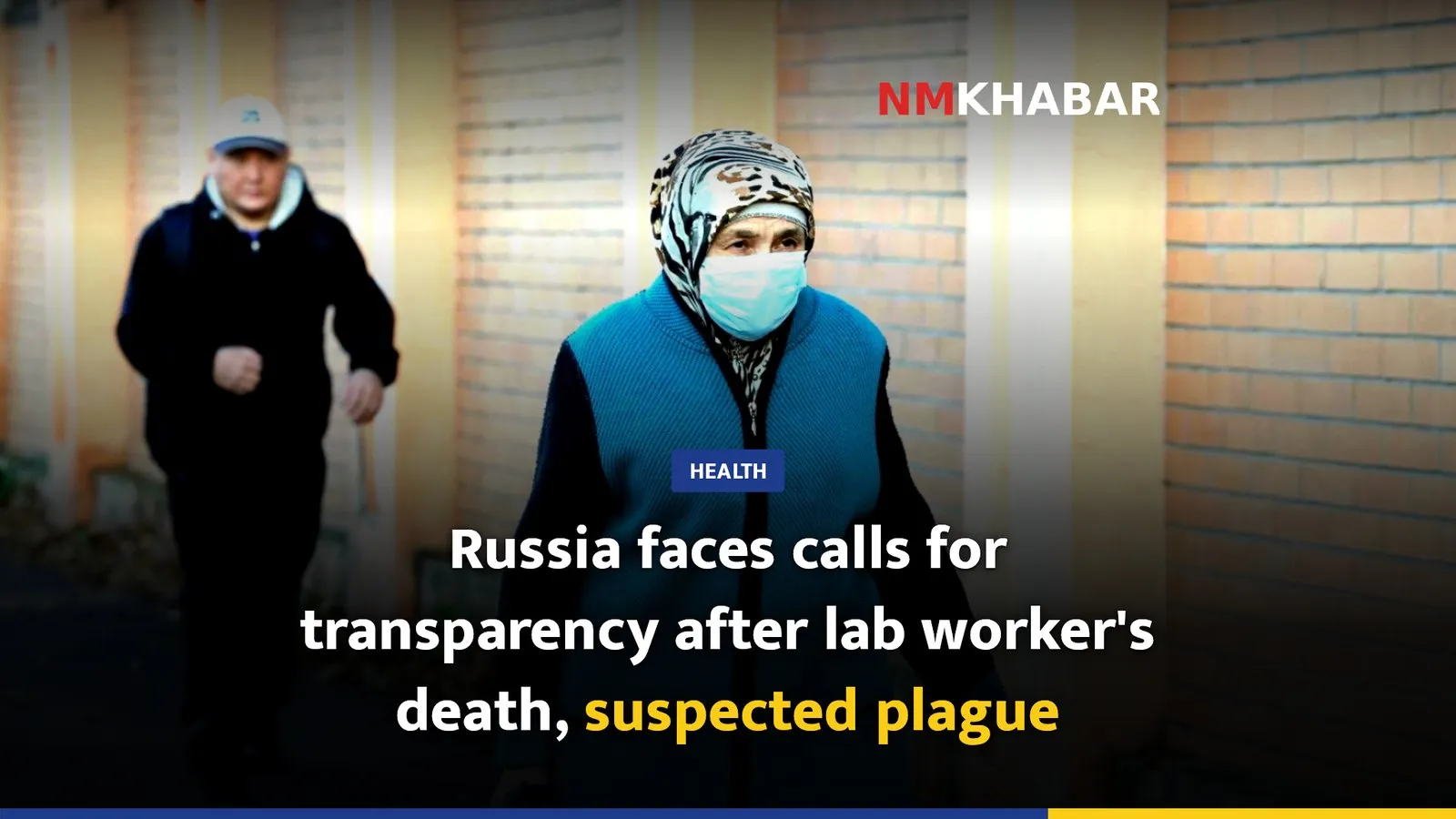
The World Health Organization (WHO), the UN health agency, is demanding transparent information from Russia following the death of a 28-year-old laboratory technician in Siberia, Daria Shipilova, who is suspected to have died from pneumonic plague. The United States has also expressed concern over Russia’s lack of transparency, while Nepal has placed its health surveillance system on high alert.
Shipilova, an employee at the Irkutsk Anti-Plague Research Institute in Siberia, died on October 2, 2026. She had been hospitalised on September 29, 2026, with cold-like symptoms or severe pneumonia. Initial, unconfirmed reports cited by the WHO suggest she may have contracted pneumonic plague following an alleged accidental laboratory exposure on September 25, 2026. Russian authorities, however, have denied any link to plague or her work, stating her death was due to “pneumonia of unknown origin.” The Irkutsk Anti-Plague Research Institute of Siberia and the Far East studies dangerous pathogens, including plague, which naturally occurs in wild animals in the region.
International Scrutiny and Concerns
The incident has drawn international scrutiny, with the WHO expressing its inability to conduct a full risk assessment due to insufficient information from Russia. Tedros Adhanom Ghebreyesus, the Director-General of the WHO, urged Russia on Wednesday, October 7, 2026, to provide transparent details regarding Shipilova’s lab tests, the health status of her contacts, and the public health measures implemented. Russian authorities informed the WHO that 200 contacts were placed in quarantine. Maria Van Kerkhove, the WHO director of epidemic and pandemic management, confirmed that while Russia has responded to initial queries, the agency has sent further questions. The WHO is also seeking clarification on unconfirmed media reports of a second employee at the research institute contracting “pneumonia of unknown origin.”
US President Donald Trump on Wednesday, October 7, 2026, stated that Shipilova’s death did not appear to be linked to a biological weapon. However, he voiced concern over Russia’s limited information, drawing parallels to China’s initial response to the COVID-19 pandemic. Both the United States and the United Nations have urged Russia to be more transparent. The US State Department has sent a formal diplomatic message to Russia requesting more information.
Russia’s Stance and Measures
Russia’s consumer protection and health monitoring agency, Rospotrebnadzor, maintains that the epidemiological situation in the region is stable and there is no threat of a plague outbreak. Anna Popova, chief of Rospotrebnadzor, stated that tests on the deceased woman’s contacts showed no dangerous infectious disease pathogens. Medical monitoring for all contacts has concluded as of Tuesday, October 6, 2026. Despite these assurances, quarantine restrictions were imposed at the lab and nearby hospitals in Shelekhov, with Shelekhov Mayor Maxim Modin confirming the hospital where Shipilova died was placed under quarantine. Kremlin spokesman Dmitry Peskov advised the public to follow official statements from Rospotrebnadzor rather than “rumors or speculation.”
Nepal on High Alert
Nepal has placed its health surveillance system on high alert following the suspected plague incident in Russia. Nepali health officials, however, have stated that the risk of the disease reaching Nepal is extremely low as of Wednesday, October 7, 2026. Nepal will continue its monitoring measures as international agencies gather more information.
Understanding Plague: From Black Death to Modern Treatment
Plague is caused by the bacterium Yersinia pestis, which was responsible for the “Black Death” in the 14th century. This single deadliest event in recorded human history spread across Europe, the Middle East, and northern Africa, wiping out an estimated 30 to 50 percent of the population. Pneumonic plague, the form suspected in Shipilova’s case, spreads from person to person through respiratory particles, causing a severe form of pneumonia. Symptoms, including shortness of breath and coughing up blood, can appear within 24 hours of exposure. While fatal if untreated, recovery rates are high if detected and treated with antibiotics in time. Bubonic plague, another form, is spread through bites from fleas that jump from infected rodents and causes pus-filled sores.
What Comes Next
A phone conversation between US President Donald Trump and Russian President Vladimir Putin on the issue has been scheduled, though a date has not yet been set. Trump mentioned the planned call on Wednesday, October 7, 2026, which was also Putin’s birthday. The WHO awaits Russia’s response regarding the reported second employee with pneumonia and will update its risk assessment once more information becomes available. Mongolia has tightened health surveillance at its border with Russia. The US Centers for Disease Control and Prevention (CDC) is closely monitoring the situation but has indicated no signs of a widespread threat to the United States.
Unanswered Questions Remain
The definitive cause of Daria Shipilova’s death remains unclear, with Russian authorities attributing it to pneumonia of unknown origin while the WHO cites initial reports of suspected pneumonic plague. The veracity and cause of the reported pneumonia in a second employee are also yet to be confirmed. While President Trump stated a biological weapon does not appear to be involved, the lack of full and transparent information from Russia continues to be a point of international concern. The incident also revives discussions about the origins of the COVID-19 pandemic, for which the WHO has not provided a definitive answer.