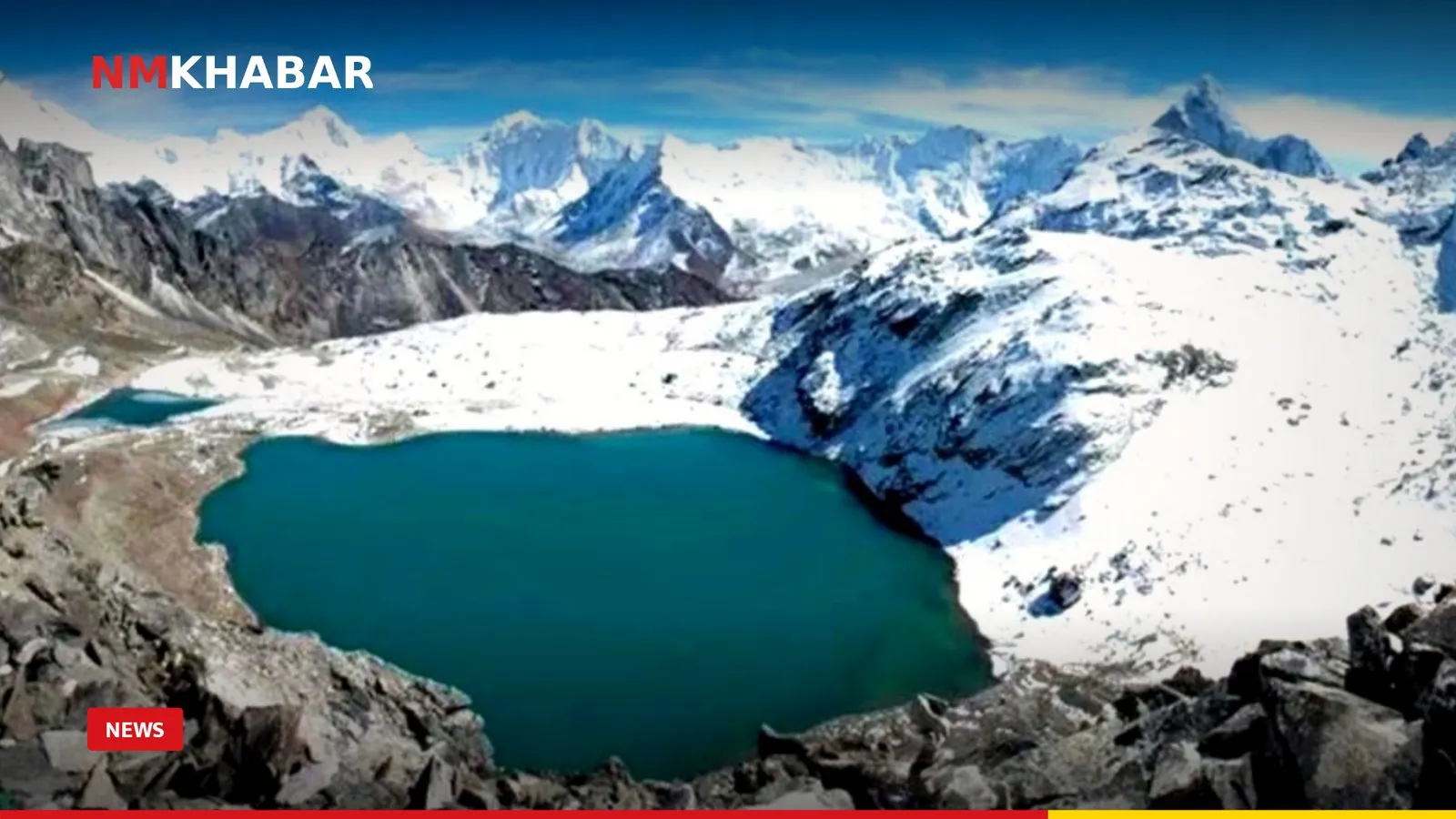
The Nepali government is launching a project worth over Rs 7 billion to mitigate the risks posed by glacial lakes and enhance flood preparedness. The initiative, named ‘Sanjivani GLOF’, will focus on reducing water levels in four high-risk glacial lakes in Manang, Sankhuwasabha, and Solukhumbu districts, and expanding flood early warning systems in four major river basins.The project, scheduled to run from 2026 to 2033, aims to address the increasing threat of glacial lake outburst floods (GLOFs), avalanches, and landslides in the Himalayan region due to climate change. The Green Climate Fund will contribute $36 million (approximately Rs 5.5 billion) to the project, with an additional $2 million (approximately Rs 300 million) from the United Nations Development Programme (UNDP). The remaining costs will be covered by the Nepali government.The four glacial lakes identified for water level reduction are Thulagi in Manang, Lower Barun in Sankhuwasabha, and Lumding Tsho and Hongu-2 in Solukhumbu. These lakes are situated above 5,000 meters. Initial plans involve reducing the water level of Hongu-2 by one meter and the other three lakes by approximately three meters, according to Dr. Rajan Bhattarai, Deputy Executive Director and Spokesperson for the Department of Hydrology and Water Resources Research, under the Ministry of Energy, Water Resources, and Irrigation.In conjunction with the lake mitigation efforts, flood early warning systems will be established in the major river basins downstream of these glacial lakes. These systems will be implemented along the Lower Barun, Arun, Dudhkoshi, and Marsyangdi river corridors. The estimated cost for expanding these flood warning systems is $7.54 million.The ‘Sanjivani GLOF’ project aims to provide 24-hour flood forecasting and early warning services. This is expected to enable timely evacuation of local residents, facilitate rescue and relief preparations, and reduce potential loss of life and property. Dr. Bhattarai emphasized the importance of these systems, stating, “Since water from glacial lakes flows into various river systems downstream, the need for an early warning system in the relevant river corridors has been felt. The goal is to provide quick flood warnings to residents in downstream areas if a glacial lake bursts for any reason.”Currently, the work of reducing water levels in glacial lakes is in the preliminary study phase. The Department of Hydrology and Water Resources Research anticipates that studies and design work will continue for another year, with fieldwork expected to commence only after 2027. “We will be busy with studies and design until 2027. Fieldwork will likely begin the following year,” Dr. Bhattarai said.Previous efforts include reducing the water level of Tsho Rolpa Lake in Dolakha by three meters in 2000 and Imja Lake in Solukhumbu by 3.4 meters in 2016, with assistance from the Nepali Army. A study by UNDP and ICIMOD identified 21 highly vulnerable glacial lakes in Nepal.Arun Bhakta Shrestha, an advisor at ICIMOD, commended the plan to reduce water levels in high-risk glacial lakes. However, he also highlighted the need to address risks from unlisted glacial ponds and landslides caused by collapsing ice-laden rocks, citing recent incidents such as the 2081 BS flood in Thame, Solukhumbu, and the Bhote Koshi-Trishuli flood on Bhadra 10 (BS) caused by a collapsing glacier section.
Background
- In 2000, the water level of Tsho Rolpa Lake in Dolakha was reduced by three meters.
- In 2016, the water level of Imja Lake in Solukhumbu was reduced by 3.4 meters with assistance from the Nepali Army.
- A study by UNDP and ICIMOD identified 21 highly vulnerable glacial lakes in Nepal.