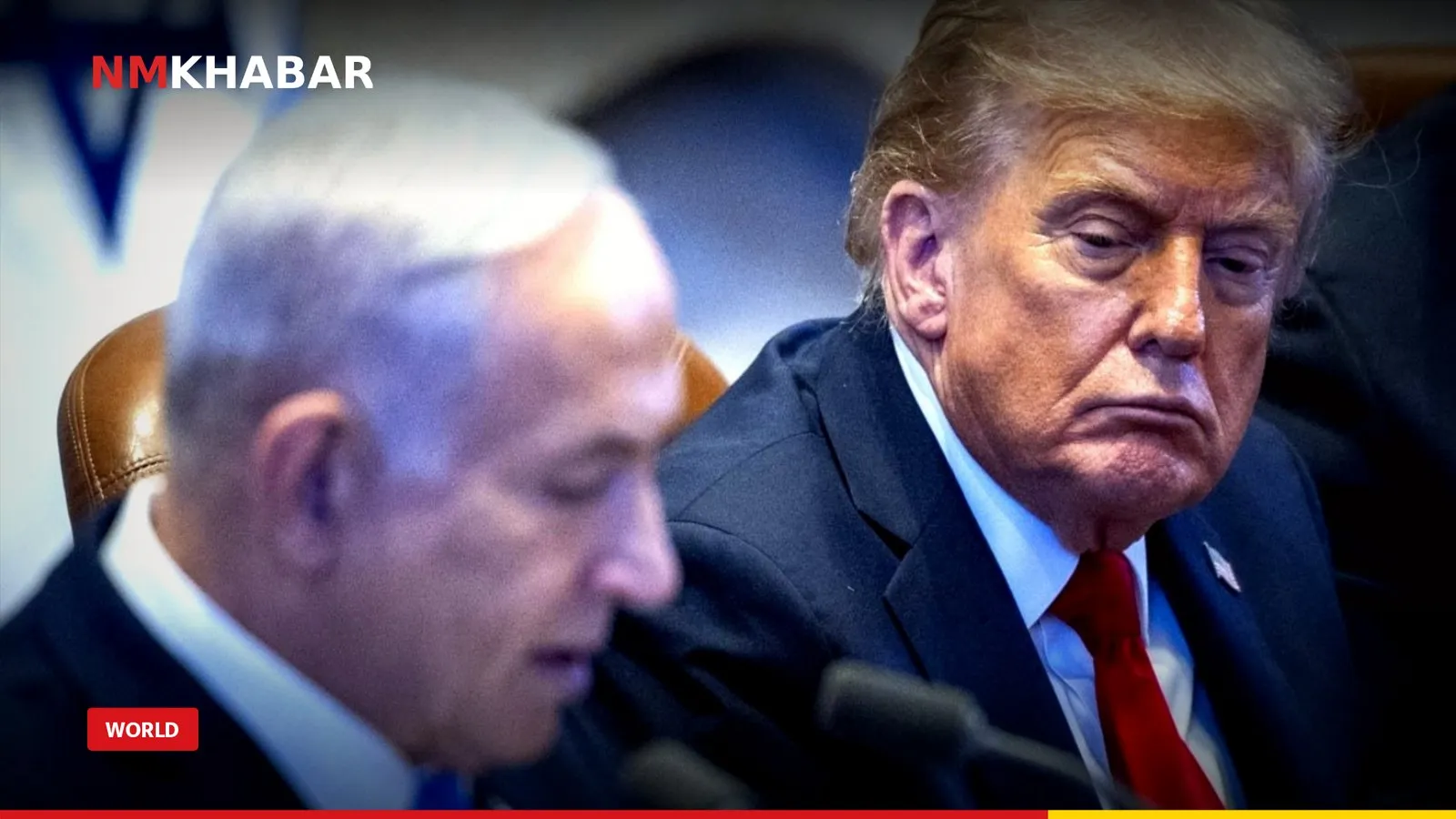
US President Donald Trump on Monday cast doubt on whether he would follow through on a threatened resumption of military strikes against Iran, just a day before the US midterm elections. This comes amidst reports of a ‘tough’ discussion with Israeli Prime Minister Benjamin Netanyahu and declining approval ratings for Trump, fueled by voter dissatisfaction with the economy.Trump, speaking at the Washington Reflecting Pool on Monday, suggested he would not attack Iran after the Tuesday midterm elections and expressed belief that a deal with Tehran could happen. He reiterated his demand that Iran not possess nuclear weapons and stated that after eliminating first and second-tier Iranian leaders, the US would now stop.Diplomatic efforts continue amid conflictTrump has expressed a preference for continued diplomatic negotiations with Iran. US Vice President JD Vance noted that there have been “a number of good conversations with the Iranians” and that he and the President “feel pretty good about the prospects for potentially coming to a negotiated settlement.”Iranian negotiators were in Doha on November 1, 2026, for talks with Qatari mediators, who are pressing both Iran and the US to return to the negotiating table. A delegation of Qatari mediators arrived in Tehran on the evening of November 2, 2026, to hold further discussions with Iranian officials on a draft agreement.Despite Trump describing his call with Netanyahu on October 31, 2026, as “very good,” an Israeli source characterized the conversation as “tough,” while a US source called it “direct.” According to Axios, Netanyahu had urged Trump to resume strikes against Iran immediately after the midterm elections, but Trump preferred to allow diplomatic negotiations to continue for the time being.Trump also stated that Washington still needed to address “one or two” remaining sites in Iran, including a suspected nuclear facility at Pickaxe Mountain, claiming the US could strike them within minutes.Declining approval and economic discontentPresident Trump’s job approval rating remains low ahead of the midterms. A Reuters/Ipsos poll conducted from October 16-19, 2026, found his approval rating at 31 percent. A Marist Poll conducted on October 27, 2026, showed Trump’s approval rating at 40 percent, with 59 percent disapproving of his performance.As American voters head to the polls, many are frustrated with the state of the economy and Trump’s management of it. The University of Michigan’s Index of Consumer Sentiment was revised to 48.0 at the end of October 2026, a 0.2 percent decrease from 48.1 in September. According to labor economist Kathryn Anne Edwards, 74 percent of Americans believe the government is doing a bad job managing the economy, the highest figure since the 1970s.However, advance estimates released by the US Bureau of Economic Analysis (BEA) on October 29, 2026, show that real gross domestic product (GDP) increased at an annual rate of 3.4 percent in the third quarter of 2026 (July-September). RBC economist Mike Reid noted that consumer spending remains robust and the unemployment rate is stable. Yet, for many voters, the economy is synonymous with inflation, according to Francis Généreux, lead economist at Desjardins Group. Rising prices have been driven by tariffs and the US-Iran war, which began on February 28, 2026.Midterm elections and Israeli political instabilityPresident Trump has warned that if the Republican Party loses control of Congress, he could face a third impeachment. He acknowledged that sitting presidents typically do not win midterm elections. The US midterm elections are scheduled for Tuesday, November 3, 2026, and their outcome will significantly impact Trump’s remaining term and US diplomacy with Iran.Meanwhile, in Israel, the October 27, 2026, election did not result in any bloc securing a clear majority to form a government. Israeli President Isaac Herzog is expected to task a party with forming a government within seven days of the election results’ publication, by November 4, 2026. If no bloc can form a government, Netanyahu’s current administration will remain in a caretaker capacity, potentially leading to another election in early 2027. This political instability could also affect Israel’s policy towards Iran.
Background
- The United States and Israel launched military attacks on Iran on February 28, 2026, starting the Iran-US war.
- This conflict has increased gas prices and raised concerns among US consumers about inflation and the economy.
- In October 2026, the US Department of Defense estimated the war had cost $47.1 billion so far.
What happens next
The US midterm elections are scheduled for November 3, 2026. In Israel, President Isaac Herzog is expected to task a party with forming a government by November 4, 2026, or another election may occur in early 2027.