The Nepali government is preparing to systematically involve the private sector in expanding cross-border electricity markets and increasing domestic consumption. This initiative aims to strengthen the necessary legal, regulatory, and institutional frameworks to balance production and demand while expanding market access for electricity.According to information released by the Prime Minister and Council of Ministers Office, Nepal is experiencing an expansion in its electricity generation capacity. The government has put forward a policy to develop the energy sector as an integrated system, linking production, transmission, domestic consumption, electricity trade, and the regional energy market.As part of this process, the private sector is expected to participate in market research, identifying potential partners, and managing commercial risks related to electricity trade. For this purpose, a system has been proposed to grant No Objection Certificates (NOCs) or Letters of Intent (LOIs) to prospective electricity trading companies as a preliminary step.However, the government has clarified that these NOCs or LOIs will not be considered final licenses for electricity trade. This approach is expected to facilitate the private sector in conducting market studies, identifying partners, and undertaking other preparatory activities for electricity trade.With increasing electricity production in Nepal, the government has prioritised expanding markets for surplus power beyond domestic demand. Its policy is to boost internal consumption and establish a foundation for expanding electricity trade with neighbouring countries and regional markets.The Ministry of Energy, Water Resources, and Irrigation has already published a draft of the ‘Energy Consumption Increase and Export Strategy, 2083’. Additionally, the Electricity Regulatory Commission has advanced regulatory provisions, including guidelines for calculating transmission charges for the national electricity transmission grid and open access to electricity transmission and distribution systems.This latest government initiative seeks to integrate electricity production, domestic consumption, transmission infrastructure, and cross-border electricity trade into a single system, further systematising the private sector’s role.Nepal’s growing power capacity and export ambitionsNepal’s total electricity generation capacity reached 3,602 megawatts as of Jestha 15, 2082 (BS), according to the Economic Survey 2081/82. Nepal Electricity Authority (NEA) sold electricity worth Rs 29.32 billion to India and Bangladesh in the fiscal year 2083. Nepal has been exporting 40 megawatts of electricity to Bangladesh via India’s transmission system from June 15 to November 15, 2026.India aims to purchase 10,000 megawatts of electricity from Nepal over 10 years, a target set by Indian Prime Minister Narendra Modi in June 2023. Nepal plans to increase its electricity generation capacity to 28,500 megawatts by 2035 and export approximately 15,000 megawatts.Madhesh Province’s role in energy consumptionNepal Electricity Authority (NEA) plans to construct transmission lines in Madhesh Province capable of consuming approximately 4,000 megawatts of electricity. This development aims to provide sufficient, reliable, and quality electricity to the province’s cities and industrial areas, which have significant potential for expansion.Energy, Water Resources, and Irrigation Minister Deepak Khadka has directed effective electricity distribution in Madhesh Province, highlighting the need to control high electricity theft and repair old transmission lines and transformers. According to the NEA Madhesh Province Provincial Office in Janakpur, the Maula Pur distribution centre in Rautahat recorded the highest electricity leakage at 43.40% in the fiscal year 2080/81 (BS), followed by the Simraungadh distribution centre in Bara at 43.23%.Unanswered questions remainThe exact date for granting NOCs or LOIs to electricity trading companies is not yet specified. Detailed procedures for private sector involvement in market research, partner identification, and commercial risk management are also unclear. The timeline for finalising and implementing the ‘Energy Consumption Increase and Export Strategy, 2083’ remains to be announced, as does the full implementation date for the Electricity Regulatory Commission’s guidelines on transmission charges and open access.
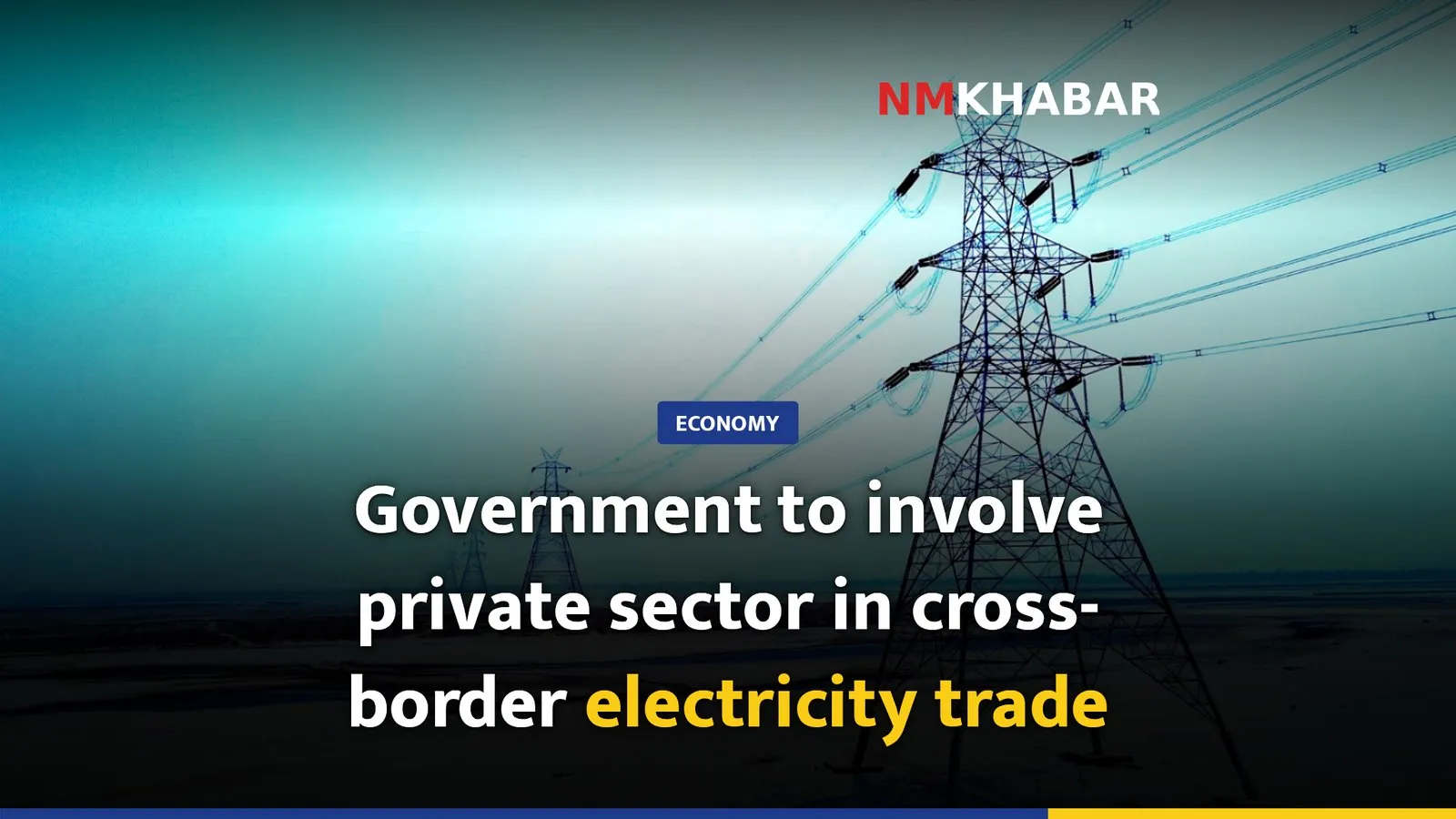
Government to involve private sector in cross-border electricity trade
The Nepali government is set to involve the private sector in expanding cross-border electricity markets and increasing domestic consumption, strengthening legal and institutional frameworks for power trade.
NM Khabar English Desk
4 min read
Size:
NM Khabar English Desk
Correspondent · NM Khabar
NM Khabar English desk. Stories are prepared with AI assistance and checked against their sources — how we work: https://nmkhabar.com/ai-policy/ . Report an error: info@nmkhabar.com